Skyline Icons That Define Dubai’s Global Identity
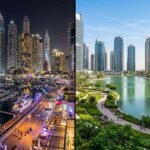
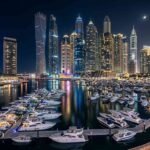
The skyline of Dubai is not just a collection of tall structures; it is a carefully composed architectural identity map shaped by ambition, luxury, and engineering daring. When people search for the best buildings in Dubai, they are often looking at more than aesthetics—they are decoding how a desert city transformed into one of the most recognizable urban skylines in the world.
Each landmark contributes a different layer to this identity. Some represent record-breaking engineering, others symbolize luxury hospitality, and several act as futuristic experiments in form and function. Together, they form a visual language that defines modern Dubai.
Burj Khalifa as the vertical symbol of modern Dubai
The most dominant structure in the skyline is
Its role goes beyond height. It integrates residential, hospitality, and observation experiences within a single vertical ecosystem. The design draws inspiration from desert flowers, while its structural system enables it to withstand wind forces at extreme altitude.
Burj Khalifa comparison overview:
| Aspect | Burj Khalifa | Typical Skyscraper |
|---|---|---|
| Height | 830+ meters | 300–500 meters |
| Usage mix | Hotel, residence, offices | Mainly office or residential |
| Structural system | Buttressed core design | Central core or tube system |
| Global ranking | Tallest globally | Varies by region |
This comparison highlights why Burj Khalifa stands as a global outlier in skyscraper engineering.
Why Burj Al Arab is considered the world’s most luxurious hotel landmark
The sail-shaped silhouette of
Key features that define its iconic status include:
- Distinctive sail-inspired exterior design
- Ultra-luxury suite-only accommodation concept
- Private island location enhancing exclusivity
- Lavish interior design using gold accents and high-end materials
- Skyview restaurant positioned within a dramatic atrium space
Rather than blending into the skyline, Burj Al Arab deliberately stands apart, reinforcing Dubai’s identity as a city where architecture becomes a marketing tool for global tourism.
Emirates Towers and the corporate skyline transformation era
They introduced a more structured financial and business district aesthetic, moving away from purely symbolic architecture toward functional modernism. Their triangular form and reflective glass façades contribute to a clean, professional skyline language that still influences nearby developments.
Record Breaking Engineering Behind Dubai’s Megastructures
Dubai’s skyline is defined not only by visual impact but also by engineering extremes. Many of the structures fall into the category of megastructures, where architectural ambition meets advanced structural science. This is one of the core reasons the best buildings in Dubai are frequently studied in global engineering discussions.
Burj Khalifa structural system and height dominance explained
The structural backbone of
Unlike conventional skyscrapers that rely on a single vertical spine, this approach enhances stability at extreme height levels. It allows the structure to resist wind oscillation while maintaining usable interior space.
Key engineering characteristics include:
- Y-shaped floor plan for aerodynamic efficiency
- High-performance concrete pumped to record heights
- Setback architecture reducing wind pressure
- Central hexagonal core providing torsional resistance
This system is one of the reasons the building remains structurally stable despite its unprecedented scale.
How Cayan Tower achieves its 90 degree twist
The Cayan Tower in Dubai Marina is known for its dramatic 90-degree spiral twist. Each floor rotates slightly from the one below, creating a continuous helical form from base to top.
This was achieved through:
- Rotational slab alignment during construction stages
- Central core reinforcement to maintain stability
- Precision engineering to manage wind load distribution
- Segmented construction sequencing for controlled twisting
The result is a visually dynamic tower that changes appearance depending on viewing angle, reinforcing Dubai’s reputation for experimental design.
What makes Dubai buildings structurally extreme by global standards
Dubai’s architectural environment encourages structural extremes due to its competitive skyline development culture. Engineers often push boundaries in height, form, and material performance.
Several factors contribute to this trend:
- High-rise clustering in districts like Downtown Dubai and Dubai Marina
- Demand for iconic visual identity in global tourism markets
- Advanced concrete and steel technologies
- Climate-adaptive engineering for high temperatures and wind conditions
These conditions create a unique architectural ecosystem where experimentation is not optional but expected.
Futuristic Architecture Shaping Dubai’s Global Image
Futuristic design plays a central role in how Dubai positions itself globally. Many of the best buildings in Dubai are not just functional structures—they are symbolic representations of innovation, technology, and forward-thinking urban planning.
Museum of the Future as a torus shaped innovation hub
Its design elements include:
- Open central void symbolizing unknown future possibilities
- Arabic calligraphy façade panels acting as windows
- Stainless steel structure for reflective futuristic aesthetics
- Integration of technology-driven exhibition spaces
This building is as much a conceptual statement as it is an architectural one.
The Opus by Zaha Hadid and fluid geometry design principles
Its design philosophy emphasizes continuity, movement, and spatial fluidity. The interior spaces flow organically, challenging traditional compartmentalized layouts. This approach reflects a broader trend in Dubai architecture toward sculptural buildings rather than static forms.
Why Dubai invests in futuristic architecture branding
Dubai’s investment in futuristic architecture is closely tied to its global branding strategy. Architecture becomes a visual communication tool that reinforces innovation and economic ambition.
“Architecture in Dubai functions as a global signal of progress, not just shelter.”
By developing landmark structures, the city strengthens its identity as a hub for tourism, technology, and international business while continuously evolving its skyline narrative.
Luxury Hospitality Landmarks That Double as Architecture Icons
Luxury hospitality is one of the strongest pillars shaping Dubai’s skyline identity. Many hotels are designed not only for accommodation but also as architectural symbols that define the city’s visual presence.
Atlantis The Royal and stacked volumetric design language
Atlantis The Royal comparison overview:
| Feature | Atlantis The Royal | Traditional Resort Hotel |
|---|---|---|
| Design approach | Stacked volumetric blocks | Horizontal layout |
| Skyline presence | High visual impact | Limited skyline visibility |
| Spatial concept | Vertical luxury layering | Ground-based expansion |
| Architectural identity | Iconic and sculptural | Functional and uniform |
This comparison shows how modern resorts in Dubai are evolving into skyline-defining structures.
Burj Al Arab as a sail shaped hospitality icon
Its design emphasizes exclusivity and theatrical presentation, reinforcing the idea that hospitality in Dubai is deeply tied to visual identity.
How luxury hotels shape Dubai’s tourism identity
Luxury hotels in Dubai do more than provide accommodation; they define the city’s global tourism narrative. Their architectural uniqueness helps attract international visitors and strengthens Dubai’s position as a premium travel destination.
They also contribute to skyline diversity, ensuring that hospitality architecture plays an equal role alongside commercial and residential developments.
Observation Decks and Framing Structures of the City
Observation structures in Dubai offer a curated way of experiencing the skyline. They frame the city’s architectural identity and allow visitors to understand scale, design, and urban planning from elevated perspectives.
Dubai Frame as a conceptual bridge between old and new city
Dubai Frame structural overview:
| Aspect | Dubai Frame | Typical Observation Tower |
|---|---|---|
| Concept | Framing old vs new Dubai | 360-degree viewing tower |
| Design | Rectangular frame structure | Cylindrical or tapered tower |
| Experience | Directional storytelling | Uniform viewing experience |
| Symbolism | Urban transition narrative | Height-focused attraction |
Burj Khalifa observation decks and viewing hierarchy explained
The observation experience in
- Lower decks provide detailed urban views of Downtown Dubai
- Mid-level decks balance skyline and horizon visibility
- Upper decks offer extreme elevation and atmospheric perspective
This tiered experience transforms the building into a vertical storytelling platform.
Where visitors get the best skyline views in Dubai
Dubai’s skyline can be experienced from multiple vantage points, each offering a distinct architectural composition. Areas such as Downtown Dubai, Dubai Marina, and Palm Jumeirah provide contrasting skyline perspectives shaped by different urban planning philosophies.
These viewpoints allow visitors to interpret the city as a layered architectural system rather than a single unified skyline.
Connected Megastructures and Skybridge Engineering
One of the most innovative trends in Dubai architecture is the development of connected megastructures. These buildings use skybridges to merge towers into unified architectural systems, redefining vertical urban living.
One Za’abeel and The Link skybridge architectural innovation
Instead of treating towers as isolated structures, One Za’abeel integrates them into a single architectural ecosystem.
How skybridges change urban density and experience
Skybridges transform skyscraper design by enabling shared spaces above ground level. They create opportunities for:
- Integrated hospitality and leisure zones
- Shared amenities between towers
- Improved spatial efficiency in dense urban zones
- Iconic architectural silhouettes visible across the city
This approach redefines how vertical cities operate, especially in high-density districts.
Are connected towers the future of skyscraper design
Connected tower systems are increasingly seen as a logical evolution of skyscraper design. By linking structures, architects can optimize land use while expanding usable space vertically and horizontally.
This model aligns with Dubai’s broader architectural philosophy, where innovation and visual impact are treated as equally important design drivers.
As connected towers continue to redefine urban landscapes, the need for efficient logistics and transportation becomes paramount, especially for businesses dealing with international shipments. For those looking to understand the intricacies of moving goods across borders, our comprehensive guide on shipping from UAE to Kuwait covers all essential aspects of land and sea freight.