Dubai has built a reputation as one of the most active trading hubs in the Middle East, and that position is no accident. The city sits at the crossroads of Asia, Africa, and Europe, connects manufacturers and buyers through world-class ports and airports, and supports cross-border trade with a business environment designed for movement. That is why export companies in Dubai cover such a wide range of sectors, from commodities and packaging to plastics, freight, metals, electronics, and general trading.
For businesses looking to understand export companies Dubai, it helps to look beyond a simple company list. Dubai’s export ecosystem is shaped by logistics infrastructure, free zones, re-export activity, wholesale trade networks, and specialist service providers that help goods move from supplier to buyer with as little friction as possible. In practice, that means import export companies in Dubai often do far more than sell products. Many also manage sourcing, warehousing, customs coordination, consolidation, and distribution.
This article breaks down how Dubai export companies operate, what kinds of exporters in Dubai serve regional and international markets, and where the listed businesses fit into the broader trade picture. It also explains why import export companies in UAE continue to use Dubai as a central base for wholesale, distribution, and international trade operations.
Why Dubai is a major base for export companies
Dubai’s role in trade comes from a combination of geography, infrastructure, and business specialization. It is close enough to major Asian manufacturing markets, connected to Gulf and African demand centers, and supported by shipping and air freight routes that make large-scale trade practical.
For export companies in Dubai, location matters because time matters. Buyers want goods quickly, suppliers want predictable shipping, and trading companies want access to multiple routes instead of relying on a single channel. Dubai offers that flexibility through sea, air, and road connectivity, which is one of the reasons so many importers and exporters UAE use it as a trading base.
Strategic trade location
Dubai is positioned between manufacturing economies and consumer markets. That makes it attractive for businesses that import products, store them, add value through repackaging or redistribution, and then export them onward. This is one reason import and export companies in Dubai are often involved in re-export as well as direct export.
Instead of treating Dubai as only an endpoint, many companies use it as a trade platform. Goods can arrive from one country, be consolidated in Dubai, and then be shipped to customers in the GCC, Africa, South Asia, or beyond. In trade terms, Dubai is often less of a warehouse city and more of a relay station with excellent manners.
Port and airport connectivity
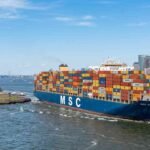
Large-scale exporting depends on transport infrastructure, and Dubai’s network supports both volume and speed. Sea freight is essential for containerized shipments, bulk goods, packaging materials, industrial products, and commodities. Air freight supports time-sensitive, higher-value, or specialized cargo. This combination allows Dubai exporters to serve different types of industries without relying on one transport model.
The presence of major logistics gateways, including Dubai International Airport, also strengthens the position of UAE export companies that need access to urgent cargo movement, documentation support, and international freight handling.
Free zones and trade-friendly structures
Free zones have played a major role in attracting international trade businesses. They offer structures that suit global companies, regional distributors, and specialist exporters that want to manage imports, exports, and re-exports from one base. This is especially relevant for Jebel Ali export companies and businesses operating from other trade-focused zones in Dubai.
For many wholesale import and export companies UAE, free zones are attractive because they support warehousing, light industrial activity, and international ownership structures that align well with cross-border trade operations.
What export companies in Dubai actually do
The term “export companies in Dubai” covers a wide range of business models. Some companies manufacture or process products locally and export them abroad. Others operate as traders, distributors, or sourcing intermediaries. Some focus on freight and customs support rather than owning the goods themselves, while others combine trading and logistics under one roof.
General trading and product sourcing
Many export companies Dubai operate as general trading businesses. These companies buy products from manufacturers or wholesalers, then sell them into regional or international markets. Their product mix can be broad or highly specialized depending on their customer base.
General trading companies are common in Dubai because the city supports multi-category trade. A company may handle food ingredients, consumer products, industrial materials, electronics, or packaging products under one commercial structure if the business model allows it.
Import, re-export, and redistribution
A large share of trade in Dubai involves importing goods into the UAE and then exporting them onward. This re-export model is central to the city’s role as a trade hub. Import export companies in Dubai often source from manufacturing countries, store goods in Dubai, and redistribute them across nearby regions.
This approach benefits buyers that want faster delivery, mixed product shipments, or access to a regional stockholding point. It also benefits sellers that do not want to establish separate warehouses in multiple countries. In that sense, Dubai export companies often act as both trade facilitators and inventory bridges.
Logistics, freight, and cargo support
Not every business in the export chain is the seller of record for goods. Some companies provide freight forwarding, cargo management, customs handling, or shipping coordination. These businesses are essential because export activity does not happen on paperwork and ambition alone.
Companies involved in cargo and logistics help exporters manage documentation, route planning, shipment consolidation, customs clearance, and delivery schedules. For international trade, that operational support can be as important as the product itself.
Main sectors served by Dubai export companies
Dubai’s export market is diverse because the city supports both industrial and commercial trade. The companies listed in the SEO blueprint show that clearly. They span metals, plastics, packaging, logistics, commodities, technology, and general trading, which reflects the breadth of Dubai’s trade economy.
General trading and multi-category exports
General trading remains one of the strongest segments among exporters in Dubai. Businesses such as Aaj Trading Co LLC, Asante General Trading LLC, Gauri Trading (L.L.C), JEETU STAR TRADING L.L.C, and A Ronai LLC fit the broader profile of companies that operate across multiple product categories or serve varied buyer needs.
In practical terms, these companies may support wholesale distribution, B2B supply, regional resale, or import and export activity across different sectors. This flexibility is one reason general trading businesses remain common in Dubai. A market built around cross-border movement naturally rewards companies that can adapt to changing demand.
Commodities and industrial trade
Industrial and commodity-focused exporters are another important part of the Dubai trade landscape. Atlas Metals LLC and Commodities Trading Company (CTC Dubai) represent the type of business activity associated with metals, raw materials, and large-scale trading relationships. Commodity exports typically involve longer supply chains, more documentation, and closer coordination with freight and customs partners.
These companies often serve manufacturers, distributors, construction supply chains, or industrial buyers. Their value is not only in supplying goods but also in maintaining commercial relationships and managing shipment reliability across borders.
Packaging, plastics, and manufacturing-linked exports
Packaging and plastics are important export categories in the UAE, especially where local manufacturing supports regional distribution. Companies such as Arabian Packaging L.L.C, Emirates Polystyrene Factory, Eco Plastic Industries, and Dubai Flex Pak highlight the role of packaging and materials businesses within Dubai’s export environment.
These businesses can support both domestic industrial demand and export markets that require packaging materials, plastic products, flexible packaging, or related industrial supplies. In a trading hub like Dubai, packaging is not a side note. It is a core supply chain category because every product eventually needs to be protected, wrapped, stored, or shipped.
Technology and specialized supply
Dubai’s export ecosystem also includes specialist companies that operate in technology and related supply categories. Aark Technology FZCO is an example of a business that may align with the broader free-zone trading model often used for electronics, systems, components, or technical products.
Technology-oriented exporters and distributors benefit from Dubai’s logistics speed and its access to regional buyers. This is particularly useful for products that move through project supply chains, business procurement channels, or specialized wholesale networks.
Organic, agricultural, and product-specific trade
Some companies reflect a more product-focused or category-led trade model. Sindhiya Organics LLC stands out as an example of a business name associated with organic product trade. Product-specific exporters can serve niche markets while still using Dubai’s infrastructure to access broader regional demand.
For buyers, this matters because Dubai is not limited to one export identity. It supports large-scale commodity flows, but it also accommodates specialist suppliers that trade in narrower categories with defined sourcing and quality requirements.
Key types of export companies in Dubai and the UAE
Not all businesses that appear in a list of export companies in Dubai play the same role. Understanding the type of company helps buyers, suppliers, and partners identify which businesses are relevant to their needs.
| Company type | Typical role in trade | Common fit in Dubai |
|---|---|---|
| General trading company | Buys, sells, imports, and exports multiple product categories | Wholesale supply, B2B trade, regional distribution |
| Commodity trader | Handles bulk goods, industrial materials, or large commercial contracts | Metals, raw materials, industrial supply chains |
| Manufacturer-exporter | Produces or processes goods locally and exports them | Packaging, plastics, factory output, industrial materials |
| Freight and logistics provider | Moves cargo, manages shipping, customs, and forwarding | Sea freight, air freight, cross-border cargo operations |
| Free-zone distributor | Imports, stores, and re-exports products from trade zones | Regional stockholding, re-export, wholesale trade |
General traders
General traders are often the most visible import export companies in UAE because they can respond quickly to market demand. They may carry broad supplier networks, serve different geographies, and handle a mix of products depending on customer requirements.
This model is especially useful in Dubai because the city acts as a meeting point for suppliers and buyers from multiple markets. A flexible trading company can source from one region and sell into several others without needing a separate operating base in each country.
Manufacturer-linked exporters
Companies in packaging, plastics, and industrial materials may export goods they produce or process directly. This creates a different trade profile from a pure trading house. The company’s export value lies in production capability, product consistency, and supply continuity rather than only in market access.
That distinction matters for buyers looking for long-term procurement relationships, especially when the product requires technical specifications, packaging standards, or repeat production runs.
Logistics-led trade businesses
Some firms are best understood through their logistics role rather than their product category. A business may support exporters by arranging transport, consolidating cargo, or managing customs and freight documentation. In the Dubai trade ecosystem, those companies are not peripheral. They are part of the engine room.
Notable companies in the Dubai export ecosystem
The companies listed in the blueprint reflect different layers of the export market in Dubai and the UAE. Some appear to fit general trading models, some align with industrial production, and others support logistics or commodity movement. Together, they illustrate how broad the term “Dubai export companies” really is.
Trading and distribution-focused businesses
- AMIT International Group FZE – A free-zone structured company name that fits the profile of international trade and distribution activity.
- JEETU STAR TRADING L.L.C – A trading-focused entity name associated with commercial buying and selling activity.
- Gauri Trading (L.L.C) – Representative of the general trading model that is common in Dubai’s B2B trade market.
- A Ronai LLC – Part of the wider group of businesses operating in cross-border commercial trade.
- Aaj Trading Co LLC – A trading company profile that aligns with wholesale and export-linked business operations.
- Asante General Trading LLC – Reflects the multi-category general trading structure widely used in the UAE.
- Elzit Import & Export LLC – A directly named import and export business, clearly positioned within cross-border trade.
- Country Hill International – An international trade-oriented business name that fits export and distribution activity.
- Cyrus Group of Companies – A group structure that may encompass broader commercial and trading operations.
- Damsco Group – A group-format business that sits within the wider landscape of UAE trade enterprises.
- Danish International FZE – A free-zone business structure aligned with international trade activity.
- Danlesco Gulf LLC – A Gulf-facing company profile that fits the regional trade and export model.
Industrial, commodity, and manufacturing-linked businesses
- Atlas Metals LLC – Relevant to the metals and industrial materials side of export trade.
- Commodities Trading Company (CTC Dubai) – A direct fit for the commodity trading segment of the market.
- Arabian Packaging L.L.C – Part of the packaging sector that supports manufacturing and distribution chains.
- Emirates Polystyrene Factory – Linked to local manufacturing and export potential in industrial materials.
- Eco Plastic Industries – Relevant to plastic product manufacturing and industrial supply.
- Dubai Flex Pak – A packaging-oriented business that aligns with export-ready industrial production.
- Sindhiya Organics LLC – A product-specific business that suggests trade in organic or related goods.
- BOROUGE PTE LTD – A notable name in materials-related trade and industrial supply contexts.
Freight, cargo, and logistics support companies
- Transparent Freight Services LLC – A freight-focused company relevant to shipping and cargo movement.
- Hyatt Alnajah Logistics LLC – Positioned within logistics support for import and export activity.
- MEGA SPEED CARGO SERVICES LLC – A cargo and freight services provider supporting goods movement.
- DHL WORLD – A globally recognized logistics and freight brand relevant to export operations.
When businesses search for a list of export companies in Dubai, it is worth remembering that the list alone does not tell the full story. What matters is the company’s role in the supply chain, the product category it serves, and whether it handles sourcing, warehousing, export documentation, freight coordination, or final delivery support.
Import export companies in Dubai versus manufacturers and freight providers
Businesses often use the phrase “import and export companies in Dubai” as if it refers to one single type of firm. In reality, the market includes three broad categories: trading companies, manufacturer-exporters, and logistics providers. These categories overlap, but the distinction matters when choosing a partner.
Trading companies focus on commercial movement
A trading company usually specializes in buying and selling goods across markets. It may not manufacture the product, but it knows how to source it, negotiate supply, and move it to the right market. This makes trading firms useful for buyers that want product access, supplier flexibility, and market coverage.
Manufacturers focus on product supply and consistency
Manufacturing-led exporters are different because their strength lies in production. Businesses like packaging or plastics manufacturers can offer consistency, direct product knowledge, and more control over output. For industrial buyers, that can be more valuable than a broad product catalogue.
Freight providers focus on movement rather than ownership
Logistics companies are the operational backbone of export activity. They may not own the goods, but they make the transaction work. Freight providers handle cargo movement, route planning, customs support, and shipping coordination. Without them, many exporters in Dubai would spend more time wrestling with paperwork than actually trading.
How Jebel Ali and free-zone structures support exporters
Jebel Ali remains one of the most important trade and logistics areas connected to export activity in Dubai. For businesses looking into Jebel Ali export companies, the appeal is clear: proximity to major port infrastructure, warehousing options, and free-zone business frameworks designed around trade.
Why Jebel Ali matters for export operations
Exporters benefit from access to storage, shipping, and distribution in one ecosystem. This makes Jebel Ali especially useful for companies that import in volume, hold stock, and then export to regional buyers. It is also attractive to wholesale import and export companies UAE that need efficient handling of mixed shipments and commercial cargo.
Free-zone companies and international trade
Several businesses in the blueprint use FZE or FZCO structures, which signals the importance of free zones in the export market. Free-zone entities are often set up for international trade, distribution, technology supply, and re-export activity. These structures are common among Dubai exporters because they support flexible regional operations and international commercial relationships.
How exporters in Dubai support different buyer needs
Not every buyer approaches export companies in Dubai for the same reason. Some want a direct supplier. Others want a sourcing partner, a regional distributor, or a logistics provider that can move goods across borders without delays. Understanding these use cases makes it easier to navigate the market.
For wholesalers and distributors
Wholesalers often work with Dubai export companies because they want access to broad product networks and consolidated supply. A trading company can source from multiple manufacturers and package those goods into a single commercial relationship, which simplifies procurement.
For regional importers
Importers in nearby markets may prefer Dubai exporters because stock can be sourced and shipped faster than ordering separately from distant manufacturers. Dubai acts as a buffer between production origin and final market, which can reduce lead times and simplify purchasing.
For project-based buyers
Industrial buyers, contractors, and procurement teams may use exporters in Dubai for metals, packaging, plastics, technical items, or project supplies. In these cases, the company’s value often depends on reliability, category knowledge, and logistics coordination rather than simply offering the lowest price.
What to evaluate when reviewing a list of export companies in Dubai
A long Dubai exporters list can be useful, but only if it helps you identify the right type of business. Whether you are reviewing top export companies in Dubai or comparing importers and exporters UAE for a supply relationship, the same practical checks apply.
Match the company to the trade model you need
Start with the business model. Are you looking for a general trader, a manufacturer, a freight partner, or a commodity supplier? A packaging factory and a cargo services company can both appear in export-related searches, but they solve very different problems.
Check product and sector fit
Look for alignment between the company’s sector and your actual requirement. If you need industrial materials, a commodity or metals trader may be more relevant than a general trading house. If you need packaging products, a manufacturer-led exporter is often a better fit.
Assess logistics capability
Even when the exporter is primarily a trading company, logistics capability matters. Ask whether the business manages freight coordination, export documentation, shipment consolidation, or customs support. In cross-border trade, operational discipline is often the difference between a smooth shipment and an inbox full of “just checking on this.”
Consider regional distribution strength
Many import export companies in UAE succeed because they understand regional demand patterns and can supply nearby markets efficiently. If your target customers are in the GCC, Africa, or South Asia, a Dubai-based exporter with established regional channels may offer more practical value than a supplier with no local distribution experience.
Dubai export companies and the wider UAE trade network
Although this article focuses on export companies in Dubai, the city should be understood within the wider UAE trade system. Import export companies in UAE often operate across emirates, free zones, ports, and industrial areas. Dubai remains the best-known trade hub, but it also functions as part of a broader commercial network.
That network includes manufacturing activity, logistics infrastructure, commodity trading, packaging production, and general wholesale trade. In other words, Dubai export companies are important not only because of where they are based, but because of how they connect to the wider UAE supply chain.
Dubai as the commercial front door
For many overseas buyers, Dubai is the first point of contact with UAE export companies. It offers visibility, connectivity, and a concentration of traders, distributors, freight companies, and service providers. That makes it easier for international businesses to find partners without navigating multiple fragmented markets.
UAE trade depth beyond a single city
At the same time, the UAE’s export strength does not stop at Dubai’s city limits. Industrial suppliers, logistics operators, and trading groups may work across the country while maintaining Dubai as their customer-facing or distribution base. This is why businesses searching for wholesale import and export companies UAE often end up focusing heavily on Dubai anyway.
Practical ways businesses use Dubai exporters
Trade relationships in Dubai are not limited to simple buy-and-ship transactions. Companies use Dubai exporters in several practical ways depending on their scale, product category, and market reach.
Regional stockholding and redistribution
A supplier may import goods into Dubai, hold stock, and then dispatch smaller volumes to multiple countries. This is useful for companies that want to reduce delivery times and avoid placing large direct orders from distant manufacturers every time demand changes.
Multi-country sourcing through one commercial partner
General trading companies can act as sourcing consolidators. Instead of dealing with several suppliers across different countries, a buyer may work with one Dubai-based trading partner that coordinates procurement and export from a central base.
Export support for manufacturers entering nearby markets
Manufacturers that want to enter Gulf or African markets may use Dubai as a distribution platform rather than opening offices in each destination country. In that scenario, Dubai exporters become route-to-market partners as much as product suppliers.
Why the export market in Dubai stays relevant
Dubai remains relevant because it solves practical trade problems. It shortens routes between suppliers and buyers, supports re-export and regional distribution, and gives businesses access to freight, warehousing, and commercial infrastructure in one place. That combination is difficult to replicate.
The market also remains diverse. The blueprint’s company list includes trading firms, commodity businesses, packaging companies, logistics providers, and industrial suppliers. That diversity is a strength because it allows buyers to source products, shipping support, and commercial services from the same trade ecosystem.
For businesses researching top export companies in Dubai, the most useful approach is not to look for one “best” company in the abstract. It is to identify the type of exporter that fits the job: a general trader for broad sourcing, a manufacturer for category-specific supply, a commodity company for industrial trade, or a freight specialist for reliable movement. Dubai works well because all of those models can operate side by side, supported by the same wider trade infrastructure.
As businesses navigate the complexities of trade in Dubai, they may also want to explore the offerings from various service providers, such as those in the water solutions sector. For detailed insights and contact information, you can check out the company overview and contact details related to the rebranding to Taqa Water Solutions.