Warehouse Storage in Dubai – What You Need to Know Before You Sign Any Contract
Your goods are arriving from overseas but the delivery address isn’t ready yet. Or your business imports in bulk but can’t hold everything at the office. Or you’re between apartments and need somewhere safe to store your furniture for two months. Warehouse storage in Dubai solves all three situations, but the options vary wildly in quality, and a bad choice costs you more than just money.
I’ve seen clients lose goods to humidity damage because they chose the wrong facility. I’ve seen businesses get hit with hidden charges they never expected. This guide tells you what to look for and what to avoid.
Types of Warehouse Storage Available in Dubai
General Commercial Warehousing
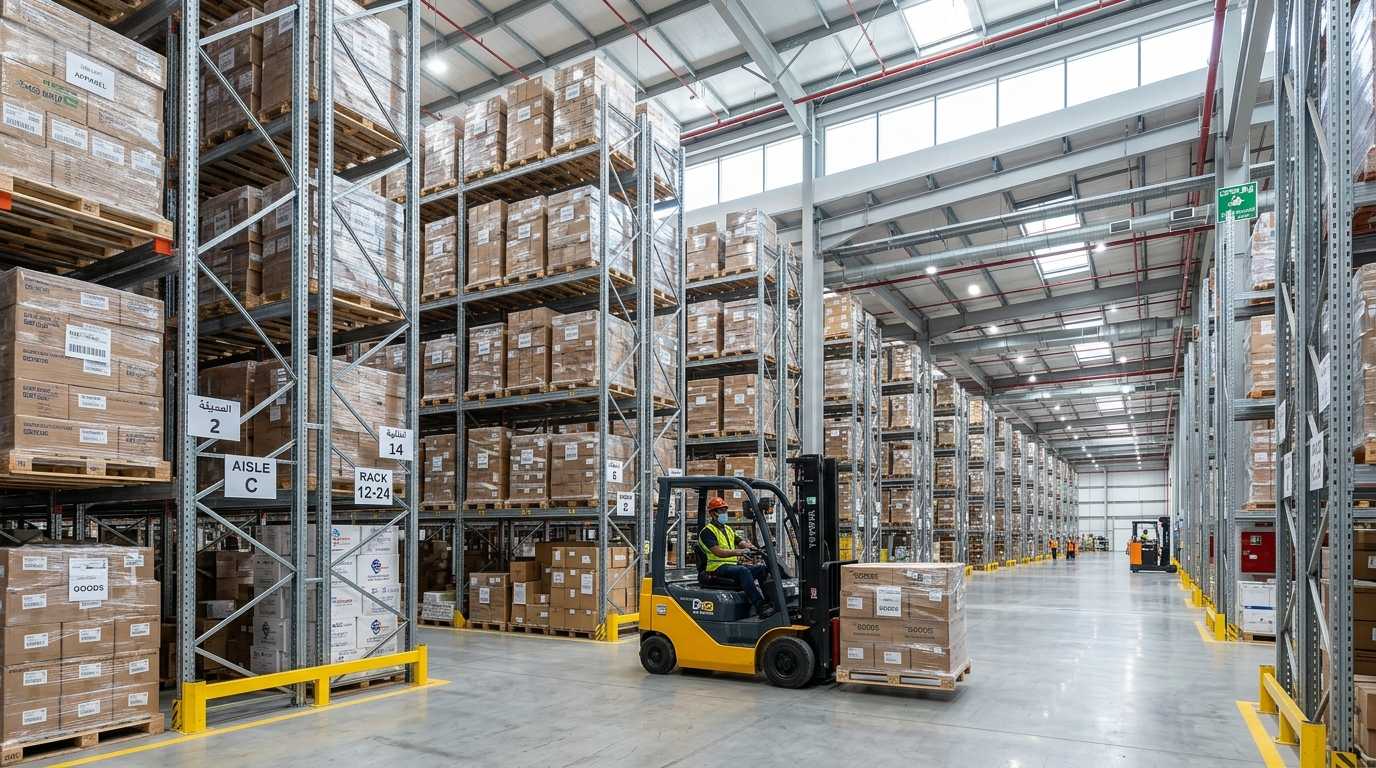
This is for businesses that import, distribute, or manufacture goods and need a storage base in Dubai. You rent dedicated floor space or racking space measured in square metres or pallet positions. Goods come in on pallets or in cartons and stay until you need them shipped out. Most commercial warehouses in Dubai are in industrial areas like Al Quoz, Jebel Ali Free Zone (JAFZA), DIP (Dubai Industrial Park), or DAFZA near the airport.
Bonded Warehousing
A bonded warehouse is a customs-controlled facility. Goods stored there haven’t cleared UAE customs yet, which means you don’t pay import duties until the goods actually enter the UAE market. This is very useful for businesses that re-export goods to other countries — they store in a bonded facility, re-export, and never pay UAE import duty at all. Dubai has several bonded warehouses operated by licensed entities under Dubai Customs supervision.
Temperature-Controlled Storage
For food products, pharmaceuticals, cosmetics, or any goods that need specific temperature ranges, you need a temperature-controlled or cold storage facility. Dubai’s climate — with outdoor temperatures hitting 45 degrees Celsius or above from May through September — makes proper cold chain storage non-negotiable for these commodities. A standard warehouse in Dubai during summer without climate control can reach damaging temperatures even with industrial fans running.
Personal Storage
For individuals, self-storage facilities operate across Dubai in areas like Al Quoz and Nad Al Hamar. You rent a unit by size — from small lockers to room-sized spaces — and access it yourself with your own key or access code. Good for furniture between moves, seasonal items, business documents, or equipment you don’t use daily. Most personal storage facilities in Dubai are climate-controlled given the heat.
Where Warehouses in Dubai Are Located
| Area | Best For | Key Advantage |
|---|---|---|
| Al Quoz Industrial | General cargo, furniture, personal storage | Central location, good road access |
| Jebel Ali (JAFZA) | Import/export businesses, bonded storage | Direct proximity to Jebel Ali Port |
| DAFZA (Airport Free Zone) | Air freight cargo, time-sensitive goods | Next to DXB cargo terminal |
| DIP (Dubai Industrial Park) | Manufacturing, heavy goods, bulk storage | Large floor space, good truck access |
| Al Rashidiya / Nad Al Hamar | Personal self-storage units | Accessible from central Dubai |
| Silicon Oasis | Electronics, tech goods, light commercial | Clean facilities, good security |
What Professional Warehouse Storage Includes
Receiving and Inspection
When your goods arrive at the warehouse, a professional facility logs each item in their Warehouse Management System (WMS). They check quantities against your packing list and flag any visible damage. You get an inbound receipt. This is your proof of what entered the facility in what condition. Without this, any damage claim later becomes your word against theirs.
Inventory Management and Reporting
Good warehouse operators in Dubai give you real-time inventory access. You log into a portal and see exactly how many units of each SKU are in stock, what came in, and what went out. This matters enormously if you’re running an e-commerce or distribution business. Without visibility, you’re ordering more stock when you still have plenty sitting in the warehouse.
A Real Situation Where the Wrong Warehouse Cost a Business Dearly
A client of ours imported electronics from China — tablets and accessories — and stored them in a cheap warehouse in Al Quoz. The facility looked fine on the surface but had no proper humidity control. Dubai’s coastal humidity, especially between July and October when Shamal winds shift and humidity spikes, got into the storage area. Over three months, a significant portion of the stock developed moisture damage in the packaging and internal components. The client lost over AED 80,000 worth of goods in a facility that cost them a few hundred dirhams a month less than a properly controlled option. The saving wasn’t a saving at all.
That’s the real cost of choosing storage on price alone without checking the facility’s environmental controls.
Questions to Ask Before Signing a Warehouse Contract
- Is the facility climate-controlled year-round, and what are the temperature and humidity ranges maintained?
- What is the security setup — CCTV coverage, access control, security personnel?
- What is included in the base rate and what triggers extra charges?
- How do you handle damaged or missing goods — what’s the claims process?
- What is the minimum contract period and what are the terms for early exit?
- Do you have a Warehouse Management System and can I access my inventory online?
- Are you licensed by Dubai Municipality and Dubai Customs for the commodity I’m storing?
Hidden Charges That Catch People Off Guard
Dubai warehousing contracts often have charges beyond the monthly storage rate. Receiving fees per inbound pallet or shipment. Outbound handling fees per order or pallet. Labelling or repackaging fees if you need goods prepared for delivery. Container destuffing fees if you’re sending full containers to the warehouse. Monthly reporting fees in some facilities. Ask for a complete fee schedule before you sign. Not just the headline rate.
Free Zone Warehousing vs Mainland Warehousing
If you’re importing goods purely for re-export, a JAFZA or DAFZA free zone warehouse avoids UAE customs duty on those goods. You only pay when goods are moved from the free zone into the UAE mainland. This is a significant commercial advantage for trading companies that use Dubai as a regional hub. Our team at cargo services in Dubai can advise on whether free zone or mainland warehousing fits your business model better based on your trade flows.
For storage solutions from short-term to long-term, personal to commercial, check our full range at warehouse storage services in Dubai.
Frequently Asked Questions
What is the minimum storage period for warehouse space in Dubai?
Most commercial warehouses in Dubai have a minimum contract period of one month. Some facilities allow weekly billing for short-term cargo storage, particularly near the airport or Jebel Ali Port for transit goods. Self-storage facilities for personal items often allow month-to-month contracts with no long minimum commitment. Always clarify the minimum period and early exit penalty before signing.
Is warehouse storage in Dubai expensive compared to other UAE emirates?
Dubai warehouse rates per square metre are generally higher than Sharjah or Ajman, which are neighbouring emirates with lower operating costs. Many businesses store goods in Sharjah industrial areas and trucking them to Dubai customers daily. Whether the saving justifies the extra transport cost depends on your delivery frequency and cargo volume. Your logistics provider can model both options for you.
Can I store personal household goods in a commercial warehouse in Dubai?
You can, but self-storage facilities designed for personal goods are usually more practical. Commercial warehouses charge per pallet position or per square metre and have minimum volumes that don’t suit small household quantities. Self-storage units give you flexible sizing from a single unit for boxes up to a room-sized space for full household furniture, and you have direct access without needing to coordinate with warehouse staff.
What happens to my goods if the warehouse closes or has a dispute?
In Dubai, commercial warehousing contracts are governed by UAE commercial law. Goods stored in a licensed facility are your property and cannot be withheld without a legal process. Always store with licensed operators and keep your own inventory records independent of the warehouse system. For high-value goods, cargo insurance covering storage is strongly recommended.
Do Dubai warehouses handle customs clearance for imported goods?
Many full-service logistics warehouses in Dubai offer customs clearance as part of their service, or they work with a licensed customs broker. For goods arriving from abroad, the warehouse can coordinate the import declaration through Dubai Customs’ Mirsal 2 system and release your goods into storage once cleared. Confirm whether customs clearance is included or an extra service when you get your quote.
As you navigate the logistics of moving, don’t forget to consider the little details that can brighten your new space, much like choosing the perfect colors for your braces can enhance your smile. For tips on selecting the ideal shades, check out this guide on best braces colors.