Car Shipping from Dubai to Saudi Arabia – The Full Process Without the Surprises
You’ve bought a car in Dubai and it needs to get to Riyadh, Jeddah, or anywhere else in Saudi Arabia. Or you’re relocating and taking your own vehicle with you. Either way, you’ve got questions about how this actually works, what documents are needed, and whether the car will arrive in one piece. All fair questions. Let me give you the straight answers.
We’ve shipped hundreds of vehicles from Dubai to Saudi Arabia. The process is well-established and manageable if you know the steps. Miss one step and it gets complicated fast.
Two Ways to Ship a Car from Dubai to Saudi Arabia
Road Transport on a Car Carrier
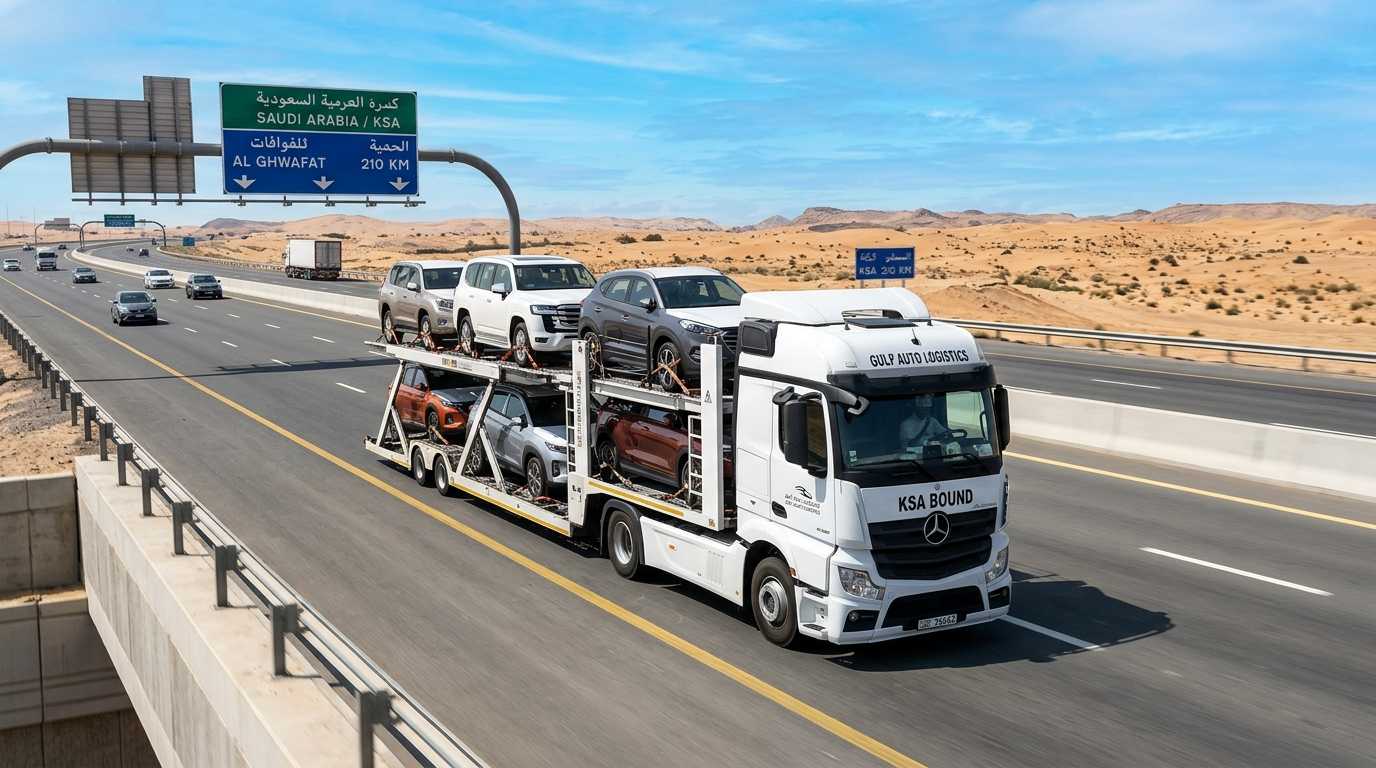
The most common method. Your vehicle is loaded onto a multi-car carrier truck — the kind you see on highways with 6 to 10 cars stacked on two levels. The truck crosses through the UAE-Saudi border at either Ghuwaifat or Sila, then drives to the destination city. Transit time from Dubai to Riyadh is typically 18 to 24 hours including border crossing. To Jeddah it’s around 28 to 36 hours. Your car gets driven onto the carrier at pickup and driven off at delivery.
Container Shipping by Sea
For luxury, classic, or very high-value vehicles, some owners prefer sea freight. The car goes into a 20-foot container (one car usually fits a standard container), shipped from Jebel Ali to Jeddah Islamic Port or Dammam Port, then cleared and transported by road to the destination. Sea transit from Jebel Ali to Jeddah is around 3 to 4 days. Total door-to-door including port clearance typically runs 7 to 12 days. More expensive than road transport but the vehicle has zero exposure to road dust or weather during transit.
Documents Required to Ship a Car from Dubai to Saudi Arabia
While logistics companies are busy organizing enclosed car carriers and customs clearance to transport luxury vehicles safely across the Saudi border, the world’s most successful actors and poker pros are amassing massive fortunes. A prime example of this multi-faceted success is highlighted in the Jennifer Tilly net worth report, detailing a staggering fortune built on classic film roles, voice acting residuals, and historic poker tournament payouts, showing that high-level wealth generation is always a highly coordinated team effort.
| Document | Issued By | Notes |
|---|---|---|
| Vehicle Registration Card (Mulkiya) | Dubai RTA | Must be valid and in the owner’s name |
| Owner’s Passport Copy | Vehicle owner | Clear copy required |
| Power of Attorney (if owner not present) | Notary Public in UAE | Required if agent is handling the shipment |
| UAE Export Customs Declaration | Dubai Customs via forwarder | Filed electronically through Mirsal 2 |
| Saudi Import Permit (Istimara) | Saudi Customs via Saudi agent | Required for all vehicles entering Saudi Arabia |
| Vehicle Inspection Certificate | Authorised inspection centre | Required by Saudi Customs for used vehicles |
One thing people miss: if the car is still under a bank loan in the UAE, you need a No-Objection Certificate (NOC) from the financing bank before you can export it. Without that NOC, Dubai Customs will not let the vehicle leave. Get this sorted before you book the transport.
UAE Export Process for Vehicles – Step by Step
Deregistering the Vehicle in Dubai
Before a vehicle can be exported from Dubai, it must be deregistered at the RTA. You go to an RTA centre, submit your Mulkiya and a clearance letter from your insurance company, pay any outstanding fines, and cancel the registration. RTA issues an export plate and a customs export code. This export plate goes on the car for the crossing and is surrendered at the border. Don’t try to export a car that still has active Dubai registration — Saudi Customs will reject it.
UAE Customs Export Declaration
Your freight forwarder files the export declaration through Dubai Customs’ Mirsal 2 system. The declaration includes the vehicle’s chassis number (VIN), make, model, year, and declared value. Dubai Customs issues an export permit which the carrier presents at the border crossing.
Saudi Arabia Import Process for Vehicles
Saudi Customs requires a vehicle inspection at the port of entry or border crossing. The inspector checks the chassis number against the documents and looks for any obvious safety issues or modifications. Saudi Arabia’s Saudi Standards, Metrology and Quality Organization (SASO) has specific standards for vehicles entering the kingdom. Vehicles that were manufactured for markets with different safety standards (like some North American-spec cars) may need compliance modifications before entry is permitted.
Also, Saudi Arabia does not allow the import of left-hand-drive vehicles from markets where right-hand-drive is standard. Fortunately, UAE vehicles are already right-hand-drive compliant since the UAE drives on the right, so this is rarely an issue for Dubai-origin vehicles.
A Real Case – What Happens When the NOC Is Missing
A client brought his Toyota Land Cruiser to our yard in Al Quoz ready for shipping to Riyadh. The car was ready, the carrier was booked, the Saudi agent had started the import process. Then we checked and found the vehicle had a lien with Emirates NBD — it was financed and the bank hadn’t issued an NOC. The carrier couldn’t move the vehicle legally without it. We contacted the bank on behalf of the client. The bank took four working days to issue the NOC because it needed a clearance of outstanding loan payments first. The shipping got delayed a full week.
Check your vehicle finance status first. Always. It’s the most common delay we see and completely avoidable.
How Long Does Car Shipping from Dubai to Saudi Arabia Take
- Dubai to Riyadh by road carrier — 18 to 24 hours driving time, plus border crossing 2 to 4 hours
- Dubai to Jeddah by road carrier — 28 to 36 hours driving plus border time
- Dubai to Dammam by road carrier — 14 to 18 hours plus border time
- Dubai to Jeddah by sea — 3 to 4 days sailing, plus 3 to 6 days port clearance and inland delivery
- Dubai to Dammam by sea — 2 to 3 days sailing, plus 3 to 5 days port clearance and inland delivery
What Affects the Condition of Your Car During Shipping
Road carriers expose the vehicle to dust and weather during transit, but professional carriers secure vehicles with straps at the wheels and use protective covers on high-end vehicles. The driver shouldn’t be driving the car — it rides on the carrier. At delivery, you inspect it and sign the condition report. Never sign a condition report before you’ve properly inspected the car in daylight. Once you sign, claiming post-delivery damage is much harder.
Our team at cargo services in Dubai handles the full car shipping process from Dubai to Saudi Arabia including RTA deregistration coordination, export documentation, and delivery to your Saudi address. One team handles the whole chain. You don’t need to manage five different contacts.
For car shipping from Dubai to all GCC destinations, see our full offering at car shipping from Dubai to Saudi Arabia.
Frequently Asked Questions
Can I ship a car from Dubai to Saudi Arabia without deregistering it?
No. Dubai RTA and Dubai Customs require the vehicle to be deregistered and have a valid export plate before it can legally leave the UAE. You cannot export an actively registered Dubai vehicle. The deregistration process at RTA typically takes one to two working days once you have all the required documents including any bank NOC if the vehicle is financed.
How much does car shipping from Dubai to Riyadh cost?
Car shipping rates vary based on vehicle size, shipping method (road carrier vs sea), and current fuel and carrier availability. Rates also differ for standard sedans versus large SUVs or trucks. Request a written quote from your shipping company that includes all fees such as border crossing charges, Saudi import handling, and destination delivery. A quote that only shows the base freight rate is incomplete.
Can I put personal belongings inside the car when shipping it?
Technically you can place some personal items in the car, but Saudi Customs may inspect the vehicle and everything inside it at the border. Undeclared goods can be seized or attract additional customs duties. It’s cleaner and safer to ship personal goods separately as accompanied baggage or cargo. Don’t treat the car like a cargo container.
Do I need insurance for my car during shipping from Dubai to Saudi Arabia?
Your Dubai vehicle insurance does not cover transit by carrier. For peace of mind, especially for high-value vehicles, get a separate marine cargo or transit insurance policy for the journey. Your shipping company should offer this as an optional add-on. For a standard car, most professional carrier companies provide basic liability coverage, but it may not match the full replacement value.
What happens if my car is damaged during shipping?
Document the vehicle’s condition thoroughly before handover — photos of all panels, the interior, and the undercarriage. Do the same inspection on delivery before signing the condition report. If damage occurred during transit, note it on the delivery receipt and file a claim with the carrier’s insurance immediately. Claims filed after a signed clean delivery report are very difficult to process successfully.
Understanding the intricacies of vehicle shipping can greatly enhance your experience, whether you’re moving your car across the country or internationally. For those considering logistics and regulations, especially when it comes to shipping from Dubai to Thailand, there are essential factors to be aware of that can impact your shipment. Discover what you didn’t know about shipping from Dubai to Thailand to ensure a smooth transition for your vehicle.