Everything You Should Know About Charter Container Shipping from Dubai – FCL vs LCL
Got a massive shipment of tiles or a house full of furniture that needs to get to the UK or the USA? Look, if you’re looking at charter container shipping from Dubai you’ve probably heard the terms FCL and LCL thrown around like candy. But what do they actually mean for your wallet and your peace of mind? If you pick the wrong one you’re going to pay way too much or your stuff will take forever to arrive. But don’t worry because I am going to show you the street-smart way to pick the right container service so you get your cargo moved fast and cheap. Seriously, it’s all about the volume.
Stop Paying for Air You Don’t Use
The biggest mistake people make is booking a whole 20-foot container when they only have enough stuff to fill a small van. Why would you pay for the whole box if you only need half? That’s what LCL (Less than Container Load) is for. You share the space with other people and you only pay for what you use. It’s like taking a bus instead of renting the whole bus. It is, well, really a much smarter way to move smaller shipments without breaking the bank. It’s just common sense.
I remember a client last year who was moving from Dubai to Germany. He had about 10 boxes and a bike. He was told by a random agent that he needed a 20-foot container. That would have cost him nearly fifteen thousand dirhams. He called us for a second opinion. We told him to use LCL. We packed his stuff into a secure wooden crate (we call this a “lift van”) and put it into a shared container. The total cost? Less than four thousand dirhams. He saved eleven thousand dirhams just by making one phone call. That’s the power of knowing how the system actually works.
The Real Secret to Deciding Between FCL and LCL
Actually the secret isn’t just about the size. It’s about the security and the speed. When you use FCL (Full Container Load) the container is yours. You pack it, we seal it at your door, and it doesn’t get opened until it reaches your new house. It is faster because it doesn’t have to stop at a consolidation warehouse to be mixed with other people’s stuff. It goes straight to the port. If you have enough stuff to fill at least 70% of a container FCL is almost always the better and faster choice. Period.
Listen, you should think about the handling too. With LCL your boxes are handled more times. They are loaded onto a truck, unloaded at a warehouse, packed into a container, then unloaded again at the destination. Every time someone touches your box there’s a tiny risk of a scratch. If you have very fragile or expensive items FCL gives you that extra layer of “hands-off” security. You’re the only one with the key to that seal number. It’s a big deal for peace of mind.
Standard Container Sizes You’ll Use
Don’t let someone tell you a container is “standard” without giving you the numbers. You need to know exactly how much space you have so you can plan your packing. In the world of charter container shipping from Dubai these are the three main options you’ll see every day.
- 20-Foot Container: Good for a 1 or 2-bedroom apartment. Holds about 30 cubic meters.
- 40-Foot Container: Best for a 3 or 4-bedroom villa. Holds about 60 cubic meters.
- 40-Foot High Cube: Same as a 40-foot but an extra foot taller. Great for bulky stuff or extra furniture.
- Flat Rack: For stuff that doesn’t fit in a box like machinery or boats.
How Jebel Ali Port Handles Your Container
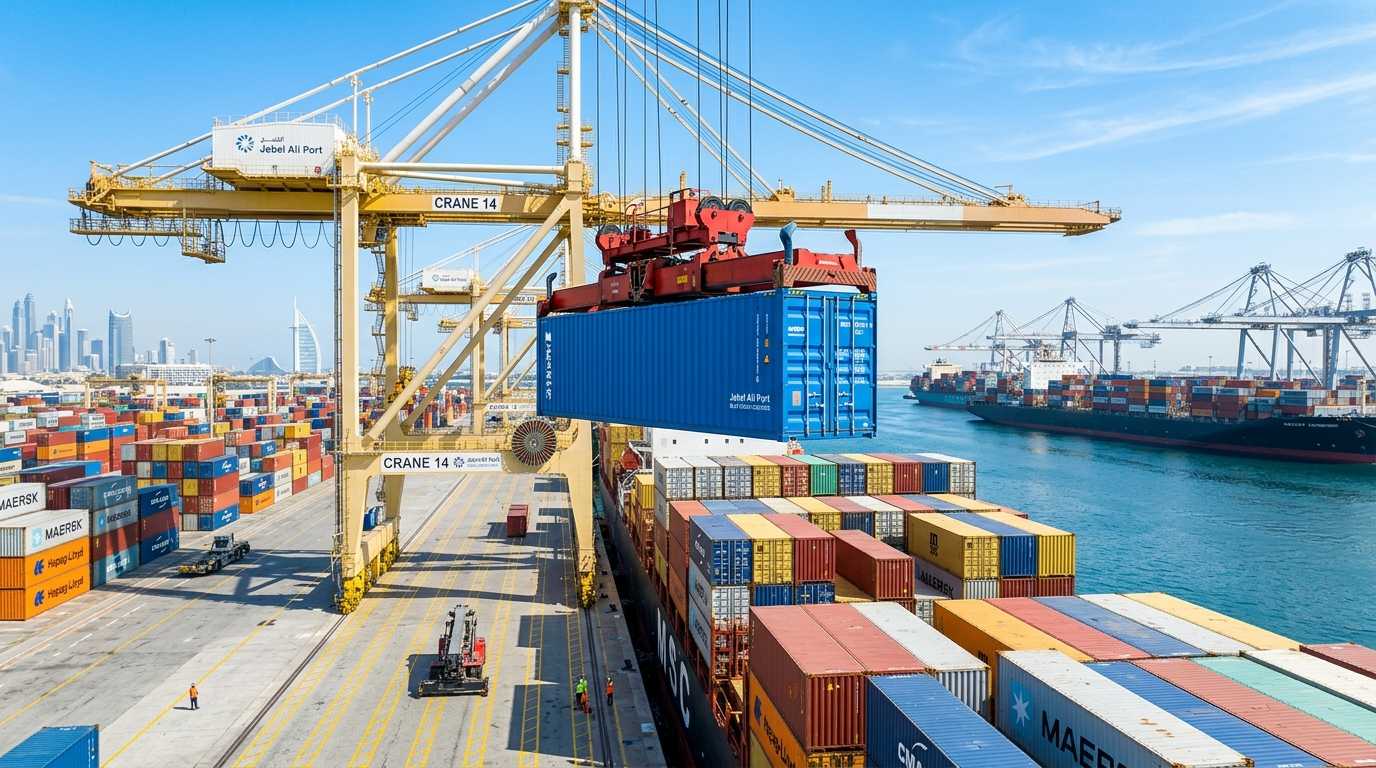
Jebel Ali is the heart of Dubai’s shipping world. It’s one of the biggest and most efficient ports on the planet. When your container arrives there it’s handled by DP World’s massive automated cranes. But look, even with all that tech things can get delayed if your paperwork isn’t perfect. You need a verified gross mass (VGM) certificate and a clear manifest. If the weight on your paper doesn’t match the weight on the crane’s scale the container isn’t going on the ship. Simple as that. This is why cargo services in Dubai are so important. They handle the “ground work” so your container moves smoothly through the gate.
According to the DP World 2023 throughput report, they handled millions of containers with an average turnaround time that beats almost every other port in the region. But they are strict. They have zero tolerance for misdeclared weights or dangerous goods that aren’t properly labeled. If you’re trying to sneak some paint or batteries into a regular container you’re going to get caught and the fines are, well, they are massive. Be honest and you’ll be fast. That’s the street-smart rule.
Packing for Sea Freight: The Stuff They Don’t Tell You
Actually packing for a container isn’t like packing for a move across the street. A container on a ship moves. It tilts, it vibrates, and it deals with humidity. If you don’t use the right “dunnage” (padding) your stuff will slide around like a hockey puck. We use heavy-duty pallets, specialized lashing straps, and “airbags” that fill the gaps between your furniture. This keeps everything tight. If it doesn’t move it doesn’t break. It’s a simple law of physics.
| Factor | FCL (Full Load) | LCL (Shared Load) |
|---|---|---|
| Cost Basis | Flat Rate per Container | Per Cubic Meter (CBM) |
| Transit Time | Fast (Direct to Port) | Slower (Consolidation Time) |
| Security | High (Single Seal) | Moderate (Shared Space) |
| Best For | Large Homes / Businesses | Small Shipments / Boxes |
The Danger of Humidity and Condensation
In a container crossing the ocean the air gets hot and wet. When the sun goes down it cools and the water drops onto your stuff. We call this “container sweat”. It can ruin electronics and moldy fabrics in days. To stop this we use “silica gel” bags and industrial desiccant poles that hang inside the container. They suck the moisture out of the air. If your shipping company isn’t using these for a long-haul trip they don’t know what they’re doing. Demand moisture protection or your stuff might arrive smelling like a swamp.
Understanding Surcharges and Hidden Costs
Look, I’m going to be blunt. The price of the container isn’t the final price. You have “Terminal Handling Charges” (THC), “Bunker Adjustment Factors” (BAF) for fuel, and “Documentation Fees”. Some companies give you a low price then hit you with a three-thousand dirham bill for these extras at the destination. Always ask for an “All-In” quote. This should include everything from your door in Dubai to the port at the destination. This is why professional charter container services are better because they are transparent about the costs. No surprises.
I once saw a guy who was quoted two thousand dollars for a container to India. He thought it was a bargain. But when the container reached Mumbai the port agent there demanded another fifteen hundred dollars in local fees that weren’t mentioned in Dubai. He had to pay or lose his goods. We never do that. We tell you the real cost upfront. It might sound higher at first but it’s the only honest way to do business. Don’t fall for the “cheap” trap.
Customs Clearance and the Manifest
Every item in your container must be on the manifest. If you have “50 boxes of household goods” that is too vague. You need to say “10 boxes of books, 20 boxes of kitchenware, 20 boxes of clothes”. If the customs inspector at the destination finds something that isn’t on the list they might impound the whole container. And look, they have X-ray machines that can see through steel. They know what’s in there. Be specific and be honest and you’ll clear customs in a day. Try to hide something and you’ll be stuck for a month.
Why You Need a Marine Insurance Policy
Look, I’ve said it before and I’ll say it again. You must have insurance. A container ship can carry twenty thousand boxes. Sometimes a crane drops one or a storm hits and containers are lost at sea. It’s rare but it happens. A marine insurance policy covers “Total Loss” and “General Average”. General Average is a weird rule where if the ship is in danger and the captain has to throw some cargo overboard to save the ship everyone on the ship has to share the cost! Even if your container wasn’t the one thrown over you still have to pay. Insurance covers this crazy rule. Don’t skip it.
The Value of Proper Labeling
Actually labeling is more important for LCL than FCL. In a shared container your boxes need to have your name, your destination, and your contact number on every single side. If a label falls off your box is lost in a massive warehouse with thousands of others. We use high-tack waterproof labels and we also write the details in permanent marker on the box itself. It’s a double-backup system. We don’t want your boxes going to London when they should be going to New York. It sounds funny but it happens to disorganized companies every day.
Final Thoughts on Choosing a Container Service
Look, container shipping is the backbone of the world but it doesn’t have to be complicated for you. If you have a lot of stuff get the whole box. If you have a few things share a box. Use a company that knows Jebel Ali like the back of their hand and isn’t afraid to give you the real price. Be honest with your paperwork, pack for the high seas, and always get the insurance. Do those things and your cargo will arrive safe and sound. Now go get those boxes packed!
Frequently Asked Questions
Can I load the container myself at my house?
Yes, we call this a “Live Load”. We bring the container to your villa on a truck and give you 2 or 3 hours to fill it. However we always recommend using a professional team to do the loading. They know how to “interlock” the boxes so they don’t move and they can fit much more into the space than an amateur can. It’s about maximizing every cubic centimeter.
How long does a container take to get to the USA from Dubai?
Usually it takes about 35 to 45 days depending on which port in the US you are going to. New York is faster than Los Angeles because the ship has to go through the Suez Canal and across the Atlantic. There are also “Direct” services and “Transshipment” services. Transshipment means the container is moved to a second ship in a place like Algeciras or Rotterdam, which adds about a week to the trip.
What items am I not allowed to put in a shipping container?
You cannot put anything dangerous or flammable. This includes gas canisters, paint, fireworks, and even some perfumes in large quantities. Also food items are usually not allowed in a “General Purpose” container because they will rot. If you have food you need a reefer. And finally, never put valuables like gold or jewelry in a container. Keep those in your carry-on luggage when you fly.
Is a 20-foot container big enough for a car and furniture?
It’s tight. A car takes up about 15 to 18 cubic meters of space. A 20-foot container has about 30 cubic meters total. So you have about 12 cubic meters left for furniture. This is enough for a small apartment but not a full house. If you want to move a car and a whole house you definitely need a 40-foot container. We can build a “mezzanine” floor over the car to use the vertical space safely.
What happens if my container is selected for a customs exam?
It happens randomly or if the paperwork looks suspicious. The customs officers will open the container and check the contents. You have to pay the “Exam Fee” and any extra storage costs caused by the delay. This is why having a perfect manifest is so important. If they see you were honest they will finish the exam quickly and let the container go. If they find something hidden they will search every single box.