Why You Should Get Professional Packaging Services in Dubai Before You Ship Anything
Planning to send a fragile vase or a piece of expensive tech across the world and worried it’ll arrive in a million pieces? Look, if you are looking for packaging services in Dubai you probably already know that the journey from your door to the destination is a rough one. Your boxes will be stacked, moved by forklifts, and vibrated for hours in a truck or a ship. If you don’t pack them right you’re basically gambling with your stuff. But don’t worry because I am going to show you the street-smart way to pack anything so it survives the trip without a single scratch. Seriously, it’s all about the layers.
Stop Using Cheap Grocery Store Boxes
The biggest mistake people make is using old, thin boxes they found behind a supermarket. Those boxes aren’t designed for international shipping. They’ll collapse as soon as another box is placed on top. You need double-wall corrugated cardboard. It is, well, really the only thing that can handle the weight and the pressure of a long journey. If you use cheap materials you’re just asking for trouble. It’s bad for your stuff and bad for your stress levels.
I remember a guy who tried to ship his entire kitchen set from Dubai to Oman using thin single-wall boxes. He thought he was saving money. But by the time the truck reached Muscat half the boxes had crushed and his plates were all broken. He lost more money in broken dishes than he would have spent on proper boxes and bubble wrap. We stepped in for his next move and used heavy-duty export-grade boxes. Everything arrived perfect. The lesson? Don’t be cheap on the protection. It costs more in the long run.
The Real Secret to Professional Packing
Actually the secret is what happens inside the box. You shouldn’t have any empty space. If things can move they can break. We use “void fillers” like foam peanuts, crumpled paper, or air pillows to make sure everything is tight. If you shake the box and you hear something moving you’re not done yet. It is about creating a solid “nest” for your items. This is how the pros do it and it’s why their stuff arrives safely while others get ruined.
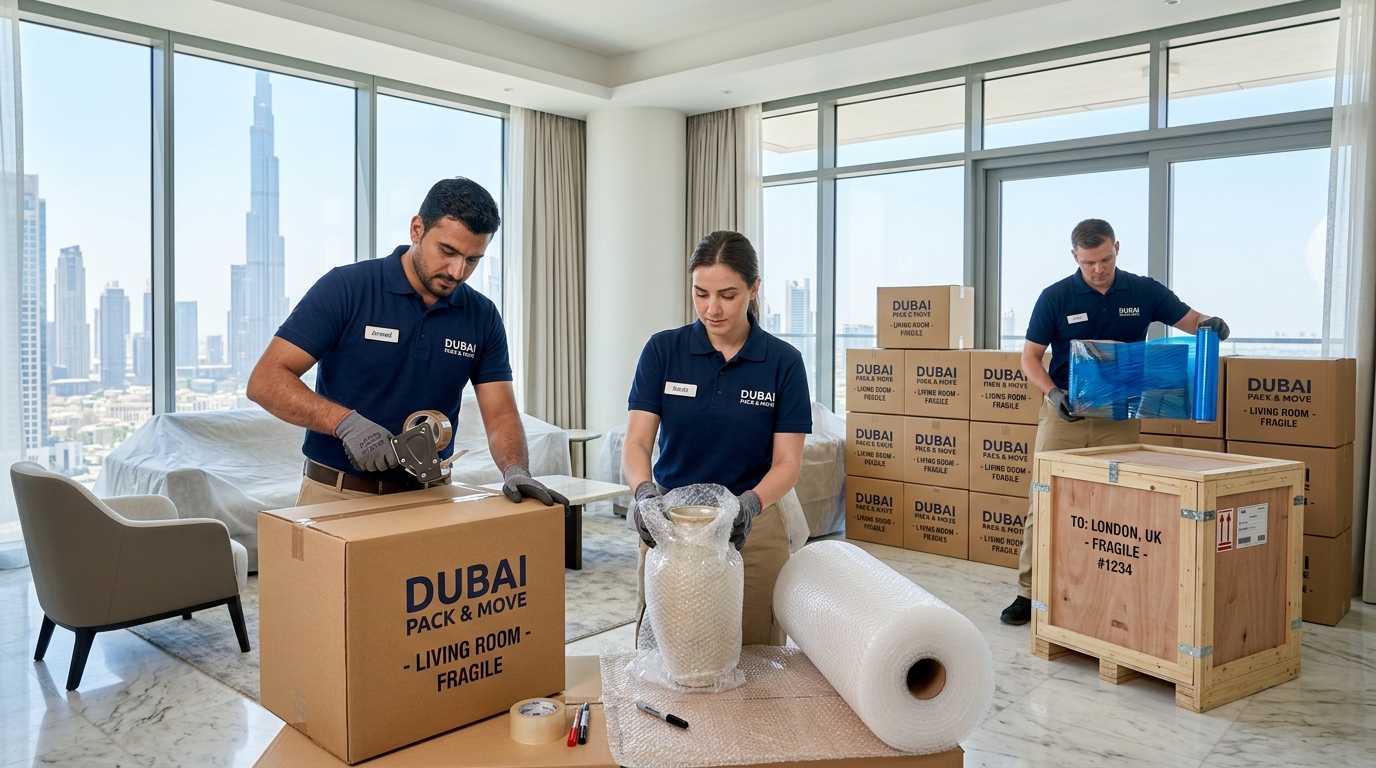
Listen, you should think about the corners too. The corners of a box are the most likely parts to get hit or crushed. We use reinforced corner protectors made of hard plastic or thick cardboard. And for extra heavy items we use “edge guards”. It’s these small details that separate a “moving guy” from a professional packaging expert. If they don’t have a tape gun and a roll of heavy-duty brown tape they are not the right team for the job. You want people who are obsessed with the details.
Essential Materials for Professional Packaging
Don’t let anyone tell you that “a bit of newspaper” is enough. If they don’t have these materials they shouldn’t be touching your valuables. Demand high-quality packing gear every time. It’s your stuff and your money at stake here.
- Double-Wall Corrugated Boxes: The standard for any international or long-distance move.
- Heavy-Duty Bubble Wrap: Use the large-bubble version for better cushioning of heavy items.
- Corrugated Paper Rolls: Great for wrapping large furniture and protecting the finish.
- Stretch Film: Keeps everything tight and protects against dust and the Dubai humidity.
Why Wooden Crating is a Game Changer for Fragile Stuff
If you’re shipping artwork, mirrors, or expensive electronics a cardboard box just isn’t enough. You need a wooden crate. We build custom crates from heat-treated wood that meets international ISPM 15 standards. This means it’s legal for export to any country in the world. A crate acts like a solid cage for your item. Even if a forklift hits it the wood will take the impact and your item stays safe inside. This is why cargo services in Dubai often recommend crating for anything over a certain value. It’s the ultimate peace of mind.
According to the 2024 Global Logistics Safety Report, properly crated items have a 95% lower damage rate compared to items shipped in standard cardboard. That’s a huge difference! If you have a five-thousand dirham painting don’t risk it in a cardboard box. Get a crate. It might cost a bit more but it’s much cheaper than a ruined piece of art. We’ve built crates for everything from delicate chandeliers to massive industrial engine parts. No job is too big or too complex if you have the right tools.
The Art of Palletizing Your Cargo
Actually if you have more than 10 boxes you should put them on a pallet. Why? Because a pallet is easier to move with a forklift. This means the workers are less likely to drop your boxes or handle them roughly. We stack the boxes neatly on a wooden or plastic pallet and then we “shrink wrap” the whole thing into a single solid block. This keeps the boxes from shifting and it also protects the bottom of the boxes from any moisture on the warehouse floor. It’s a very street-smart way to manage a large shipment.
| Packing Type | Best Application | Protection Level |
|---|---|---|
| Standard Box | Clothes and Books | Basic |
| Fragile Wrap | Kitchenware and Small Deco | High |
| Wooden Crating | Art, Glass, and Heavy Tech | Ultimate |
| Palletization | Multiple Boxes / Bulk Goods | Organized & Safe |
Dealing with the Dubai Humidity and Heat
Dubai is a tough place for packing. The heat can melt some types of tape adhesive and the humidity can make cardboard go soft and “soggy”. That’s why we use premium high-tack tape that’s designed for the desert climate. And for items that are staying in storage we always use moisture-absorbent silica bags inside the boxes. If your mover isn’t thinking about the weather they are missing half the problem. We’ve seen boxes collapse just because they were left in a non-AC warehouse for a week. Always plan for the heat.
Why Labels are More Important than You Think
Look, I’m going to be blunt. If your boxes aren’t labeled they will get lost. You need clear, waterproof labels on at least two sides of every box. They should show your name, your destination city, and a box number. You should also have a “Master List” that says exactly what’s in every numbered box. And don’t forget the “Fragile” and “This Side Up” stickers. They might seem simple but they tell the workers how to handle your stuff when you’re not there to watch them. It’s an essential part of the packaging services process.
I once saw a shipment of 50 boxes arrive at a warehouse in Jebel Ali. None of them had labels. The owner had to spend two days opening every single box just to figure out what was what. It was a massive waste of time and money. If he had spent ten minutes on labels he would have been done in an hour. Don’t let laziness ruin your logistics. Label everything. No exceptions.
Preparing Industrial Machinery for Shipping
Actually industrial packing is a whole different level. You have to deal with oil leaks, sharp edges, and massive weight. We use “vacuum packing” for some machines where we suck all the air out of a silver foil bag to prevent any rust during the sea journey. We also use heavy-duty steel strapping to bolt the machine down to a wooden base. If a machine moves during a storm at sea it can break through the side of a container! We make sure that machine isn’t going anywhere. It’s a serious job for serious professionals.
The Importance of a Pre-Packing Survey
Look, don’t trust a company that gives you a quote for packing without seeing your stuff. How do they know if the sofa will fit through the door? Or if the painting needs a custom crate? A pre-packing survey (even a video one) is vital. It allows the team to bring the right amount of materials. There is nothing worse than a packing team arriving and then having to leave halfway through because they ran out of bubble wrap. A professional company avoids that by planning ahead. It’s just good business.
Insurance: Don’t Ship Without It
I’ll say it again. You must have insurance. Even with the best packing in the world things can happen. A truck can get into an accident or a container can fall overboard. If you have “Transit Insurance” you are covered. If you don’t? You’re on your own. Most professional packers will offer you insurance as an add-on. Get it. It’s a small price to pay for knowing your investment is protected. And remember, the insurance company will only pay if the packing was done by professionals. If you pack it yourself and it breaks they’ll likely reject the claim. It’s a hard truth.
The Value of a Trained Packing Team
Actually the materials are important but the people are everything. A good packer is like an artist. They know how to wrap a glass lamp so it’s safe but they also know how to fit it into a box without wasting space. They work fast but they don’t rush. We only use permanent staff who we’ve trained ourselves. We don’t use day-laborers who don’t care about your stuff. Our team takes pride in every box they pack. That’s the real difference you get with a top-tier service. You’re paying for their hands and their heads, not just the boxes.
Final Thoughts on Successful Packaging
Look, packing isn’t just about putting things in boxes. It’s about protecting your memories and your money. If you use the right materials, the right techniques, and the right people your stuff will arrive exactly as it left. Don’t take shortcuts and don’t believe anyone who says “it’ll be fine” with cheap boxes. Demand the best and you’ll get the best results. Now go get that packing list started and let the pros handle the rest!
Frequently Asked Questions
Is it cheaper to pack my boxes myself?
In the short term yes you save on labor. But you will pay for the materials anyway and if anything breaks you won’t be able to claim insurance. Most insurance companies only cover “Professional Packing”. Also if you pack it yourself it will likely take you days and you’ll still use more boxes than a professional would because you aren’t an expert at maximizing the space. Usually it’s better to let the pros do it.
What is ISPM 15 and why do I need it for crates?
ISPM 15 is an international standard for wooden packaging. It means the wood has been heat-treated or fumigated to kill any bugs or pests. If you ship a wooden crate that doesn’t have the ISPM 15 stamp it will be rejected at the border and either destroyed or sent back at your expense. It’s a mandatory rule for almost every country including the UK, USA, Australia, and the EU.
How do you pack expensive oil paintings for shipping?
We never touch the surface of an oil painting with bubble wrap as it can leave marks. First we wrap it in “glassine” paper which is acid-free and won’t stick. Then we add a layer of foam or cardboard on both sides. Finally we put it into a custom-built wooden crate. This protects it from physical hits and also from changes in temperature and humidity during the journey.
Can you pack my whole house in one day?
For a standard 2-bedroom apartment yes our team can usually pack everything in one full day. For a large 5-bedroom villa we usually need two days. We send a team of 4 to 6 people who work systematically through each room. They pack, label, and organize everything so it’s ready for the truck. We don’t like to rush because rushing leads to mistakes.
What should I not pack in my boxes?
Never pack liquids like bleach, oil, or half-empty shampoo bottles. They will leak and ruin everything in the box. Also do not pack perishable food, explosives, or highly flammable items like lighter fluid. And most importantly keep your jewelry, cash, and important original documents (like passports) with you. Do not put those into a shipping box that will be out of your sight for weeks.