Everything You Should Know About Jebel Ali Port Dubai and How Cargo Actually Moves
Ever wondered how that new sofa or car from overseas actually ends up in your living room or driveway? Look, if you’re involved in any kind of trade or moving, Jebel Ali Port Dubai is a name you can’t escape. It is, well, really the heart of the whole region’s economy. But if you think it’s just a place where ships park you are very wrong. It is a high-tech monster that moves millions of boxes every year. If you don’t understand the street-smart way it works you are going to get lost in the paperwork and the delays. Let me show you what actually happens behind those massive blue gates.
Stop Thinking of it as Just a Port
The biggest mistake people make is treating Jebel Ali like a small boat yard. It’s huge. Seriously. It is the largest man-made harbor in the world and the biggest port in the Middle East. If your cargo is coming by sea to the UAE it is almost certainly going through Jebel Ali. You have to treat it with respect or it will swallow your shipment and spit it out weeks later with a massive bill for storage. It is just bad for your business and your sanity.
I remember a client who tried to save a few dirhams by managing his own import of industrial pumps. He didn’t realize that the “Free Time” at the port is very short. He spent three days just trying to find out which terminal his container was in. By the time he got the right papers his free time was up and he had to pay nearly two thousand dirhams in demurrage fees. He was fuming but the port doesn’t care about your feelings. They care about movement. If you aren’t moving you’re paying. The lesson? Use experts who know the layout. It’s the only way to survive.
The Real Secret to Jebel Ali’s Speed
Actually the secret is the automation. Jebel Ali is run by DP World and they have some of the most advanced technology in the world. They have automated cranes that can pick a container off a ship and put it on a truck without a human even touching it. It is fast. But that speed only works if your data is perfect. If your “VGM” (Verified Gross Mass) is wrong by even a few kilograms the crane will stop and your container will be sidelined for a manual check. It is a high-speed system that demands high-speed accuracy.
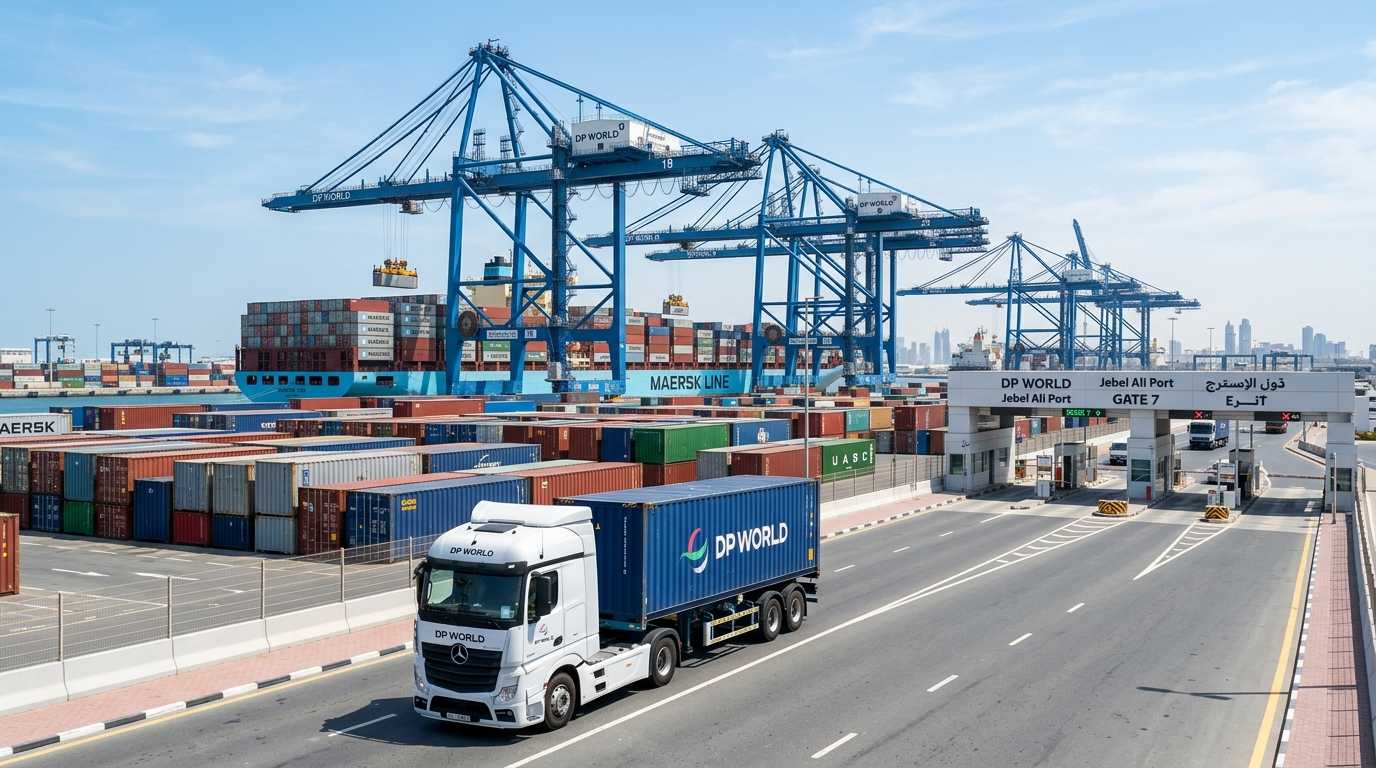
Listen, you should think about the “Gate-In” process too. When a truck brings a container to the port it goes through a scanner and a weight bridge. Everything is logged in the system. If the truck driver doesn’t have the right “Booking Reference” or the seal number is wrong he won’t be allowed in. This is where cargo services in Dubai show their value. They make sure the driver has every single paper ready so they aren’t blocking the gate and wasting time. Time is literally money in this port.
Key Sections of Jebel Ali Port You Need to Know
Don’t get confused by the size. The port is divided into different terminals and specialized areas. Depending on what you are shipping you will be dealing with a specific part of the port. Knowing where your stuff is saves you hours of driving around in the heat.
- Terminal 1: The original terminal, handles a mix of container and general cargo.
- Terminal 2 & 3: The ultra-modern, highly automated terminals for huge container ships.
- Terminal 4: The newest addition, adding even more capacity for the world’s biggest vessels.
- Ro-Ro Terminal: Specifically for cars and anything with wheels that can be “rolled” on and off.
- General Cargo: For the weird-shaped stuff like pipes, steel, and massive machines.
How JAFZA and the Port Work Together
Actually you can’t talk about the port without talking about JAFZA (Jebel Ali Free Zone). It is a massive industrial area right next to the port. If you have a business there you don’t pay customs duty on goods that are staying in the zone or being exported. It’s a massive advantage for international traders. But look, as soon as that stuff crosses the gate into “Mainland” Dubai you have to clear customs and pay the 5% duty. It’s a smart setup but it needs careful management or you’ll get hit with fines for “smuggling” even if it was just a simple mistake.
According to the DP World 2023 annual review, the port handled over 14 million TEUs (Twenty-foot Equivalent Units). That is a staggering amount of boxes. The coordination between the port and the free zone is what makes Dubai a global trading hub. This is why sea freight services are so central to everything here. They act as the bridge between the high-speed port operations and your warehouse. They know how to pull a container out of the port and get it to your door before the “Free Time” expires.
The Journey of Your Container Through the Port
What actually happens when the ship docks? First the “Gantry Cranes” unload the containers and put them on “Straddle Carriers” or automated guided vehicles (AGVs). These take the box to the “Container Yard” where it’s stacked in a specific spot based on its destination or its owner. If your container is at the bottom of a stack of five it takes time to dig it out. This is why you can’t just show up and expect your box in five minutes. There is a whole mechanical dance happening 24/7.
| Process Step | Time Estimate | Main Requirement |
|---|---|---|
| Unloading from Ship | 2-4 Hours | Correct Stowage Plan |
| Customs Inspection | 2-24 Hours | Perfect Manifest |
| Loading onto Truck | 1-2 Hours | Validated Booking Reference |
| Gate-Out Process | 15-30 Minutes | Clearance of Port Dues |
The Reality of Customs Exams at Jebel Ali
Don’t be scared of customs but don’t be lazy either. They have X-ray scanners that can see through your whole container in seconds. If they see something that doesn’t match the paperwork they will order a “Physical Exam”. This means they open the box and look inside. If they find one thing wrong they might search every single box. It’s slow and it’s expensive because you have to pay the laborers for the manual work. I’ve seen a whole shipment of toys delayed for two weeks because the owner tried to hide a few boxes of branded shoes. It was a stupid move that cost him his profit. Be honest and the system works for you.
Why Jebel Ali is a Hub for Re-Export
Look, many people use Jebel Ali as a “transshipment” point. This means the cargo comes from China on a huge ship, gets unloaded at Jebel Ali, and then gets put on a smaller ship to go to Kuwait, Iraq, or East Africa. Dubai is the perfect middleman. The port has the depth to handle the biggest ships in the world and the local logistics companies have the “feeder” networks to get the stuff to smaller ports. It is a massive operation that keeps the world’s trade moving. If you’re a global trader Jebel Ali is your best friend.
I once worked with a client who was shipping construction materials to Kenya. We used Jebel Ali to “consolidate” his cargo. He bought different items from India, China, and Germany. They all arrived at Jebel Ali, we put them into one single 40-foot container in a JAFZA warehouse, and then shipped it to Mombasa. It saved him nearly 30% on his shipping costs because he wasn’t paying for multiple half-empty containers. That is the street-smart way to use the port’s unique position. It is all about the consolidation.
Dealing with Hazardous Goods (DG Cargo)
Don’t even try to sneak a battery or a can of paint into a regular container. Jebel Ali is extremely strict about “Dangerous Goods”. You need special labels, a special declaration, and often your container has to be stacked in a “DG Yard” far away from other cargo. If you get it wrong the penalties are, well, they are massive. And I’m not just talking about money. You could face criminal charges for endangering the port. Always check the IMO classes and make sure your lashing is perfect. No chances taken here.
The Importance of “Free Time” and How to Manage It
Look, I’m going to be blunt. The port is not a warehouse. They give you a few days (usually 3 to 7) to get your container out. After that they start charging you by the day and the price goes up every day. If you leave it for a month you might end up paying more in port storage than the cargo is worth! We always start the clearance process while the ship is still at sea. This is what we call “Pre-Clearance”. By the time the container hits the ground the papers are already signed and the truck is waiting. It is the only way to avoid those nasty storage bills.
The Role of the “Clearing Agent”
Actually you can’t just walk into the port and take your box. You need a licensed clearing agent. They are the ones who have the digital tokens and the access codes to the DP World systems. They talk to the customs and they pay the port dues on your behalf. A good agent is worth their weight in gold because they know the shortcuts. They know which office is faster and which clerk is more helpful. If your agent is slow your cargo is slow. Simple as that. Pick someone with a long history at the port.
Final Thoughts on Mastering Jebel Ali Logistics
Look, Jebel Ali Port is a world-class facility but it’s also a busy and strict environment. If you’re organized, your papers are clean, and you use the right local experts it’s a dream to work with. Don’t take shortcuts, don’t guess your weights, and always keep an eye on your “Free Time” clock. If you follow those simple rules you’ll be moving cargo like a pro in no time. Now go get that manifest ready and let’s get that ship docked!
Frequently Asked Questions
What is a TEU and why does Jebel Ali use it?
TEU stands for “Twenty-foot Equivalent Unit”. It is the standard measure of a container’s size. A 20-foot container is 1 TEU and a 40-foot container is 2 TEUs. Jebel Ali uses this to measure its capacity and its performance. When you hear that the port handled 14 million TEUs it means they moved the equivalent of 14 million 20-foot boxes in a single year. It is a massive number!
Can I visit Jebel Ali Port to see my cargo?
Generally no. The port is a high-security area and you need a special ROP (Restricted Occupancy Permit) to enter. Only licensed truck drivers and port staff are allowed inside the container yards. If you want to see your cargo you should wait until it has cleared customs and been moved to a warehouse in JAFZA or the mainland. It is much easier and safer that way.
How do I track my container at Jebel Ali?
You can use the DP World “Zodiac” or “Cargo Tracking” portal. You just need your container number (e.g., ABCD1234567) or your Bill of Lading number. It will show you if the ship has arrived, if the container has been unloaded, and if it is ready for collection. Most professional logistics companies will provide you with these updates automatically so you don’t have to check yourself.
What is “Demurrage” and “Detention”?
These are two different types of late fees. Demurrage is what you pay to the port for keeping the container in the yard longer than the “Free Time”. Detention is what you pay to the shipping line (the owners of the box) for keeping the physical container for too long after it has left the port. Both are expensive and you should avoid them by being fast with your loading and unloading.
What happens if a container falls off a ship at the port?
It is very rare but it happens. The port has specialized salvage teams to handle it. This is why you must have marine insurance. Even if it’s the port’s fault getting the money back can be a long legal battle. If you have insurance your insurance company pays you immediately and then they fight the port for the money. It is a much better situation for your business cash flow.