Everything You Should Know About Car Shipping from UAE to Europe – A Complete Guide
Got a luxury sedan or a classic SUV that you want to bring back to the streets of Berlin, Paris, or Madrid? Look, if you’re dealing with car shipping from UAE to Europe you know it is one of the most high-value and detail-oriented logistics moves you’ll ever make. Europe is a massive market with strict safety and environmental standards, and the process of getting your car from the Dubai desert to the European roads can be a real headache if you’re not prepared. But don’t worry because I am going to show you the street-smart way to manage your vehicle so it clears the border without the drama. Seriously, it’s all about the shipping method.
Stop Guessing with European Customs and Taxes
The biggest mistake people make is not knowing about the “Duty and VAT” rules and the “Returning Resident” exemptions. If you’re shipping a car for commercial reasons you’ll have to pay a 10% import duty and a VAT that ranges from 17% to 25% depending on the European country. It is, well, really a system that has zero tolerance for lack of preparation. However, if you’re a European citizen moving back home after living in the UAE for at least twelve months and you’ve owned the car for at least six months you can often import it duty-free and VAT-free. Without the right papers to prove your residency and ownership you’ll be hit with a massive tax bill. Don’t take chances. It’s bad for your wallet and your peace of mind. It is just not worth the risk.
I remember a client who was shipping a high-end Porsche from a showroom in Dubai to his new home in Munich. He thought his standard export papers would be enough. When the car reached the Port of Bremerhaven the customs held it because he didn’t have the “De-registration” certificate from the RTA in Dubai verified correctly. The car sat in the port warehouse for fifteen days while he scrambled to get the documents from the UAE. He ended up paying thousands in storage fees and his road registration in Germany was delayed by weeks. The lesson? Always use a professional car shipping from UAE to Europe specialist who knows the RTA and EU Customs rules inside out. Trust the pros.
The Real Secret to Choosing Between RORO and Container Shipping
Actually the secret is in the value of the car and the final destination. RORO (Roll-on/Roll-off) is the cheapest way to ship a car. Your car is driven onto a specialized ship and parked in a massive deck. It’s great for standard cars and SUVs. But if you have a luxury, classic, or high-value sports car you should seriously consider “Container Shipping” (FCL). Your car is secured inside a 20-foot or 40-foot container, protected from the elements and potential scratches. Many people just pick RORO because it’s cheap and don’t realize that for a high-value vehicle the extra protection of a container is worth every dirham. This is where cargo services in Dubai with real automotive experience show their value. They pick the right method for your car’s needs.
Listen, you should think about the port of entry too. Bremerhaven (Germany), Rotterdam (Netherlands), and Antwerp (Belgium) are the main hubs for North and Central Europe. They are fast and have the best infrastructure for car handling. If your car is going to the South of France or Spain you should consider the Port of Barcelona or Genoa. Picking the right port can save you hundreds of Euros in inland trucking costs. It’s the street-smart choice for anyone who wants their car delivered fast and safe. No one wants their car being trucked across the entire continent when it could have landed closer to home.
Key Ports and Transit Times for Cars to Europe
Don’t just pick a port because it’s famous. You need to consider the current situation at the European car terminals and the trucking links. A professional logistics provider will give you the real-world ETAs based on the current “Ground Reality” in Europe.
- Bremerhaven (Germany): 25 to 35 days transit. The main hub for Germany and Central Europe.
- Rotterdam (Netherlands): 28 to 38 days. The gateway to the Benelux and beyond.
- Antwerp (Belgium): 28 to 38 days. Specialized in vehicle handling and storage.
- Barcelona (Spain): 22 to 30 days. The best gateway for the Mediterranean South.
Understanding the “COC” and Technical Compliance
Europe has very strict safety and environmental standards. Before you can register your car and get your plates you’ll need a “Certificate of Conformity” (COC) or a technical approval from a local authority like the TÜV in Germany or the IVA in the UK. Many cars sold in the UAE have “GCC Specs” which might differ from European specs in terms of lights, emissions, or glass. You might need to make small modifications to your car before it can pass the inspection. Get a technical report before you ship. It’s a simple step that saves a massive headache and potentially thousands of Euros in unexpected modification costs. A professional car shipping partner will guide you through this technical maze.
According to the 2024 EU Automotive Trade Update, the transition to Euro 6d emissions standards has made it tougher to import older used cars. If your car is more than ten years old you need to check if it’s even legal to register it in your specific European city. Some cities have “Low Emission Zones” that might ban your car entirely. Be street-smart and check the local rules of your final destination before you book the ship. We want you to be driving your car, not looking at it in a garage because it can’t be registered. It’s the small details that make the difference.
Why Jebel Ali is the Hub for Global Car Exports
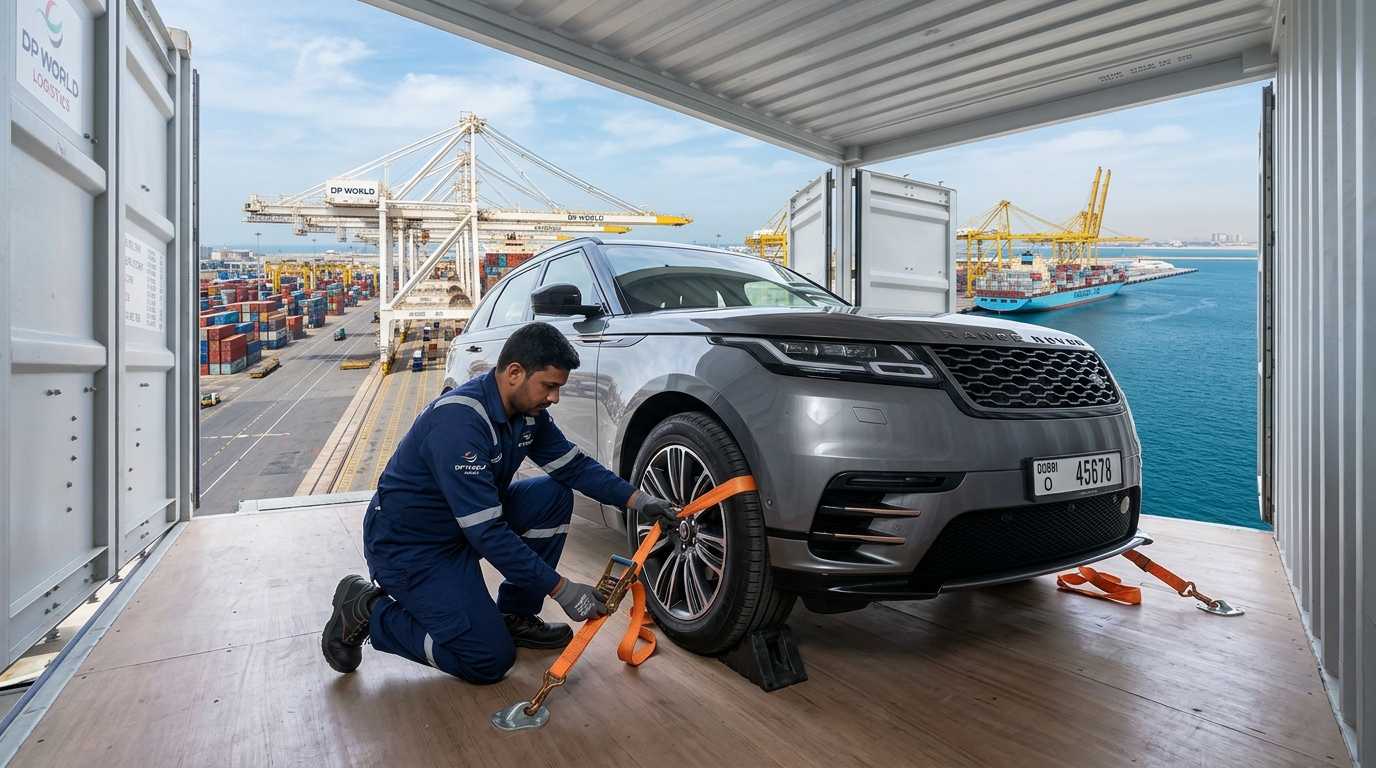
Most car shipping from Dubai to Europe starts at Jebel Ali Port. The port has world-class facilities for both RORO and container loading. If you’re using a container we make sure the car is lashed and blocked using high-grade industrial straps and wheel chocks. We also disconnect the battery and keep the fuel tank at less than a quarter for safety. No one wants a car moving inside a container during a storm in the Mediterranean. We treat every car like it’s a masterpiece, because for you, it is. We use the best materials to ensure your vehicle survives the journey perfectly.
| Service Type | Transit Time | Main Gateway |
|---|---|---|
| RORO Shipping | 25-35 Days | Bremerhaven / Antwerp |
| Container (FCL) | 28-40 Days | Rotterdam / Hamburg |
| Air Freight (Luxury) | 3-5 Days | Frankfurt / London (LHR) |
| Inland Trucking | 2-7 Days | Door-to-Door (EU wide) |
The Reality of Shipping Personal Cars to Europe
Actually we move hundreds of cars for families moving back to Europe every year. If you’re a returning resident the tax savings can be huge (often over 30% of the car’s value). But look, you need a mountain of paperwork: original invoice, RTA export certificate, proof of insurance in the UAE for the last six months, and proof of your new residency in Europe. If you miss one document the customs will assume it’s a commercial import and they’ll charge you full tax. Be honest and be organized. Try to hide the car’s true value and the customs will find the current market price in their system. Be street-smart and play it straight. That’s the only way to save money on the move.
Packing and Protecting Your Car for the Sea Trip
Actually protecting your car is about more than just a box. It’s about moisture and security. The sea air is salty and humid, which can be tough on the paint and the interior. For high-end cars we always recommend a “Moisture-Absorbent” cover or silica gel packs inside the cabin. If you’re using a container we block the wheels with specialized wooden blocks and use heavy-duty nylon straps. We want your car to arrive in Europe exactly as it left the UAE. No scratches, no salt damage, no drama. That’s the street-smart rule of car shipping. We don’t take shortcuts when it comes to your vehicle’s safety. We treat it with the respect it deserves.
I remember a shipment of a classic 1970s Mercedes going from a collector in Dubai to a garage in Milan. We used a specialized 20-foot container with extra padding and moisture-control units. Even with the three-week sea trip and the handling at the port the car arrived in perfect condition. The collector was thrilled and the car was ready for the Italian vintage rallies. It wasn’t a miracle; it was just better planning and better protection. If you care about the car you have to care about how it’s secured. That’s the real value of a professional automotive logistics service.
Understanding the “Landed Cost” in Euros (EUR)
Look, I’m going to be blunt. The price in Dirhams is just the start. When the car lands in Europe you’ll have to pay the “Terminal Handling Charges”, the “Unloading Fees”, the “Customs Clearance Fee”, and potentially the “Duty and VAT”. If your car needs modifications you’ll also have the “Workshop Fees” and the “Inspection Costs” (TÜV/IVA). This is why we always recommend a transparent quote that includes all the port fees. This means the Dubai company manages the European side too. It’s much safer and more transparent for your budget. No one likes a surprise bill at the port of Rotterdam.
The Importance of a Fast Clearing Agent in Bremerhaven
In Europe the customs process is all about the paperwork and the technical check. If you use a random agent you found online you’re going to have a hard time. We only work with agents in Bremerhaven, Rotterdam, and Barcelona who specialize in cars. They know the inspectors, they know the latest rules for GCC-spec vehicles, and they can solve problems in minutes that would take others days. This is the ultimate “street-smart” move for car shipping. Having the right person at the port is more important than having the biggest ship. Trust the relationship and you’ll save a lot of stress.
The Value of Marine Insurance for Vehicles
Look, it’s a 6,000 kilometer journey by sea. Things can happen. A container can be damaged by a crane or a rough storm in the Bay of Biscay can be brutal. You must have “All-Risks” marine insurance for your vehicle. Don’t settle for the basic “Total Loss” cover. You want a policy that covers scratches, dents, and even interior damage during transit. Most professional car shippers in Dubai will provide you with a certificate that is recognized by European insurance companies. It’s a small price to pay for total peace of mind while your car is on the water. Don’t risk your investment to save a few dirhams.
Final Thoughts on Mastering European Car Logistics
Look, car shipping from UAE to Europe is a great way to keep the vehicle you love. The routes are reliable, the technology is getting better, and the tax exemptions for returning residents are very generous. Be honest with your paperwork, pick the right shipping method for your car’s value, and always use a company that knows the “street talk” of the European automotive world. Do that and you’ll be driving on the Autobahn or the French Riviera before you know it. Now, let’s get those RTA export certificates and EU customs filings ready!
Frequently Asked Questions
Can I ship my car to the UK from Dubai?
Yes, but since Brexit the rules are slightly different from the EU. You’ll need to deal with the HMRC and the DVSA for registration. The UK has a very established process for importing cars from the UAE, especially through the Port of Southampton or London Gateway. You can often get “TOR” (Transfer of Residence) tax relief if you’re moving your home. Always talk to a UK-specific car shipping specialist first.
How much fuel should be in the car for shipping?
For safety reasons shipping lines require the car to have very little fuel—generally less than a quarter of a tank. If the tank is full they might refuse to load the car or they will charge you for draining it at the port. This applies to both RORO and container shipping. It’s a safety rule to minimize the risk of fire on the ship.
What is the “COC” exactly?
COC stands for Certificate of Conformity. It is a document issued by the car manufacturer that proves the vehicle meets the technical standards required for the European market. If your car was manufactured for the GCC market it might not have an “EU COC”. In that case you’ll need an individual technical inspection (like an IVA in the UK or a Vollgutachten in Germany) to get it registered.
Is it better to ship a car in a shared or private container?
A private 20-foot container is the safest but most expensive. A “Shared Container” (Consolidation) is a great middle ground. You share a 40-foot container with one or two other cars. It’s cheaper than a private container but still offers the same protection from the elements. Most people with premium cars choose this option for the best balance of cost and security.
How do I register my Dubai car in Europe?
Once the car is cleared by customs you’ll need to take it to a local technical station for inspection. You’ll need your original registration, the customs clearance document, and proof of local insurance. Once it passes the inspection you can take the papers to the local vehicle registry (like the DMV in the US or the Zulassungsstelle in Germany) to get your local plates and logbook.
After you’ve navigated the complexities of car registration in a new country, you might also want to ensure your travel plans are equally smooth. For the best options when booking flights, consider exploring the best OTA for flights that prioritize price accuracy and safety, making your journey hassle-free.