The Hypebeast’s Protocol: How to Move Your Collection of Designer Sneakers
Listen up. I have a sneaker room in my villa in Al Barari that is worth more than my car. I have original 1985 Jordans, Off-White collabs, and Yeezys that have never touched a sidewalk. When a moving company tells me they will “just put the shoes in a big box,” I want to ban them from the premises. Sneakers are not just footwear; they are assets made of delicate leather, suede, and aging rubber. If you don’t follow a strict atmospheric and structural protocol for move your designer sneakers, you will end up with creased toe-boxes, yellowed soles, and crushed original packaging that wipes 40% off the resale value. You cannot move a hypebeast collection like you move a rack of clothes.
Last year, a friend of mine moved to the Marina. He let the movers stack ten pairs of his high-end sneakers in a single massive cardboard box. The weight of the top shoes crushed the original boxes of the bottom ones. In the Dubai heat, the glue on one of his deadstock pairs started to soften and seep out, sticking to the inside of the box. When he finally opened them, the original packaging was ruined and the suede was stained. He lost 15,000 Dirhams in resale value in one afternoon. Total sneaker-head tragedy.
You have to be obsessive. Let me show you the exact multi-layered defense strategy for a high-value sneaker move.
The Original Box Mandate
If you threw away the original boxes, you’ve already lost the game.
The Double-Box Strategy
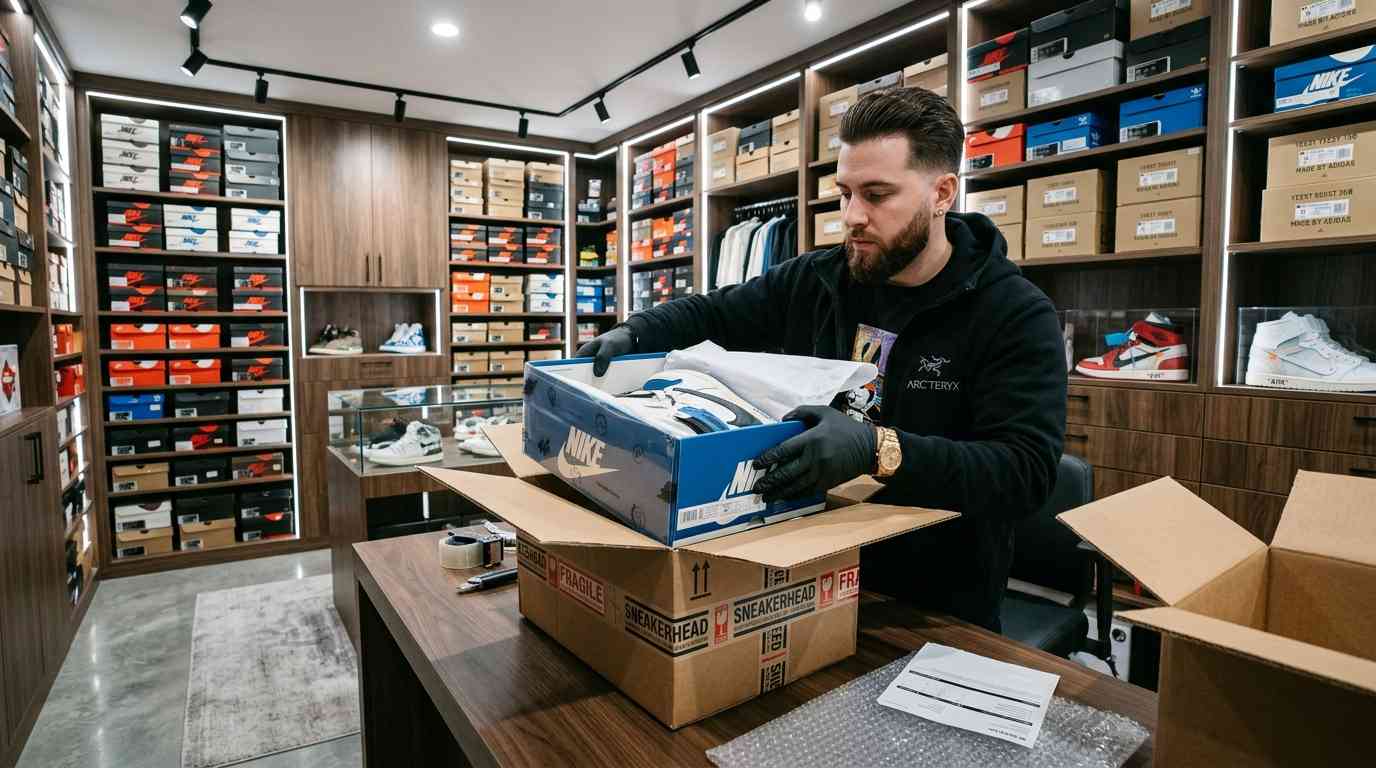
The original brand box is the most important part of the asset. You never, ever let tape or labels touch the original box. You must wrap the original sneaker box in acid-free tissue paper, then place it inside a slightly larger, specialized ‘shipping box.’ The gap between the two boxes should be filled with bubble wrap or packing peanuts. This ensures that even if the outer box is crushed or dropped, the original packaging remains in ‘mint’ condition. This is how the big resellers do it, and it’s the only way to move a collection across the city.
The Atmospheric Threat
Heat and humidity are the silent killers of rubber and glue.
The Silica Gel Rule
Dubai’s humidity can cause mold to grow on leather and suede inside a sealed box in under 48 hours. Before you seal each sneaker box, you must include a fresh 10g silica gel packet. This absorbs any trapped moisture. Furthermore, your collection must travel in a climate-controlled vehicle. If your sneakers sit in a 50-degree moving truck for four hours, the glue that holds the soles together will literally start to melt and separate. If your movers don’t have an air-conditioned truck, your high-end collection stays in your personal car.
If you have an elite collection of footwear and want a team that understands the paranoia of moving high-value assets without a single crease, check out our Lifestyle and luxury goods relocation division. We are the best movers and packers in UAE because my crew treats your Jordan 1s like they are museum artifacts.
The Toe-Box Preservation
Don’t let the weight of the move ruin the shape of your shoes.
The Cedar Shoe Tree Protocol
Never move a sneaker empty. You must use high-quality cedar shoe trees or, at the very least, original cardboard inserts or crumpled acid-free paper to maintain the shape of the toe-box. During a move, boxes get shifted and stacked. If there is pressure on the front of the shoe and there is no internal support, you will get permanent ‘creasing’ that even a professional cleaner can’t fix. A creased toe-box is the difference between a ‘Grade A’ and a ‘Grade C’ asset.
Essential Designer Sneaker Moving Checklist
| Hypebeast Requirement | The Practical Truth |
|---|---|
| Double-Boxing Everything | Protects the original brand packaging from tape, labels, and crushing. |
| Acid-Free Tissue Paper | Standard tissue paper has acids that will yellow white leather and soles over time. |
| Fresh Silica Gel Packets | Essential for absorbing Dubai humidity and preventing mold growth inside the box. |
| Climate-Controlled Transit | Prevents high heat from melting the glue and causing sole separation. |
| Internal Support (Shoe Trees) | Maintains the structural integrity of the toe-box against pressure and stacking. |
Frequently Asked Questions
Should I clean my sneakers before the move?
Yes. Any dirt, sweat, or salt from the Dubai pavement left on the shoe will set into the material during the move, especially in a warm truck. Give every pair a professional deep-clean (I recommend a specialized sneaker laundry service) at least 48 hours before packing so they are bone-dry when they go into the box.
Does moving insurance cover sneaker resale value?
Almost never. Standard moving insurance covers the ‘replacement value’ of a pair of shoes, which they will calculate at the original retail price (e.g., 200 Dollars). They do not care that your limited-edition collab is now worth 2,000 Dollars on StockX. You must obtain a ‘high-value asset’ rider for your insurance policy and provide a certified appraisal of the collection before the move.
How many boxes can I stack on top of each other?
If you are using the double-box strategy, you can safely stack up to five high. If you are just using the original brand boxes, you should never stack them at all. The cardboard used by Nike and Adidas is not designed for vertical load. The bottom box will invariably buckle, ruining the packaging and the shoes inside.
Can I use plastic ‘drop front’ sneaker boxes for moving?
They are great for storage, but risky for moving. Most of these plastic boxes are brittle. If the moving truck hits a bump, the plastic can crack or the doors can pop open, spilling your shoes. I always recommend moving the shoes in their original cardboard packaging, then setting up your plastic display wall at the new house.
Should I use shrink-wrap on my sneaker boxes?
resellers often shrink-wrap the original boxes to keep them ‘deadstock’ clean. This is fine for moving, but you must ensure you don’t wrap them too tight, as the tension can cause the cardboard box to warp. Also, ensure there is a silica gel packet inside the shoe before you seal it in plastic.