The uncompromising Guide to Safely Pack Fragile Antiques for Ocean Freight
Are you terrified of moving overseas and wondering how to safely pack fragile antiques without them turning to dust in a shipping container? Here is the exact, professional protocol for crating and protecting high-value heritage pieces against the violent reality of international sea freight.
Moving a modern IKEA sofa across the ocean is easy. Moving a 200-year-old French armoire or a delicate Ming vase is a high-stakes military operation. Standard moving techniques will destroy antiques. Ocean freight is violent. The ship pitches and rolls in heavy seas. The massive gantry cranes slam the containers onto the docks. If your antique is wrapped in thin cardboard, the vibration alone will shake the delicate joints apart before the ship even crosses the equator.
Last year, an expat moving from Dubai to London tried to ship an inherited 19th-century grandfather clock. He let standard movers wrap it in bubble wrap and put it in the back of the sea container. He didn’t ask for custom crating. During a rough storm in the Mediterranean, a heavy box of books shifted and fell directly onto the clock. The intricate mahogany casing was smashed, and the delicate internal mechanics were crushed. A priceless family heirloom was destroyed because he wanted to save 1,000 Dirhams on a wooden crate. Total disaster.
You cannot cut corners with antiques. Let me show you how the professionals actually secure these items.
The Absolute Necessity of Custom Wooden Crating
Cardboard is useless against the crushing weight of a shifting sea container. If you own a true antique, you must demand a bespoke wooden crate.
The Measurement and Build
Professional fine art and antique movers will visit your home days before the move. They measure the exact dimensions of your antique cabinet, mirror, or sculpture. They return to their warehouse and build a solid plywood crate specifically engineered for that exact item. It is a completely customized box.
The Suspension System
A strong box is not enough. If the antique rattles inside the strong box, the vibration will destroy the fragile wood joints. Inside the wooden crate, the movers install high-density, shock-absorbing foam blocks. The antique is suspended securely within this foam matrix. When the crane slams the container onto the dock, the wood crate and the foam take the impact. The antique inside experiences zero shock.
Protecting the Surface and the Finish
Ocean containers are subject to massive temperature fluctuations and intense humidity. This “container rain” will ruin old varnish and rust delicate metals.
The Danger of Bubble Wrap on Wood
Never let a mover put standard plastic shrink wrap or bubble wrap directly against the surface of antique wood or oil paintings. The plastic traps moisture. In the heat of the container, the trapped moisture will cause the wood to “sweat,” lifting the 100-year-old veneer or causing the varnish to turn a cloudy, milky white. It ruins the piece.
The Acid-Free Wrap
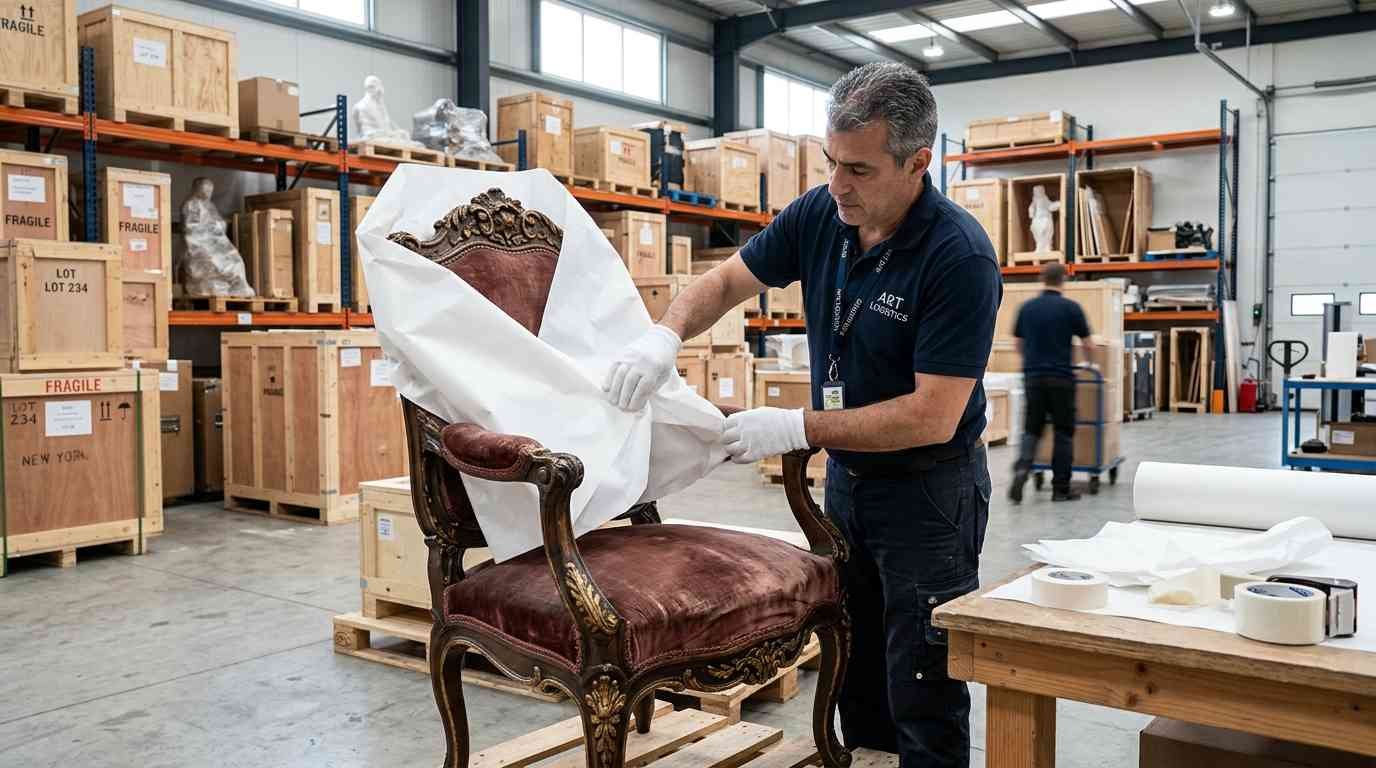
The first layer touching any antique must be breathable. Professionals use acid-free glassine paper, Tyvek wrap, or thick 100% cotton moving blankets. This protects the surface from scratching while allowing the wood to breathe. Only after the breathable layer is applied do they use bubble wrap or thick corrugated cardboard to provide shock protection on the corners.
If you want a logistics team that understands the chemistry of antique preservation, explore our Home Improvement and specialty packing division. We are the best movers and packers in UAE because our crews are trained specifically in fine art handling.
Handling Delicate Mechanics and Glass
Antiques with moving parts or glass panels require extreme micro-management.
Grandfather Clocks and Mechanical Items
You cannot just put a grandfather clock in a box. The heavy pendulum and the delicate weights must be completely removed by a professional clockmaker before the move. If you leave the pendulum swinging inside the clock during a 30-day ocean voyage, it will literally batter the internal mechanism to pieces. The pendulum and weights are wrapped separately and packed in their own secure box.
Antique Glass and Mirrors
Antique glass is brittle and cannot handle the flexing of a moving truck. Do not just tape an “X” across the glass. The entire glass surface must be covered in specialized glass-masking tape or foam board. The frame itself must then be custom-crated so that zero pressure is applied to the center of the glass during transit.
Essential Antique Packing Checklist
| Crucial Protocol | Why It Protects Your Heirloom |
|---|---|
| Demand Custom Wooden Crates | The only defense against the crushing weight of a shifting sea container. |
| Never Use Direct Plastic Wrap | Trapped moisture will cause antique wood veneer to peel and varnish to cloud. |
| Use Acid-Free Glassine Paper | Allows the antique to breathe while protecting the fragile surface finish. |
| Remove Pendulums/Weights | Prevents internal swinging parts from destroying delicate antique clock mechanics. |
| Secure Fine Art Insurance | Standard weight-based moving insurance will not cover the true value of an antique. |
Frequently Asked Questions
Do I need a special export permit for antiques?
It depends on the country of origin and the age of the item. Many European and Middle Eastern countries have strict cultural heritage laws. If an item is over 100 years old or holds significant historical value, you may need an official export license from the Ministry of Culture before customs will allow it to leave the country.
Should I clean or oil my antique furniture before packing?
No. Do not apply any heavy oils, waxes, or chemical cleaners before packing. The chemicals can react poorly with the packing materials in the high heat of a shipping container. Simply dust the item lightly with a dry microfiber cloth.
Will standard moving insurance cover my antiques?
Absolutely not. Standard moving liability pays by the kilogram. If a 10-kilogram Ming vase shatters, they owe you 20 dollars. You must purchase specific “All Risk” marine transit insurance and provide an official, professional appraisal of the antique’s value before the move begins.
Can I pack smaller antique items myself?
You can, but you shouldn’t. If you pack the box yourself (known as Packed By Owner, or PBO), the insurance company will almost certainly deny any claim for breakage, blaming your amateur packing methods. Always let the professionals pack the high-value boxes.
What is “container rain”?
When a steel shipping container moves from a hot climate (like Dubai) to a cold climate (like London), the rapid temperature change causes condensation to form on the inside roof of the container. This water drips down onto the boxes. Proper export wrapping protects your antiques from this inevitable moisture.