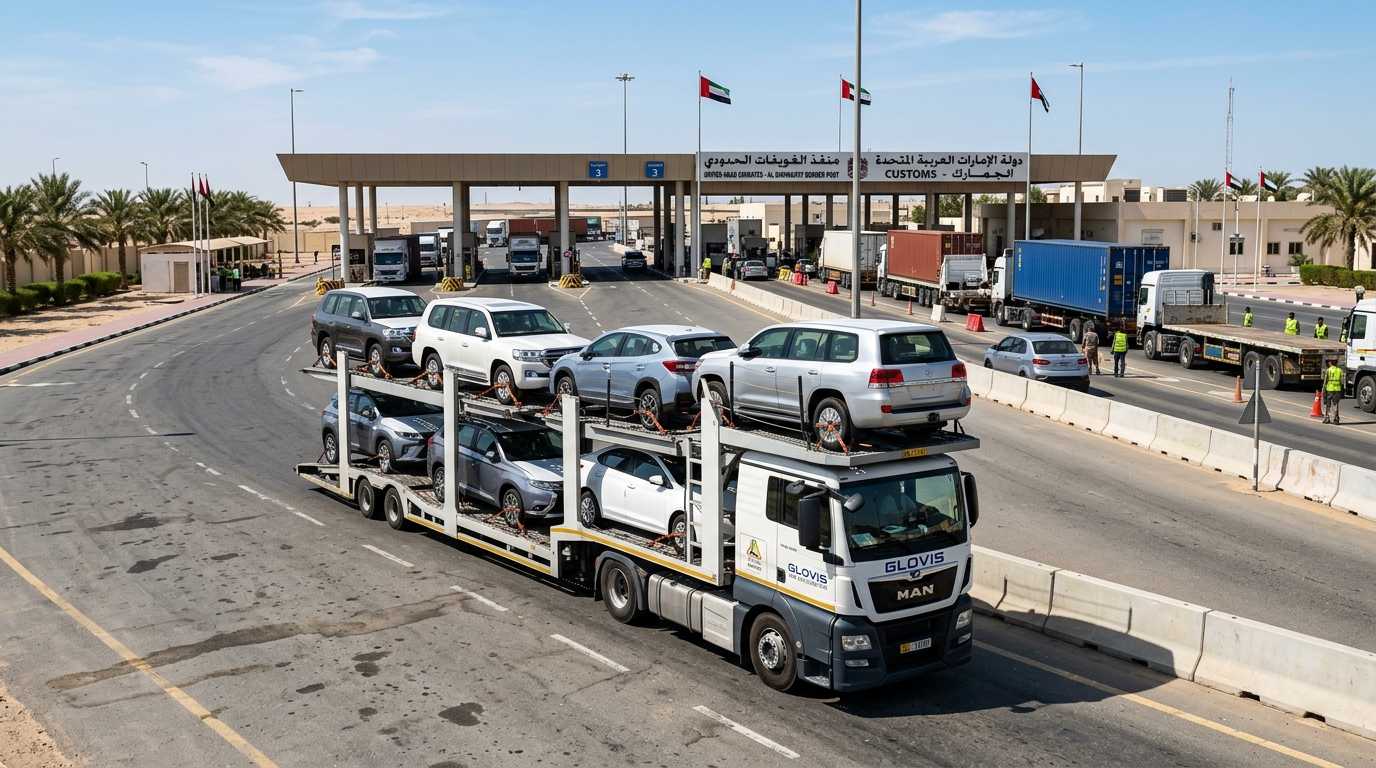
Car Shipping from Dubai to Qatar – The Route, the Documents, and What Actually Takes Time
Shipping a car from Dubai to Qatar is not as straightforward as shipping to Saudi Arabia or Oman because Qatar doesn’t share a direct land border with the UAE. Every vehicle going by road from Dubai to Doha passes through Saudi Arabia. That means two border crossings, Saudi transit rules, and coordination between three countries. It’s doable, but you need to know the process before you book.
Our team has moved dozens of vehicles from Dubai to Doha and Al Khor. Here’s the full picture.
The Route from Dubai to Qatar by Road
Cars shipped by road from Dubai take the E11 highway through Abu Dhabi to the Ghuwaifat or Sila border crossing into Saudi Arabia. From the Saudi border, the car carrier drives across Saudi territory — typically through Hofuf and then toward the Salwa border crossing into Qatar. The full road distance from Dubai to Doha by this route is roughly 650 kilometres. Driving time for a loaded car carrier is around 10 to 14 hours excluding border wait times.
Border wait times are the unpredictable part. On a normal weekday at Ghuwaifat, commercial carriers wait 2 to 4 hours on the UAE side and a similar period on the Saudi side. At Salwa crossing into Qatar, processing times vary. Total elapsed time from Dubai pickup to Doha delivery by road is realistically 24 to 36 hours.
The Alternative – Sea Freight from Dubai to Qatar
Some clients prefer shipping their car by sea from Jebel Ali Port to Hamad Port in Doha. The sea route avoids Saudi Arabia transit entirely. The sailing from Jebel Ali to Doha’s Hamad Port takes roughly 2 to 3 days depending on the vessel schedule. Add port customs clearance in Qatar (typically 3 to 5 working days) and inland delivery, and the total door-to-door time is 7 to 12 days. Sea freight is slower but avoids the multi-border road complexity.
Documents Required for Car Shipping Dubai to Qatar
| Document | Required For | Who Arranges It |
|---|---|---|
| UAE Vehicle Registration (Mulkiya) | UAE export | Vehicle owner |
| RTA Export Plate and Deregistration | UAE export | Vehicle owner at RTA |
| UAE Export Customs Declaration | UAE exit | Freight forwarder via Mirsal 2 |
| Saudi Transit Permit | Passing through Saudi Arabia | Saudi agent appointed by forwarder |
| Qatar Import Declaration | Qatar customs | Qatar customs agent |
| Chassis/VIN verification documents | All border crossings | Included in registration documents |
| Bank NOC (if vehicle is financed) | UAE export | Financing bank in UAE |
Saudi Transit – The Part Most People Don’t Plan For
Saudi Transit Permit Requirements
Because the vehicle physically passes through Saudi Arabia on road transport, Saudi Customs requires a transit permit. This permit is arranged by a Saudi-licensed customs agent appointed by your freight forwarder. The transit permit specifies the entry point (Ghuwaifat or Sila), the exit point (Salwa), the vehicle details, and the transit timeframe. Vehicles must exit Saudi Arabia within the transit period stated on the permit. Overstaying the transit period is a problem that results in fines and detention of the vehicle.
What Saudi Customs Checks at the Border
At the Saudi entry crossing, the inspection team verifies the vehicle’s chassis number against the transit permit and the UAE export documents. They check that the vehicle is listed accurately — make, model, colour, and year. Any discrepancy stops the vehicle while it’s investigated. After inspection, the vehicle gets a Saudi transit seal and proceeds. At the Salwa exit into Qatar, Saudi Customs confirms the vehicle is leaving within the permitted timeframe.
Qatar Customs Import Process for Vehicles
Qatar Customs requires the vehicle to meet Qatar General Organization for Standards and Metrology (QS) specifications. Most UAE-registered vehicles from major brands like Toyota, Nissan, Hyundai, or Land Rover are manufactured to GCC specs and clear without issues. Vehicles from non-GCC markets with different safety or emissions standards may need a compliance check before registration in Qatar.
At Hamad Port or the Salwa land crossing, Qatar Customs inspects the vehicle, verifies documents, and issues an import clearance certificate. The new owner can then proceed to register the vehicle with Qatar’s Ministry of Interior traffic department.
A Real Situation – When the Saudi Transit Permit Wasn’t Ready
A client relocating from Dubai Media City to Doha booked his car for road transport to Qatar without confirming whether his forwarder had the Saudi transit permit arranged. The carrier drove to the Ghuwaifat crossing and found the permit wasn’t in the system. Saudi Customs sent the carrier back. The car had to wait two days in Abu Dhabi while the Saudi agent resolved the permit issue remotely. The client paid two days of waiting fees for the carrier and nearly missed his own flight.
Saudi transit permit. Confirm it’s arranged and confirmed by the Saudi agent before the truck moves. Not after.
Condition of Your Car During Road Transport to Qatar
- Professional carriers secure vehicles with wheel straps and do not drive cars on the carrier deck
- Carriers are typically open (not enclosed) meaning some road dust accumulates on the vehicle
- High-value or luxury cars can be requested on enclosed carriers for extra protection
- Document the car’s condition with photos before handover and again at delivery
- Check the windscreen for stone chips after road transport on GCC highways
- Inspect all panels in daylight before signing the delivery receipt
How to Ship Your Car from Dubai to Qatar Through Professionals
The multi-country nature of this route means you need a freight forwarder with established contacts in UAE, Saudi Arabia, and Qatar. They coordinate the UAE export, Saudi transit permit, and Qatar import process simultaneously. One missing piece holds up the whole chain. Our team at cargo services in Dubai manages all three legs of the process so you have one contact point regardless of which border causes a question.
For full details on our vehicle shipping services, visit car shipping to Qatar from Dubai.
Frequently Asked Questions
How long does car shipping from Dubai to Doha take?
By road carrier through Saudi Arabia, realistic door-to-door transit is 24 to 36 hours from Dubai to Doha including border crossing times. By sea freight from Jebel Ali to Hamad Port, expect 7 to 12 days total including port clearance and delivery. Road is faster; sea gives you more control over vehicle protection during transit.
Does my car need to pass any test to enter Qatar?
Qatar requires vehicles to meet QS (Qatar Standards) compliance. Most GCC-spec vehicles from major manufacturers pass without issue. Vehicles originally manufactured for non-GCC markets may need modifications or a compliance inspection before being registered in Qatar. Confirm with a Qatar customs agent or your freight forwarder whether your specific vehicle needs any additional compliance step before shipping.
Can I ship a car to Qatar if I am not relocating permanently?
Yes, but temporary vehicle import rules apply if you’re bringing a car for a limited period rather than permanent registration. Qatar allows temporary import of foreign-registered vehicles for residents with valid Qatar IDs under specific conditions. For permanent registration, the vehicle must be properly imported and all Qatar customs duties paid. Confirm your intended use with a Qatar-licensed agent before shipping.
What is the difference between using a carrier truck vs sea freight for car shipping to Qatar?
Road carrier is faster (24 to 36 hours) and generally more affordable for standard vehicles. But the car is exposed to road conditions and dust during the Saudi transit leg. Sea freight takes 7 to 12 days and costs more, but the car travels in a secured container with no road exposure. For standard everyday cars, road carrier is fine. For luxury, vintage, or very high-value vehicles, sea in a container is worth the extra cost.
Can my freight forwarder in Dubai handle the Qatar import on my behalf?
A full-service freight forwarder with established Qatar contacts can coordinate the Qatar import process, including appointing a licensed Qatar customs agent to handle the import declaration and port clearance on your behalf. You don’t need to be physically present at Hamad Port. The vehicle is cleared and delivered to your Qatar address by the agent network. Confirm this capability when you select your forwarder in Dubai.
Once your vehicle is successfully imported, you may need to handle various financial transactions, including payments and banking arrangements. If you’re in need of banking services in Dubai, you can find the ADIB Deira branch location timings and contact details for assistance.