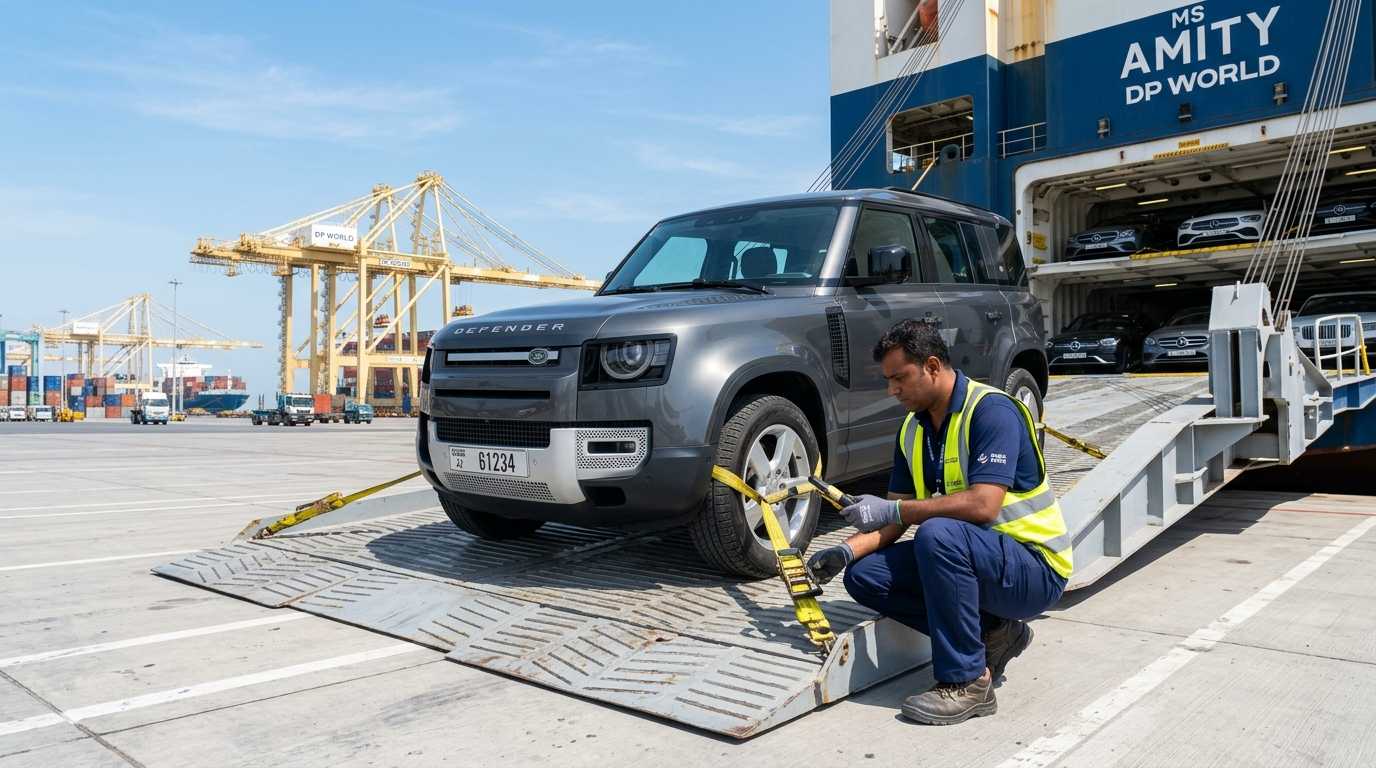
Everything You Should Know About Car Shipping from Dubai UAE to GCC – A Complete Guide
Got a modern sedan or a luxury SUV that you need to move from the streets of Dubai to Riyadh, Muscat, or Doha? Look, if you’re dealing with car shipping from dubai uae to gcc you know it is one of the most common and efficient logistics routes in the Middle East. The GCC Customs Union makes it theoretically simple to move vehicles between the member states, but the reality at the borders can be a bit more complex. But don’t worry because I am going to show you the street-smart way to manage your vehicle so it reaches its destination fast and without the drama. Seriously, it’s all about the “Makasa” and the choice of transport.
Stop Guessing with the GCC Customs Union Rules
The biggest mistake people make is not knowing about the “Statistical Declaration” (Makasa) and the strict rules for “Export Plates”. If you’re shipping a car and you want to avoid paying the 5% customs duty again in Saudi Arabia or Kuwait you MUST have the original statistical declaration from the UAE customs. It is, well, really a system that has zero tolerance for lack of paperwork. And since the car has to travel through various borders, you need to make sure the transporter has all the necessary transit permits. If the papers aren’t perfect the border officers at Ghuwaifat, Batha, or Nuwaiseeb will hold the car for days. Don’t take chances. It’s bad for your car’s safety and your timeline. It is just not worth the risk.
I remember a client who was shipping a high-end Mercedes SUV from a showroom in Dubai to his new home in Riyadh. He chose a cheap car carrier he found on social media. When the car reached the Batha border the customs held it because the “Chassis Number” on the export certificate didn’t match the manifest exactly. The car sat at the border for four days while he scrambled to get the documents corrected. He ended up paying thousands in extra fees and his family in Riyadh was without a car for a week. The lesson? Always use a professional car shipping from Dubai UAE to GCC specialist who knows the border rules inside out. Trust the pros.
The Real Secret to Choosing Between Flatbed Recovery and Car Carrier
Actually the secret is in the speed and the level of service. A “Car Carrier” (open or enclosed) is the standard way to move cars. Your vehicle is one of eight or ten on a large truck. It’s cost-effective and great for standard cars. But if you need your car in Muscat or Doha tomorrow we can provide a “Dedicated Flatbed Recovery” truck that goes straight from your door in Dubai to your door in the GCC. No stops, no loading and unloading with other cars. It’s the fastest way to move a vehicle across the border. Many people just pick the carrier because it’s the first quote they get and don’t realize that for a high-value or urgent move the extra speed of a flatbed is a must. This is where cargo services in Dubai with real regional experience show their value. They pick the right transport for your car’s prestige.
Listen, you should think about “Enclosed Transport” for your luxury or classic cars too. If you’re moving a Ferrari to Kuwait or a vintage Rolls-Royce to Bahrain you don’t want it exposed to the desert sun and the sandstorms. Our enclosed trailers provide full protection from the elements and the road debris. It’s the street-smart choice for anyone who has a high-value machine. The transit time is usually 2 to 5 days depending on the destination and the border queues. It’s the street-smart choice for anything that needs to arrive in perfect condition. No one wants their car sitting in a transit yard when it could be in their garage.
Key Routes and Transit Times within the GCC
Don’t just pick a transporter because they are the cheapest. You need to consider their experience with the specific border you’re crossing. A professional logistics provider will give you the real-world ETAs based on the current “Ground Reality” at the Ghuwaifat, Sila, and Batha borders.
- Dubai to Saudi Arabia (Riyadh/Jeddah): 2 to 4 days transit. The busiest land route.
- Dubai to Oman (Muscat): 24 to 48 hours. The fastest and most direct route.
- Dubai to Kuwait (Kuwait City): 3 to 5 days. Requires transit through Saudi Arabia.
- Dubai to Qatar (Doha): 3 to 5 days. Requires transit through Saudi Arabia.
- Dubai to Bahrain (Manama): 4 to 6 days. Requires transit through Saudi Arabia and the King Fahd Causeway.
Understanding the “RTA Export” and Border Documentation
The process starts with the RTA in Dubai. You need to get an “Export Certificate” and “Export Plates”. If the car is under a bank loan the loan must be cleared first. Once you have the RTA papers we handle the “Customs Exit” in the UAE and the “Statistical Declaration” (Makasa). This proves that the 5% GCC duty was already paid in the UAE. Without this you’ll have to pay the duty again at the destination border. Get your papers sorted before the truck even leaves your driveway. It’s a simple step that saves a massive headache and potentially thousands of Riyals in unnecessary costs. A professional car shipping partner will handle all the customs filings as part of their service.
According to the 2024 GCC Customs Union Update, the digitization of the “Makasa” system has made things faster, but the physical inspection at the border is still strict. The officers will check the VIN, the engine number, and the interior for any prohibited items. Don’t use your car as a “moving box” for personal items; the border officers don’t like it and it can cause delays. Keep the car empty except for the spare tire and the tool kit. Be street-smart and follow the rules. We want your car to clear the border in minutes, not hours. It’s the small details that make the difference between a smooth move and a border nightmare.
Why Road Transport is the King of GCC Vehicle Moves
Most car shipping from Dubai to other GCC countries is done by road. It’s the perfect distance for a fast truck journey. If you’re using our enclosed recovery we make sure the car is lashed using soft “Over-the-Wheel” straps that don’t touch the rims. We also use specialized floor-mounted winches for cars with low ground clearance. No one wants a scratched bumper or a bent rim arriving in Muscat. We treat every car like it’s a masterpiece, because for you, it is. We use the best equipment to ensure your vehicle survives the desert journey perfectly. We take pride in our “Zero Damage” record across the region.
| Service Type | Transit Time | Level of Protection |
|---|---|---|
| Dedicated Flatbed | 24-48 Hours | Standard / High Speed |
| Enclosed Private Recovery | 24-48 Hours | Maximum (Dust/Stone Proof) |
| Shared Car Carrier | 3-7 Days | Cost-Effective / Shared |
| Air Freight (Intra-GCC) | 1-2 Days | Maximum Speed |
The Reality of Shipping Modified Cars to GCC Countries
Actually we move many modified and performance cars within the GCC every year. The region has a massive car culture and many people buy specialized vehicles in the UAE. But look, you need to be careful with the local “Traffic Department” rules in the destination country. If your car has extreme modifications it might face issues during the registration inspection in Saudi or Qatar. We always recommend checking with a local specialist in the destination city before you ship. Also, make sure the car is clean; the border officers are much more helpful when they see a well-maintained vehicle. Be honest and be organized. That’s the street-smart way to move your performance machine.
Packing and Protecting Your Car for the Desert Journey
Actually protecting your car is about more than just a box. It’s about security and dust. The journey through the desert can be very dusty and the sun is intense. For high-end cars we always recommend a “Moisture-Absorbent” cover or silica gel packs inside the cabin. If you’re using a road carrier we use specialized “Stone-Guard” protectors for the front of the car. We want your car to arrive at its destination exactly as it left the UAE. No scratches, no dust damage, no drama. That’s the street-smart rule of car shipping. We don’t take shortcuts when it comes to your vehicle’s safety. We treat it with the respect it deserves.
I remember a shipment of a luxury SUV going from a family in Dubai to their new home in Doha. We used a shared enclosed carrier. Even with the transit through Saudi Arabia and the two border crossings the car arrived in perfect condition and on time for the family’s arrival. The owner was thrilled and the car was ready for his first school run in Qatar. It wasn’t a miracle; it was just better planning and better equipment. If you care about the car you have to care about how it’s transported. That’s the real value of a professional automotive logistics service.
Understanding the “Landed Cost” in Local Currencies
Look, I’m going to be blunt. The price in Dirhams for the transport is just the start. When the car lands in Saudi, Qatar, or Kuwait you’ll have to pay the “Customs Clearance Fee”, the “Local Traffic Registration”, and potentially the “Customs Duty” if you don’t have a Makasa. The currencies are mostly pegged to the Dollar, but the local fees can vary significantly. This is why we always recommend a transparent quote that includes all the border handling. This means the Dubai company manages the destination border too. It’s much safer and more transparent for your budget. No one likes a surprise bill at the border.
The Importance of an Experienced Driver for the GCC Borders
In the GCC the customs process is all about the experience of the driver. If you use a random transporter with a new driver they might get stuck for hours because they don’t know the “workflow” of the border. Our drivers have been doing the GCC routes for years. They know the officers, they know which lane to pick, and they can solve minor paperwork issues on the spot. This is the ultimate “street-smart” move for car shipping. Having the right person behind the wheel is more important than having the biggest truck. Trust the experience and you’ll save a lot of time and stress.
The Value of Transit Insurance for GCC Moves
Look, it’s a 1,000 kilometer journey by road. Things can happen. A truck can have a flat tire or a sandstorm can reduce visibility to zero. You must have “All-Risks” transit insurance for your vehicle. Don’t settle for the basic “Total Loss” cover. You want a policy that covers scratches, stone chips, and even windshield damage during transit. Most professional car shippers in Dubai will provide you with a certificate that is recognized by regional insurance companies. It’s a small price to pay for total peace of mind while your car is on the road. Don’t risk your investment to save a few dirhams.
Final Thoughts on Mastering GCC Car Logistics
Look, car shipping from Dubai UAE to GCC is a great way to keep the vehicle you love. The routes are reliable, the technology is getting better, and the GCC customs union makes it easier than ever. Be honest with your paperwork, pick the right transport method for your car’s value, and always use a company that knows the “street talk” of the regional automotive world. Do that and you’ll be driving on the Corniche or the Expressway before you know it. Now, let’s get those RTA export certificates and Makasa papers ready!
Frequently Asked Questions
Can I ship my car to Saudi Arabia if it’s older than 5 years?
Generally, Saudi Arabia only allows the import of cars that are less than 5 years old. However, there are exceptions for classic cars (older than 30 years) and for Saudi citizens returning from abroad. You must check the latest Saudi Customs (ZATCA) decree before you ship. Always talk to a specialist who knows the current Saudi regulations first.
How much fuel should be in the car for road shipping?
For road transport, we recommend keeping the fuel at less than a quarter of a tank. This reduces the weight and increases safety on the truck. It also prevents any fuel leakage during the vibrations of the journey. Unlike sea shipping, we don’t need the tank to be empty, but a low level is always better for the lashing and the balance of the recovery truck.
What is the “Makasa” exactly?
Makasa is the Arabic word for the GCC Statistical Declaration. It is a document that proves the 5% customs duty was already paid in the first GCC country of entry (e.g., UAE). Under the GCC Customs Union, you only pay the duty once. If you have the Makasa from Dubai, you don’t pay duty again at the destination border. It is the most important document for saving money on your move.
Is it safe to put my personal luggage inside the car?
Generally, we advise against it. Border customs officers at Batha, Nuwaiseeb, and Sila often inspect the interior of the car. If they see too much luggage they might treat it as a “cargo shipment” and ask for a separate manifest, which causes delays. We recommend keeping only the essential car accessories (spare tire, jack, first aid kit) inside the vehicle. Ship your luggage separately with a moving company.
How do I get my car registered in another GCC country?
Once the car is cleared at the border and delivered to your door you’ll need to take the “Customs Release” paper and the RTA export certificate to the local Traffic Department. You’ll need to have the car inspected and get local insurance. Once it passes you can pay the registration fees and get your local plates. Our local agents can help you with this process to make it faster.
After successfully registering your vehicle in a new GCC country, it’s essential to ensure all aspects of your relocation are covered, including reliable utilities. For those in need of gas supply services, you can explore the offerings from Bader Gas Supply Est in Ajman, which provides a range of services to support your new home setup.