Cargo from UAE to Qatar – What the Sea Route and the Saudi Road Both Involve
Qatar is a major trading partner for UAE businesses, but unlike Oman, it has no shared border with the UAE. Every road shipment from Dubai to Doha passes through Saudi Arabia, and every sea shipment from Jebel Ali sails to Hamad Port. The route is well-established and high-volume — Qatar imports heavily from the UAE — but there are specific documentation and customs requirements that catch first-time shippers off guard.
Here’s the full picture on both routes.
Sea Freight from Jebel Ali to Hamad Port
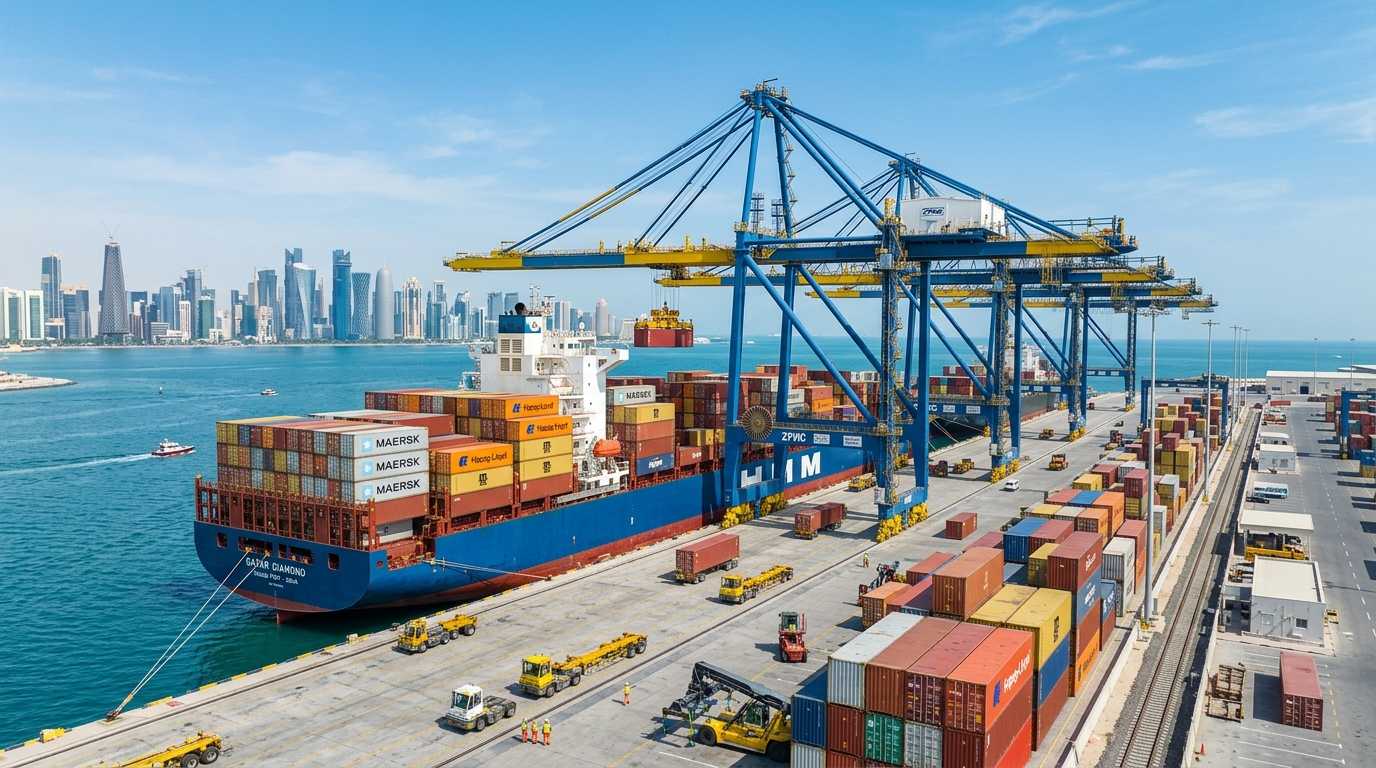
Hamad Port in Doha is Qatar’s primary commercial port, one of the newest and most modern ports in the region. Opened in 2017 and expanded since, it handles significant container volumes with efficient terminal operations. The sailing from Jebel Ali to Hamad Port takes approximately 2 to 4 days depending on the service. Several major shipping lines including Maersk, MSC, and regional operators serve this route with weekly departures from Jebel Ali.
FCL and LCL Options to Qatar
Both full container load (FCL) and less than container load (LCL) services are available from Jebel Ali to Hamad Port. LCL consolidation is available for shipments that don’t fill an entire container. Your cargo gets consolidated with other Dubai-origin freight bound for Qatar and deconsolidated at an LCL station near Hamad Port. Transit time for LCL adds 2 to 4 days to the base sailing time due to consolidation and deconsolidation handling.
Road Freight from Dubai to Qatar via Saudi Arabia
Road freight from Dubai to Doha crosses the UAE-Saudi border at Ghuwaifat or Sila, transits through Saudi Arabia’s Eastern Province, and enters Qatar at the Abu Samra border crossing. The total road distance from Dubai to Doha is approximately 650 kilometres. Driving time for a loaded truck is 10 to 14 hours. Total time including border processing at three crossings is typically 18 to 28 hours from Dubai departure to Doha delivery.
The Abu Samra Crossing into Qatar
Abu Samra is the sole land border crossing between Saudi Arabia and Qatar. It’s a busy commercial crossing with Qatar Customs processing on one side and Saudi Customs on the other. Your forwarder’s Saudi agent and Qatar agent coordinate the transit permit and import declaration at this crossing. Waiting times at Abu Samra can vary depending on the volume of commercial traffic on the day.
Documents Required for Cargo from UAE to Qatar
| Document | Notes |
|---|---|
| Commercial Invoice | HS code, country of origin, declared value in USD or AED |
| Packing List | Exact weights, dimensions, and item description |
| Certificate of Origin | Dubai Chamber; some commodities need Qatar Embassy legalisation |
| Bill of Lading (sea) / CMR Waybill (road) | Must name Qatar consignee and delivery address accurately |
| Saudi Transit Permit | Road route only; arranged by Saudi-licensed agent |
| Qatar Import Permit | Required for certain regulated commodities by Qatar MOCIPH |
| Health Certificate | Food, animal products; issued by UAE Ministry of Climate Change |
| Halal Certificate | Required for food products going to Qatar |
Qatar Customs at Hamad Port – How It Works
The Single Window System
Qatar Customs operates through a single window platform called Hukoomi, which integrates customs clearance with multiple government agencies. Your Qatar customs agent files the import declaration through this system. Depending on the commodity, clearance may also involve the Ministry of Commerce and Industry, Qatar Municipality for food safety, or Qatar’s Civil Aviation Authority for certain goods. For standard commercial cargo with full documentation, Hamad Port clearance takes 3 to 7 working days. Food and regulated goods take longer because of additional ministry approvals.
Qatar’s Post-Blockade Trade Infrastructure
After the 2017 blockade by Saudi Arabia, Qatar significantly diversified its import routes and invested heavily in port infrastructure. Hamad Port’s capacity was expanded and direct shipping services from more origins were established. The blockade ended in January 2021 with the Al-Ula Declaration, and Saudi transit for Qatar-bound cargo resumed. However, Qatar has maintained many of the direct shipping connections established during the blockade period, which gives the country more route flexibility for importers.
A Real Situation – When Sea Was Right and Road Was Wrong
A client importing heavy steel fabricated parts from Dubai to a construction project in Lusail City, Qatar had initially requested road freight for speed. The steel components weighed 18 tonnes total and exceeded standard truck weight limits for the Abu Samra crossing, which would have required a special heavy transport permit adding days and significant cost to the process. We moved the cargo as FCL sea freight from Jebel Ali to Hamad Port instead — the port handled the heavy container easily with their cranes, and the steelwork was on site in Lusail within 10 days. Road wasn’t the right call for that cargo type regardless of transit time.
UAE Origin Goods vs Goods Re-Exported Through UAE
Qatar applies the GCC Common Customs Law which means goods manufactured in the UAE and shipped to Qatar are typically exempt from import duty between GCC member states. However, goods that are manufactured outside the GCC and merely transiting through or stored in UAE before shipping to Qatar attract the standard 5% GCC import duty at Qatar customs. The Certificate of Origin document establishes whether goods are genuinely UAE-origin or not. Accurately declaring origin is both a legal requirement and commercially important for your Qatar buyer’s duty calculation.
- GCC-origin goods from UAE — typically 0% duty in Qatar
- Non-GCC goods re-exported via UAE — 5% GCC duty applies in Qatar
- Luxury goods, tobacco, alcohol — higher duty rates regardless of origin
- Prohibited goods — same as GCC-wide restrictions apply
Our Qatar Shipping Capability
Our team at cargo services in Dubai manages both sea and road freight from UAE to Qatar, including Saudi transit coordination, document legalisation, and Qatar customs clearance through our Doha agent network. For complex or high-value cargo going to Qatar’s ongoing development projects or commercial markets, we provide end-to-end management from Dubai warehouse to Qatar delivery address.
For all our Qatar and GCC shipping services, visit cargo from UAE to Qatar.
Frequently Asked Questions
How long does sea freight from Dubai to Doha take?
The sailing from Jebel Ali to Hamad Port takes approximately 2 to 4 days. Add Qatar customs clearance of 3 to 7 working days and you’re looking at 7 to 12 days total door to door for standard FCL cargo with complete documentation. LCL shipments add 2 to 4 days for consolidation and deconsolidation handling at both ends.
Is road freight or sea freight faster for Dubai to Qatar?
Road freight through Saudi Arabia is faster in terms of transit time — 18 to 28 hours versus 7 to 12 days for sea. However, road freight is limited by truck weight and dimension restrictions, Saudi transit permit availability, and Abu Samra crossing wait times. For large, heavy, or bulky cargo, sea freight is more practical despite the longer timeline. For urgent smaller cargo, road is the clear choice.
What goods are prohibited from import into Qatar?
Qatar prohibits import of goods from countries under Qatar’s trade restrictions, pornographic material, certain weapons and military equipment without permits, and drugs and controlled substances without medical authorisation. Pork products have restrictions but are available in specific licensed stores. Alcohol import is highly restricted and requires specific permits. Confirm the status of your specific commodity with a Qatar customs agent before booking.
Does my Qatar buyer need an import licence?
Some commodities require the Qatar importer to hold a specific licence or prior Ministry of Commerce and Industry approval. Food products, pharmaceuticals, medical devices, chemicals, and controlled materials typically require the importer to be registered with the relevant Qatar ministry. Your Qatar customs agent verifies whether the consignee holds the required approvals for your specific commodity before the goods ship.
How do I find a reliable customs agent in Qatar for clearance?
A full-service freight forwarder in Dubai with an established Qatar network already has a vetted agent at Hamad Port and Abu Samra. Using a Dubai forwarder with existing Qatar agent relationships means one point of contact for the entire shipment rather than managing multiple agents in different countries yourself. Ask your Dubai forwarder to confirm their Qatar agent’s credentials and specific experience with your commodity type.
Ensuring smooth customs clearance is just one aspect of navigating the logistics of your business in Qatar; if you’re also considering healthcare options in the region, you might want to explore the Arabian Gulf Medical Center in Sharjah for comprehensive patient care and services.