The Brutal Truth About How to Safely Transport Your Wine Collection
Are you a serious collector wondering how to safely transport your wine collection during a massive move? Here is the exact, uncompromising protocol used by luxury logisticians to move fine wine without boiling it, shattering the bottles, or destroying the delicate corks.
People assume that because wine comes in a glass bottle, it is durable. They throw twenty bottles of expensive vintage Bordeaux into a standard cardboard moving box, seal it with cheap tape, and put it in the back of a moving truck. That is a guaranteed way to destroy thousands of dirhams worth of investment. Wine is a living, breathing chemical composition. It is incredibly fragile. Heat, vibration, and light are its absolute enemies.
Last summer, a collector moving from Emirates Hills to a new villa in Dubai Hills packed his 200-bottle collection himself. He used standard moving boxes. He didn’t tell the movers what was inside. The boxes sat in the un-air-conditioned back of the 3-ton truck for six hours in 45-degree heat. When he unpacked them, the heat had forced the wine to expand, pushing the corks out of the bottles. The wine had “cooked.” It tasted like acidic vinegar. He destroyed a 150,000 AED collection in a single afternoon.
You cannot treat fine wine like standard cargo. Let me show you how to move it correctly.
The Temperature Trap: The UAE Oven
Heat is the number one killer of wine. If the temperature exceeds 25 degrees Celsius for more than a few hours, the chemical structure of the wine degrades rapidly.
The Refrigerated Transport Solution
If you are moving locally in the UAE between May and October, you cannot put a wine collection in a standard, un-air-conditioned moving truck. It acts like an oven. For high-value collections, you must hire a specialized moving company that utilizes temperature-controlled (refrigerated) vehicles. They keep the truck at a stable 14 to 18 degrees Celsius throughout the entire journey.
Timing the Move
If you refuse to pay the premium for a refrigerated truck, you must game the system. Schedule the wine to be moved at 6:00 AM, before the sun heats the metal of the truck. Do not let the wine sit in the truck while the movers spend four hours loading the rest of your furniture. The wine must be the absolute last thing loaded at the old house, and the absolute first thing unloaded and placed into your new climate-controlled wine fridge at the destination.
The Packing Protocol: Defeating Vibration
Standard cardboard boxes and bubble wrap are useless for heavy, fragile wine bottles.
The Polystyrene Wine Shipper
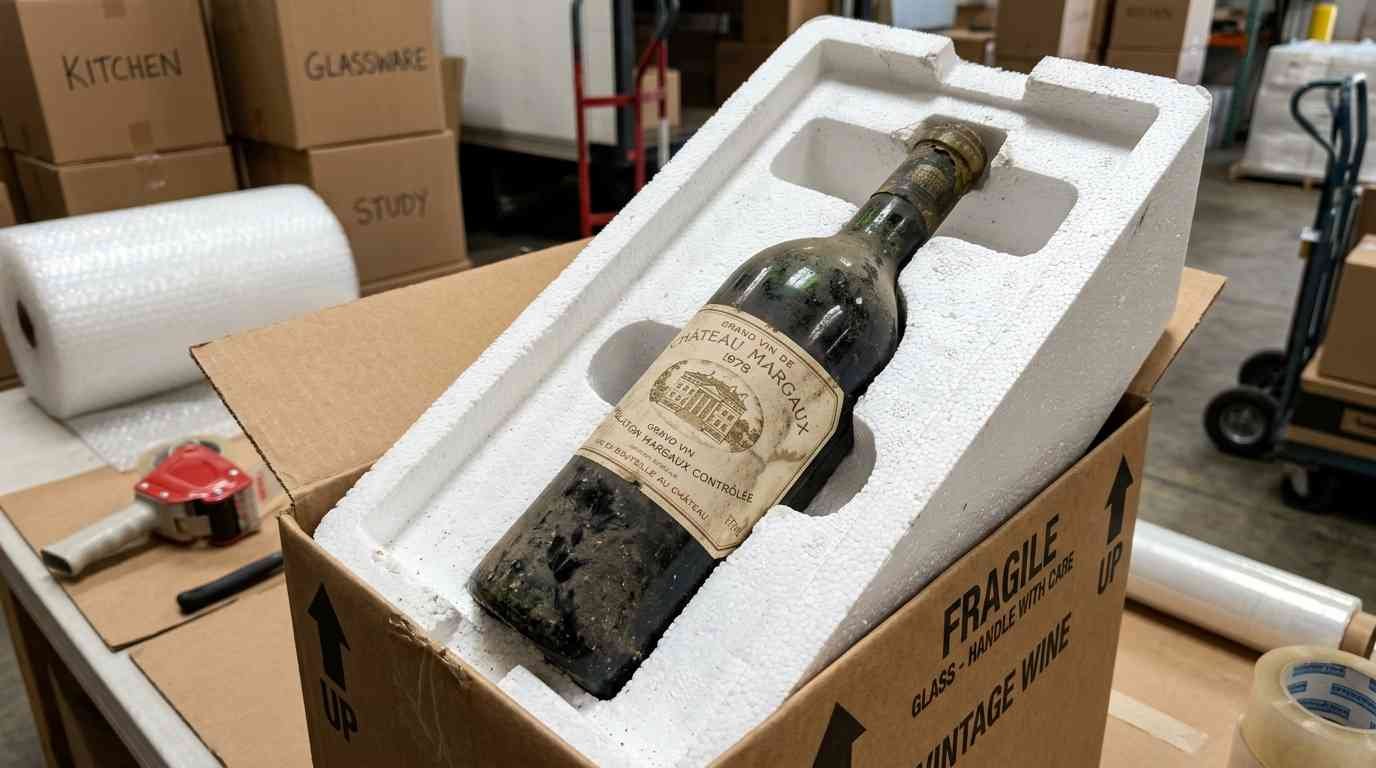
You must purchase specialized wine shipping boxes. These are not just strong cardboard; they contain thick, custom-molded polystyrene (Styrofoam) inserts. The bottle rests perfectly inside a molded groove. The polystyrene does two things: it completely isolates the glass from the bottle next to it (preventing shattering), and it acts as incredible thermal insulation against sudden temperature spikes. It also absorbs the intense road vibration that can disturb the sediment in older vintage wines.
If you want a team that brings these specialized materials directly to your cellar, explore our Lifestyle relocation division. We are the best movers and packers in UAE because our elite crews know exactly how to pack and insulate high-value liquid assets.
The Positioning and the Recovery
How the bottle sits in the box, and what you do after the move, is critical to the wine’s survival.
Horizontal or Upside Down
Never pack expensive, corked wine standing straight up. If the cork dries out, oxygen enters the bottle and oxidizes (ruins) the wine. The bottles must be packed horizontally or slightly upside down so that the liquid constantly touches the cork, keeping it swollen and airtight during the journey.
The “Bottle Shock” Recovery Period
When the wine arrives at the new house, it is traumatized. The intense shaking of the moving truck disrupts the chemical balance and the sediment. This is called “bottle shock.” If you open a premium bottle the night you move in, it will taste flat and muted. You must place the wine in your cellar and let it rest, completely untouched, for at least two weeks (and up to a month for very old vintages) before opening it.
Essential Wine Transport Checklist
| Crucial Protocol | Why It Protects Your Investment |
|---|---|
| Demand Refrigerated Trucks | Standard moving trucks hit 50°C in summer, instantly “cooking” the wine. |
| Use Polystyrene Shippers | Provides extreme thermal insulation and prevents bottles from shattering. |
| Pack Bottles Horizontally | Keeps the cork wet and swollen; a dry cork lets oxygen in and ruins the wine. |
| Load Last, Unload First | Minimizes the exact amount of time the fragile wine spends in transit. |
| Enforce a 2-Week Rest | Cures “bottle shock” by allowing the violently shaken sediment to settle. |
Frequently Asked Questions
Can I ship my wine collection internationally?
Yes, but it is incredibly complex. If you are shipping to countries like the US or Canada, you will face massive excise taxes, strict import licenses, and FDA/customs scrutiny. Furthermore, you must use a specialized “refrigerated container” (reefer) on the cargo ship, which is astronomically expensive compared to a standard dry container.
Will moving insurance cover my wine?
Standard moving liability (which pays by the kilogram) will pay you pennies for a shattered bottle of Dom Pérignon. You must purchase specialized Transit Insurance and provide an official appraisal of the collection’s value. Ensure the policy explicitly covers “temperature damage,” not just physical breakage.
Can I just put the wine in my personal car?
For small local moves, this is actually the best option. Put the polystyrene wine boxes in the air-conditioned cabin of your SUV (never in the hot trunk). You control the temperature and the speed, eliminating the risk of a careless mover destroying the collection.
How do I pack opened bottles of liquor?
Movers generally refuse to pack or transport open bottles of liquids because if they leak, they ruin the cardboard boxes around them. You must tightly tape the caps shut, put them in heavy Ziploc bags, and move them in your own car.
Does “bottle shock” affect screw-cap wines?
Yes. While screw caps do not have the cork-drying issue, the intense vibration of the truck still disrupts the chemical compounds within the liquid. All wine, regardless of the closure method, needs time to rest after a move.