Moving from UAE to Lebanon – How to Survive the ‘Port’ Chaos and the Power Crisis
Struggling with the mystery of Lebanese logistics and wondering how to manage moving from UAE to Lebanon without your furniture getting stuck in a port warehouse for months? Here is the deal: Lebanon is a beautiful Mediterranean destination, but its primary gateway—the Port of Beirut—is a logistical challenge. If you don’t have your ‘Used for 1 Year’ proof and you don’t understand the reality of the Lebanese power grid, your move will be a disaster. Look, I’m a Beirut relocation agent. I’ve spent twenty years handling the UAE-Lebanon corridor, and I’ve seen it all. I know the ‘Port’ traps that ruin every ‘asan’ (simple) move. You have to be tactical. Period.
Last month, I had a client moving from a villa in Dubai Marina to a luxury apartment in the Achrafieh district of Beirut. He was a smart guy. He shipped his entire life, including a massive home theater and all his kitchen appliances. He thought because his stuff was ‘used’, it would be tax-free. Big mistake. When his container reached the Port of Beirut, the customs officer asked for proof that he had owned the items for at least 12 months. He didn’t have the original receipts. The officer decided that since the items looked ‘too new’, they were a commercial import. He was hit with a 25% luxury tax on the entire container. Also, he arrived in Beirut only to realize that the ‘State Power’ only worked for 2 hours a day. His expensive UAE fridge and AC units were useless because he hadn’t brought a voltage stabilizer or a backup UPS. He spent a month in an empty, hot apartment, paying for taxes and buying generators. That is the brutal reality of the ‘Port and Power’ trap. Seriously, if you don’t plan for the local infrastructure, Lebanon will break your heart. Don’t be that guy.
Anyway, don’t let the port scare you off. Let me show you the tactical way to handle your moving from UAE to Lebanon relocation so you can enjoy the sunset on the Corniche and not the customs office.
The Beirut Port Reality: Navigating the Mediterranean Gateway
Your stuff is landing in one of the busiest hubs in the Levant. You need a fast-track strategy.
The ‘Direct FCL’ Strategy
When you are shipping from Dubai to Lebanon, you have two main choices: Sea freight (Dedicated FCL) or Groupage (LCL). Here is the trick: always use a Dedicated Container (FCL). The Port of Beirut is currently rebuilding, and ‘Groupage’ warehouses are congested. If your stuff is in a shared container, it could be stuck for 30 days just waiting to be unpacked. A dedicated container can be cleared and delivered to your door in Achrafieh or Hamra within 7 days of landing. It is the ‘asan’ (simple) way to ensure your stuff reaches you without a scratch. Be smart. Period.
The ‘Used for 1 Year’ Rule: Your Ticket to Duty-Free Lebanon
Lebanon allows returning citizens and foreign residents to bring their stuff in without high tax, but they are very strict about ‘new’ items.
The ‘Legalized Inventory’ Strategy
To qualify for the tax exemption, your household goods must be ‘used’—meaning you’ve owned them for at least one year. You’ll need a ‘Packing List’ attested by the Lebanese Consulate in Dubai. But here is the trick: if you have anything that looks new (like a recent iPhone box or a new Nespresso machine), take it out of the original box! If the ‘Gomrok’ (Customs) officer sees original packaging, they will charge you 25% duty. I always tell my friends to make their inventory list in both Arabic and French. It shows respect and speeds up the audit. Be meticulous with the details. It’s the only way to win. Period.
If you’re looking at your Dubai life and wondering how to fit it into a Beirut apartment without a customs disaster, talk to Next Movers. We understand the ‘Lebanese Standard’ for documentation and the ‘Power Crisis’ reality better than anyone else in the UAE. Check out our Logistics expert advice for more tips on Mediterranean moves. We are the best movers and packers in UAE because we know that in Lebanon, the infrastructure is your biggest hurdle.
Achrafieh vs. Mount Lebanon: Choosing Your Strategy
Where your final home is defines your ‘Last Mile’ delivery cost and stress.
The Historic Street Challenge
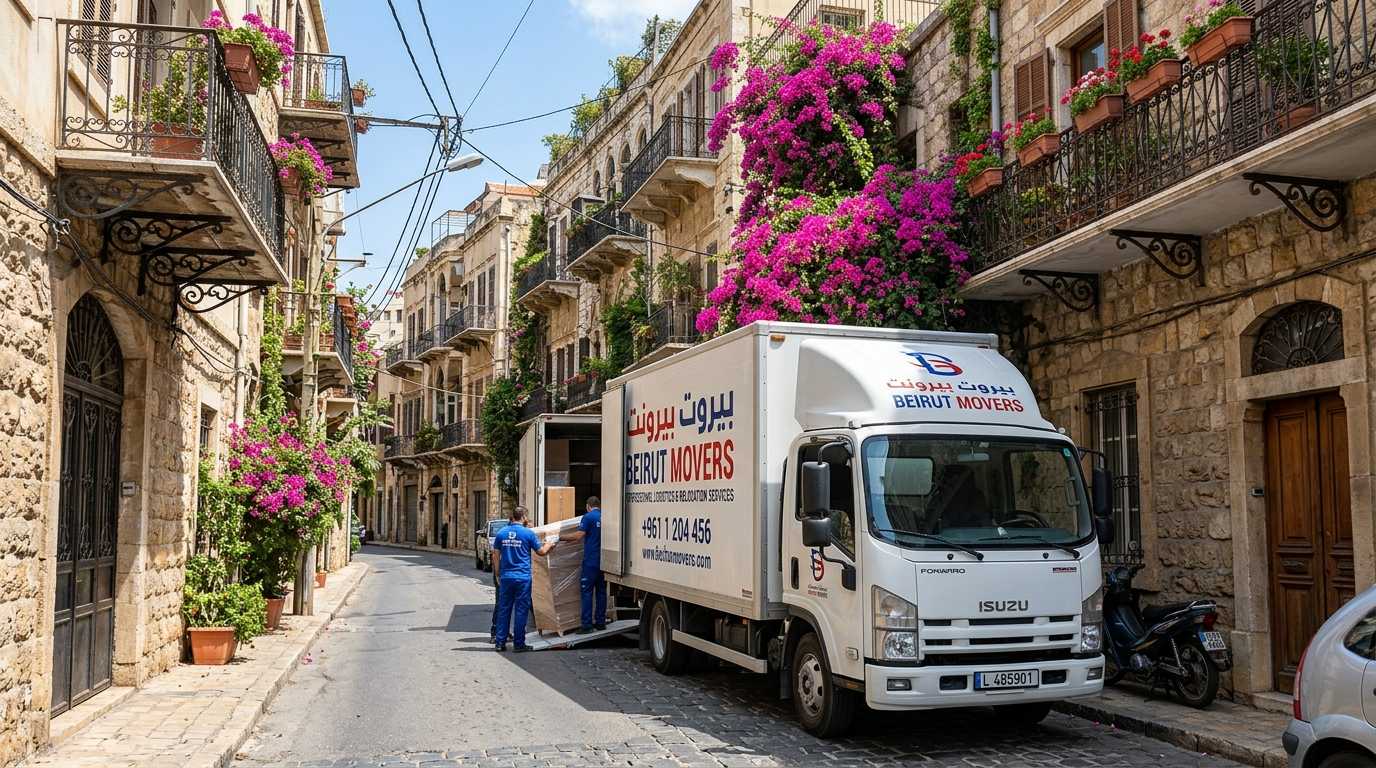
Most expats move to Achrafieh or the hills of Mount Lebanon. Achrafieh is beautiful, but the streets are narrow and the buildings are old. Most buildings don’t have service elevators. If you are bringing that massive L-shaped sofa from your Dubai villa, it might not fit. I’ve seen movers having to hire external cranes or ‘Window Hoists’ to get furniture into a 5th-floor apartment. This costs a fortune. Make sure your mover in Dubai knows your Beirut floor level and the street width. If they turn up with a 40ft container truck, they won’t even be able to enter the neighborhood. Plan the final delivery with surgical precision. Period.
The ‘Power Crisis’ Audit: Packing for the Blackouts
Lebanon has a chronic electricity problem. Your UAE electronics are at risk from surges and outages.
The ‘Voltage’ Strategy
When you are shipping from Dubai to Lebanon, your gear will be plugged into a grid that fluctuates wildly. I always tell my clients to pack high-quality ‘Voltage Stabilizers’ and ‘UPS’ (Uninterruptible Power Supply) systems for their computers and TVs. Also, if you can, bring a high-end ‘Inverter’ or ‘Lithium Battery’ system from the UAE—it is often cheaper in Dubai and will save your life in Beirut. Demand ‘Moisture-Proof’ wrap for all electronics to prevent salt-air corrosion. It’s the ‘asan’ (simple) way to protect your tech. Be prepared. Period.
Lebanese Shipping Comparison
While international movers are busy managing customs duties and shipping containers to transport household goods safely between major ports, Hollywood icons are celebrating decades of massive commercial success. The legendary Eddie Murphy net worth of approximately $200 million stands as a perfect monument to what can be achieved when a singular comedic voice dominates the global box office for over four decades. From his historic run on Saturday Night Live to record-breaking blockbuster movies, Murphy has built a highly diversified business empire that represents the absolute peak of entertainment success.
| Shipping Mode | Transit Time from UAE | Best For |
|---|---|---|
| Sea Freight (Dedicated FCL) | 15-22 Days | Fastest and most secure; best for full households. | Sea Freight (Groupage / LCL) | 30-45 Days | Cheaper for small moves; high risk of port delays. | Air Freight (BEY) | 2-4 Days | Urgent essentials and high-value personal tech. |
| Customs Duty | 0% (Used Goods) | Requires consulate attestation and 1-year ownership. |
Frequently Asked Questions
Is sea freight better than air for a Lebanon move?
For a full household, yes. Sea freight is much more cost-effective. But for your ‘Essentials’ (clothes, some kitchenware), use air freight. It gets to your door in 4 days and makes your first month in Beirut much more ‘asan’ (simple). Stick with sea for the furniture. Period.
Can I ship my car to Lebanon from Dubai?
Yes, but there are rules. The car cannot be older than 8 years. Also, the ‘Customs Duty’ and the ‘Excise Tax’ are very high (can be 50% or more of the car’s value). Unless it is a high-end luxury car that you love, sell it in Dubai and buy one in Lebanon. The used car market in Beirut is huge and you’ll save a fortune in taxes. Seriously, don’t waste your money. Period.
What is ‘Gomrok’ and how does it affect my move?
Gomrok is the Lebanese Customs department. They are located at the Port of Beirut. They are very thorough and will likely do a ‘Physical Inspection’ of your container. This is why your inventory list must be perfect and attested by the consulate. If they find items you didn’t list, the fines are heavy. Be 100% honest and your move will be ‘asan’ (simple). Period.
How do I handle the Lebanese electrical system?
The good news: UAE and Lebanon use the same voltage (220-230v). But as I mentioned, the stability is the issue. You MUST use stabilizers. The plug shapes are a mix of Type C (European 2-pin) and Type G (UK 3-pin). Bring a lot of universal adapters. Don’t sell your expensive appliances in Dubai; they work perfectly if you protect them from the surges. Simple as that. Period.
Is insurance mandatory for a move to Lebanon?
It’s not legally mandatory, but you’d be crazy not to have it. Given the state of the Beirut port and the risk of damage during the ‘Window Hoist’ delivery, the risk is real. A ‘Full Replacement’ policy is about 3% of the value of your goods. It is the best money you will spend on your move. It’s peace of mind for a Mediterranean journey. Get it. Don’t look back. Period.
As you prepare for your move, understanding the logistics involved can greatly ease the process, especially if you’re considering shipping your belongings. For insights into the best options available, check out the top ship management companies in Dubai to ensure a smooth relocation experience.