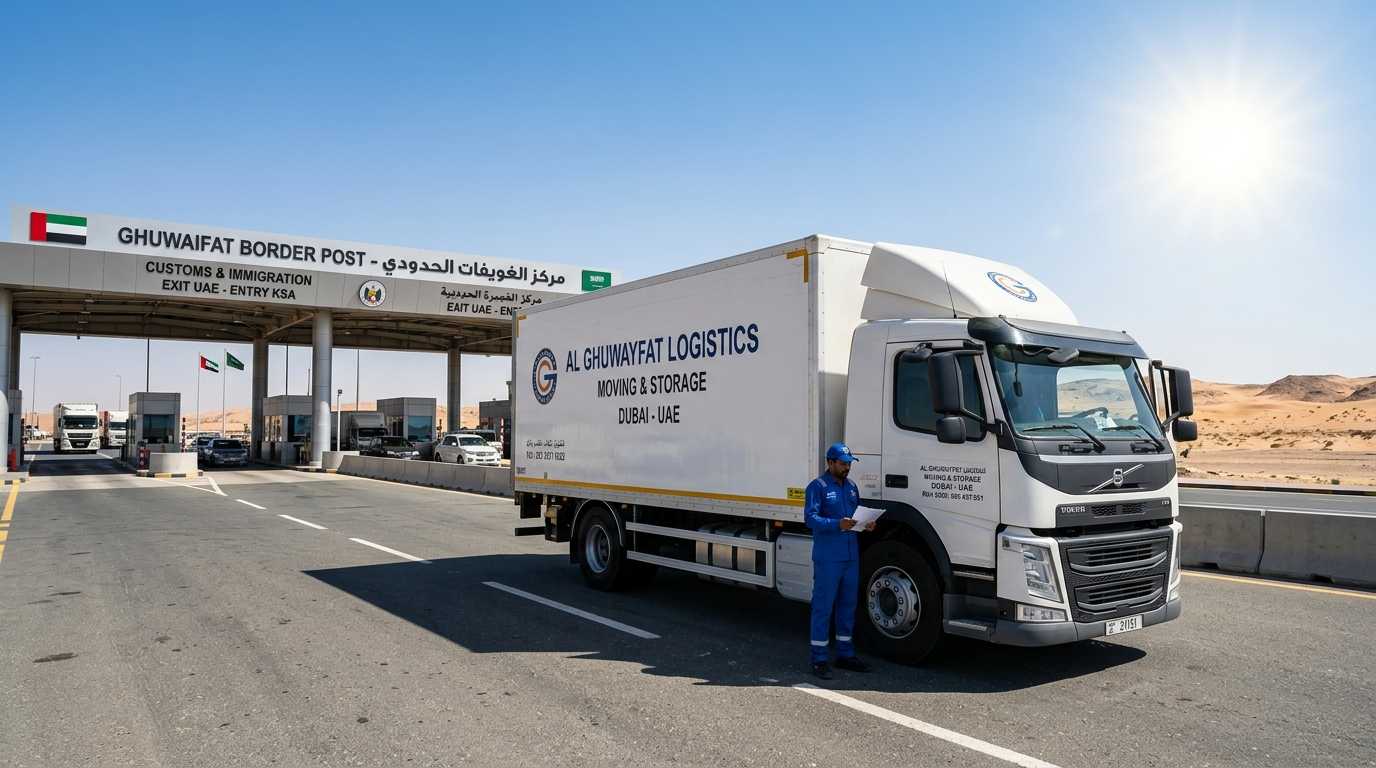
Moving from UAE to Saudi Arabia – How to Survive the Ghuwaifat Border and Move Like a Pro
Struggling with the mystery of GCC cross-border logistics and wondering how to manage moving from UAE to Saudi Arabia without your furniture getting stuck in the desert heat for days? Here is the deal: Saudi Arabia is the fastest-growing market in the world, but the border crossing at Ghuwaifat is a bottleneck that can break your move. If you think you can just hire a ‘man with a van’ and drive to Riyadh, you are in for a shock. Look, I’m an expat. I’ve been in the UAE for ten years, and when I moved to Riyadh for a Vision 2030 project, I thought it would be as simple as a weekend road trip. I was wrong. I spent three days—three days!—stuck at the border because my mover didn’t have the right ‘Saber’ registration and the manifest was a mess. You have to be tactical. Period.
Last year, I watched a friend try to save money by using a non-bonded truck. His container arrived at the Ghuwaifat border, but because the paperwork wasn’t perfectly aligned with the new Saudi customs system, the officers refused to let the truck pass. He was sitting in a hotel in Riyadh while his entire life was sitting in a 50-degree metal box in the middle of the desert. By the time the truck cleared, his candles had melted into his books and his fine-leather sofa was warped. That is the brutal reality of the ‘Ghuwaifat Trap’. Seriously, if you don’t use a professional, bonded carrier, you are gambling with your life’s possessions. Don’t be that guy.
Anyway, don’t let the border scare you. Let me show you the tactical way to handle your moving from UAE to Saudi Arabia relocation so you can enjoy the traditional kabsa and not the customs office.
The Ghuwaifat Border: Navigating the GCC Gate
Your move is a land-based mission. But land borders have their own rules.
The ‘Bonded Trucking’ Strategy
When you are moving from UAE to Saudi Arabia, you have two choices: ‘Normal’ trucking or ‘Bonded’ trucking. Here is the trick: always choose Bonded. A bonded truck allows your goods to travel through the border without being ‘Imported’ at the crossing point. They are cleared at the ‘Dry Port’ in Riyadh or Jeddah instead. This means the truck doesn’t have to wait in the massive queue for physical inspection at the border. I always tell my friends to demand a ‘Bonded T1’ manifest. It is the ‘asan’ (simple) way to cut your transit time from 7 days to 48 hours. Be smart. Period.
The ‘Saber’ System: The New Rule of Saudi Imports
Saudi Arabia is modernizing fast, and their customs system is now fully digital.
The Electronic Registration Challenge
The ‘Saber’ platform is the new electronic system for all imports into Saudi Arabia. While it’s mainly for commercial goods, household moves are now being tracked more closely. You’ll need to provide your ‘Iqama’ (Residence Permit) or a valid work visa to clear your goods. Here is the trick: your inventory list must be in Arabic. If you give them a list in English, the customs officer at the Riyadh Dry Port will either reject it or charge you for an official translation. I always have my team in Dubai prepare the list in both languages. Instead of ‘Box 1: Kitchenware,’ write ‘الصندوق ١: أدوات مطبخ’. It shows the customs officer you respect their system, which makes them less likely to pull your container for a ‘Full Security Exam’. Be meticulous. It’s the only way to win. Period.
If you’re looking at your Dubai life and wondering how to fit it into a Riyadh compound without a customs disaster, talk to Next Movers. We understand the ‘Saudi Standard’ for documentation and the ‘Bonded’ trucking reality better than anyone else in the GCC. Check out our Logistics expert advice for more tips on cross-border moves. We are the best movers and packers in UAE because we know that in Saudi Arabia, the border is the biggest hurdle.
Riyadh vs. Jeddah: Choosing Your Final Destination
Where you are moving to in the Kingdom defines your logistics strategy.
The Inland vs. Coastal Reality
Most shipments from Dubai to Riyadh go by road. It’s fast and direct. But if you are moving to Jeddah, it’s a 1,000km drive across the desert *after* you enter Saudi. In that case, it’s often cheaper and safer to ship by sea to the Port of Jeddah. Be warned: the Saudi ‘Dry Ports’ (like the one in Riyadh) are very busy. If your container arrives on a Thursday, it will sit there until Sunday because of the weekend shift. I always suggest timing your truck’s departure from Dubai on a Sunday or Monday. It’s the ‘asan’ (simple) way to ensure the truck hits the border when the staff are fresh. Plan the departure with surgical precision. Period.
The ‘Used Goods’ Exemption: Surviving the 5% Tax
Saudi Arabia has a 5% to 15% customs duty on many imports, but you can avoid it.
The Personal Effects Rule
To bring your household goods into Saudi Arabia duty-free, you must be a GCC national or an expat with a valid work contract and Iqama. The items must be ‘used’—meaning they’ve been in your possession for at least six months. If you buy a brand-new 85-inch TV in Dubai a week before you ship, the Saudi customs will find the serial number and charge you full duty. To be honest, it’s smarter to buy your new electronics in Saudi—the prices are similar and you get a local warranty. Don’t waste money shipping tax liabilities. Be honest with your inventory list. It’s the only way to avoid a customs audit. Period.
Saudi Shipping Comparison
| Destination | Transit Time from Dubai | Transport Mode |
|---|---|---|
| Riyadh | 3-5 Days | Road (Bonded Truck). | Jeddah (Road) | 5-7 Days | Road (Cross-Desert Haul). | Jeddah (Sea) | 10-14 Days | Sea (Direct to Jeddah Port). | Dammam / Khobar | 2-3 Days | Road (Fastest Route). |
Frequently Asked Questions
Is road transport better than sea for a UAE to Saudi move?
For Riyadh and the Eastern Province (Dammam/Khobar), yes. Road transport is faster and cheaper. For Jeddah and the West Coast, sea freight can sometimes be safer because it avoids the long desert drive. To be honest, most expats choose road because they want their stuff ‘asan’ (simple) and fast. Stick with a bonded road carrier for the best results. Period.
Can I ship my car to Saudi Arabia from Dubai?
Yes, but there is a rule: the car cannot be older than 5 years (for personal use). If it’s a 6-year-old car, you can’t import it. Also, you’ll pay a 5% customs duty plus 15% VAT on the car’s value. Sell your older car in Dubai and buy a new one in Saudi. The car market in Riyadh is huge and competitive. It’s the smart move. Seriously, don’t waste your money. Period.
What is the ‘last mile’ like in a Saudi compound?
It’s very easy! Most expat compounds in Riyadh and Jeddah have wide streets and plenty of parking for large moving trucks. The houses are usually large and have big doors. It’s a much more ‘asan’ (simple) delivery than in Europe. Just make sure you give your mover the compound ‘Access Permit’ 24 hours in advance. If the gate security doesn’t have the permit, the truck stays outside. Be prepared. Period.
How do I handle the Saudi electrical system?
The good news: UAE and Saudi Arabia use the same voltage (220-230v) and frequencies. Your UAE electronics will work perfectly. The plug shapes are also the same (UK-style 3-pin). You don’t even need adapters! This is one of the easiest parts of the move. Don’t sell your appliances; they are perfectly suited for Saudi life. Simple as that. Period.
Is insurance mandatory for a move to Saudi Arabia?
It’s not legally mandatory, but you’d be crazy not to have it. The desert heat and the long truck haul can be tough on furniture. A ‘Full Replacement’ policy covers you for heat damage and road accidents. For a move across the border, it’s the best investment you can make. Get it. Don’t look back. Period.
As you prepare for your move, consider reaching out to local experts for assistance and resources tailored to your needs. For detailed information on Alfanar’s Dubai branch locations and career opportunities, check out their comprehensive guide to ensure a smooth transition.