Sea Freight Dubai – FCL vs LCL Shipping and How to Choose Without Wasting Money
You’ve got cargo that’s too heavy for air freight and a delivery timeline that isn’t tomorrow. Sea freight from Dubai makes sense. But then someone mentions FCL and LCL and suddenly you’re not sure which one applies to you or what the difference even costs. This article sorts that out, straight.
I’ve worked sea freight out of Jebel Ali for over a decade. The number of clients who booked the wrong option and paid for it later is embarrassing. Let me save you from making that same call.
Why Jebel Ali Port Is Dubai’s Sea Freight Backbone
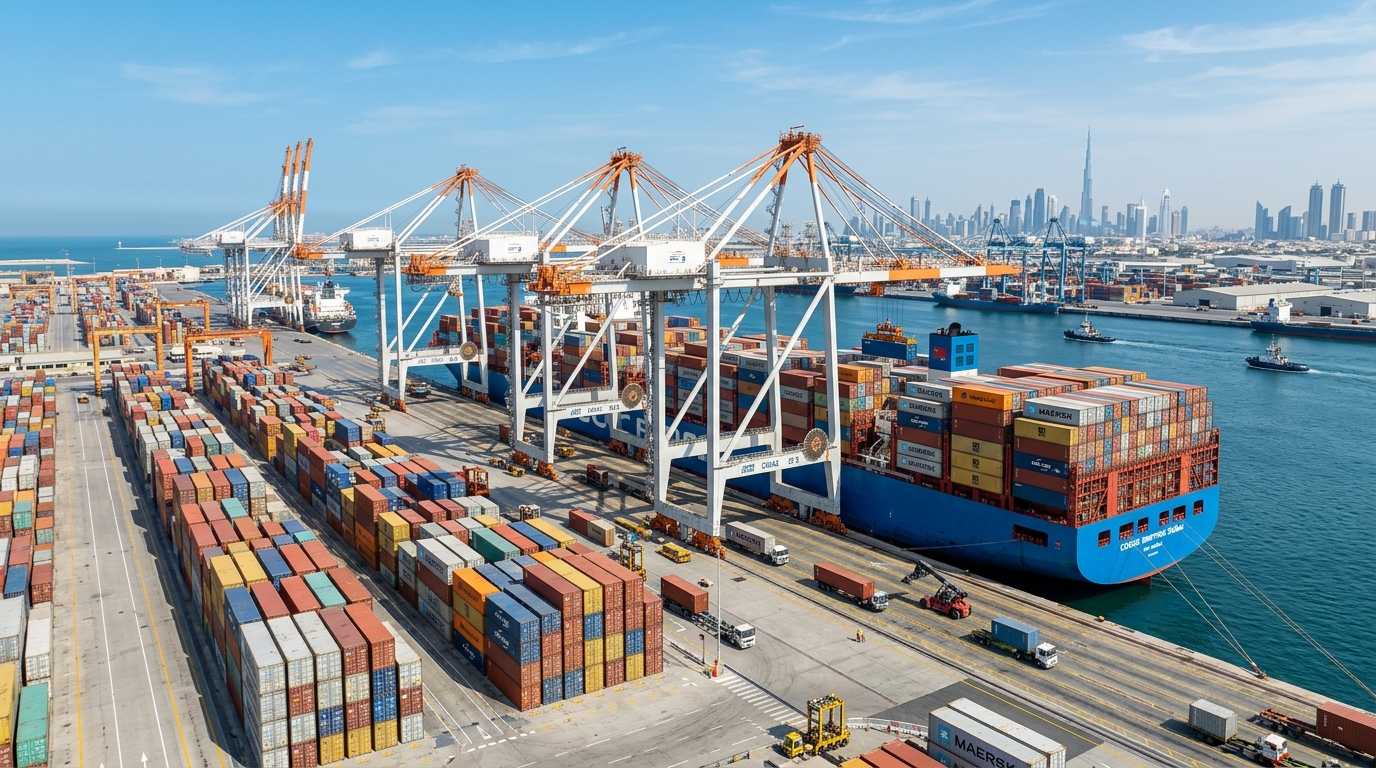
Jebel Ali Port in Dubai is the largest port in the Middle East and consistently ranks among the top 10 busiest container ports in the world. According to DP World, which operates Jebel Ali, the port handled over 14 million Twenty-foot Equivalent Units (TEUs) in 2023. It connects Dubai directly to over 150 ports globally through regular shipping services. When people talk about sea freight from Dubai, they’re almost always talking about Jebel Ali.
The port operates 24 hours a day, 7 days a week. It has dedicated terminals for general cargo, ro-ro vehicles, bulk cargo, and liquid cargo. And it’s connected to Dubai’s road and rail network, which means getting cargo in and out is genuinely fast compared to ports in the region that rely solely on road access.
FCL – What It Means and When It Makes Sense
FCL stands for Full Container Load. You rent the entire container — typically a 20-foot or 40-foot unit — and fill it yourself. The container goes from the origin to the destination without being opened or consolidated with anyone else’s cargo. Just yours.
When FCL Is the Right Call
FCL makes sense when your cargo fills more than about 15 cubic metres or weighs more than 15,000kg. At that point, renting the whole box is cheaper per unit than paying LCL rates. It’s also better when you’re shipping fragile or sensitive goods that you don’t want handled multiple times. And if you have strict delivery timelines, FCL is more predictable because your cargo isn’t waiting to be consolidated with other shipments going in the same direction.
LCL – What It Means and When You Should Use It
LCL stands for Less than Container Load. Your cargo shares a container with other shippers’ cargo going to the same destination or region. A freight forwarder consolidates multiple smaller shipments into one container. You only pay for the space your cargo actually takes up — priced per cubic metre (CBM) or per tonne, whichever is higher.
When LCL Makes Sense
LCL is right when your shipment is small — typically under 15 CBM. It lets you ship without waiting until you have a full container’s worth of goods. Good for regular small shipments, trial orders, or when you’re just starting a new trade lane and don’t yet have the volume for FCL. The trade-off is slightly longer transit time because your cargo needs to be consolidated before departure and deconsolidated at the destination.
FCL vs LCL – Direct Comparison
| Factor | FCL | LCL |
|---|---|---|
| Minimum Volume | Full 20ft or 40ft container | From 1 CBM upward |
| Pricing Basis | Per container (flat rate) | Per CBM or tonne |
| Transit Time | Faster — direct loading | Slightly longer — consolidation needed |
| Cargo Handling | Minimal — packed once, unpacked once | More handling — consolidated and deconsolidated |
| Best For | Large shipments, fragile goods, time-sensitive cargo | Small shipments, trial orders, flexible timelines |
| Risk of Delay | Low | Slightly higher due to consolidation schedules |
Simple rule: if your cargo fills more than half a container, go FCL. If it’s less, go LCL. It’s not always exact but it’s a solid starting point.
How Sea Freight from Jebel Ali Actually Works
The Booking Process
You give your freight forwarder the cargo details — weight, dimensions, commodity type, destination port, and delivery date. For FCL, they book a container slot with a shipping line like MSC, Maersk, or CMA CGM. For LCL, they consolidate your shipment with others heading to the same destination. You get a sailing schedule and a cutoff date. The cargo cutoff at Jebel Ali is typically 3 to 5 days before the vessel’s departure date. Miss that window and your shipment waits for the next sailing.
Documents for Sea Freight from Dubai
For exports out of Dubai, you need a Commercial Invoice, Packing List, Bill of Lading (B/L), and a Certificate of Origin from Dubai Chamber of Commerce for most destinations. Some countries require additional certificates — halal certificates for food, phytosanitary certificates for plants and agricultural goods, or specific Ministry approvals. Your forwarder should know what’s needed for your exact commodity and destination before you ship.
A Real Situation Where FCL vs LCL Made All the Difference
We had a client based in Al Quoz — a furniture manufacturer shipping to the UK. They had about 12 CBM of product and were booking LCL because they thought FCL was only for massive shipments. Their LCL cargo was getting consolidated with other freight, deconsolidated at Felixstowe Port, and reaching the client 3 to 4 weeks after departure. They were paying LCL rates that, over six months of regular shipments, added up to more than FCL would have cost them.
We moved them to FCL on a 20-foot container, stuffed it with their furniture plus some other goods they could consolidate themselves, and cut both the delivery time and the total cost. That’s a real example of why understanding FCL vs LCL is not just academic.
Sea Freight Transit Times from Dubai to Key Destinations
- Dubai to Jeddah (Saudi Arabia) — 3 to 5 days by sea
- Dubai to Aqaba (Jordan) — 5 to 7 days by sea
- Dubai to Mumbai (India) — 5 to 8 days by sea
- Dubai to Colombo (Sri Lanka) — 5 to 7 days by sea
- Dubai to Karachi (Pakistan) — 3 to 5 days by sea
- Dubai to Felixstowe (UK) — 22 to 28 days by sea
- Dubai to Rotterdam (Netherlands) — 20 to 26 days by sea
- Dubai to Mombasa (Kenya) — 10 to 14 days by sea
- Dubai to Singapore — 12 to 16 days by sea
These are typical transit times under normal conditions. Port congestion, weather, and customs delays at the destination can add days. Always build buffer into your delivery commitments.
What No One Tells You About Sea Freight from Dubai
The sailing schedule is fixed. Your cargo isn’t. Vessels leave on a schedule regardless of whether your documents are ready or your cargo arrived at the terminal on time. If you miss the cutoff, you wait for the next sailing. On some routes that’s weekly. On others, it might be every two weeks.
Also, destination charges are real and often larger than people expect. Port handling fees, customs clearance at the other end, and local delivery charges can add up significantly. Always ask your forwarder for a door-to-door quote, not just an origin freight rate. The origin rate is only part of the total picture.
How to Book Sea Freight from Dubai Without the Guesswork
Use a licensed freight forwarder who has direct relationships with the major shipping lines calling at Jebel Ali. Our team at cargo services in Dubai handles both FCL and LCL shipments from Jebel Ali to destinations worldwide. We manage the booking, documentation, customs clearance, and we tell you about the destination charges upfront, not after the cargo has already sailed.
For a full picture of what we handle across sea, air, and land freight, check our complete service range at sea freight services from our Dubai operations.
Frequently Asked Questions
What is the cheapest way to ship cargo from Dubai by sea?
For small shipments under 10 CBM, LCL is usually cheaper because you only pay for the space you use. For larger shipments above 15 CBM, a 20-foot FCL container typically works out cheaper per CBM. Get quotes for both options from your forwarder and compare the all-in cost including destination charges, not just the freight rate.
How long does sea freight from Dubai to the UK take?
Sea freight from Jebel Ali to UK ports like Felixstowe or Southampton takes around 22 to 28 days for the sailing. Add 3 to 5 days for origin handling and documentation, plus destination customs clearance and inland delivery. Plan for 5 to 6 weeks total from cargo ready date to delivery at the UK address.
What documents do I need for sea freight from Dubai?
You need a Commercial Invoice, Packing List, Bill of Lading, and a Certificate of Origin from Dubai Chamber of Commerce. Some destinations require additional paperwork like halal certificates for food products, fumigation certificates for wooden packaging, or specific import permits. Your freight forwarder confirms what’s needed per destination before the cargo moves.
Can I ship personal goods by sea from Dubai?
Yes. Personal effects and household goods are regularly shipped by sea from Dubai using LCL or FCL depending on volume. You typically need a packing list and a letter confirming the goods are used personal items. Many people moving out of Dubai use a 20-foot container for a full household move. Your forwarder handles the customs paperwork at both ends.
What happens if my cargo arrives at Jebel Ali late for the sailing?
If your cargo misses the terminal cutoff date, it waits for the next available sailing to your destination. On busy routes like Dubai to India or Dubai to UK, there are usually multiple sailings per week so the delay might be just a few days. On less frequent routes, you could wait a week or more. Always confirm the cargo cutoff date with your forwarder when you book.
Once your belongings are on their way, ensuring a smooth transition in your new home is essential, especially when it comes to staying connected and enjoying entertainment. Consider investing in the best router for streaming 4k to enhance your streaming experience in the UAE.