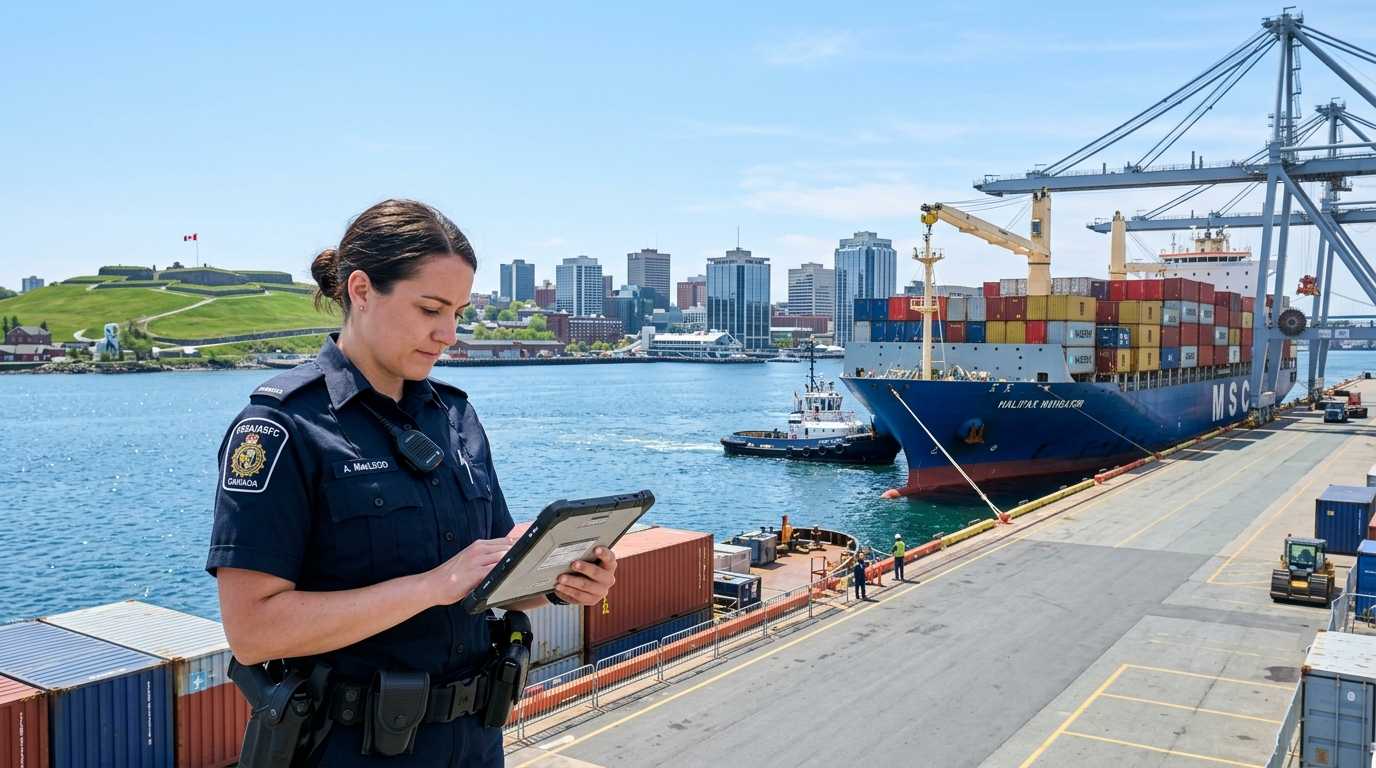
Everything You Should Know About Shipping from Dubai to Canada – A Complete Guide
Got a shipment of retail goods or moving your entire household to the beautiful cities of Toronto, Vancouver, or Calgary? Look, if you’re dealing with shipping from dubai to canada you know it is one of the most important and well-established trade routes between the Middle East and North America. Canada is a massive market with a growing Middle Eastern diaspora, and the volume of cargo moving through the Port of Vancouver and Halifax is significant. But don’t get too relaxed; the Canada Border Services Agency (CBSA) and the CARM system can be a real challenge if you’re not prepared. But don’t worry because I am going to show you the street-smart way to manage your cargo so it clears the border without the drama. Seriously, it’s all about the CBSA gateway.
Stop Guessing with Canada Customs (CBSA) and the “CARM” Rules
The biggest mistake people make is not knowing about the mandatory “CARM” (CBSA Assessment and Revenue Management) system and the strict rules for “CUSMA” (Canada-United States-Mexico Agreement) rules of origin. If you’re shipping commercial goods to Canada your importer MUST be registered in the CARM client portal and have a valid “Business Number” (BN) with import/export account. It is, well, really a system that has zero tolerance for lack of preparation. Without a CARM registration your customs broker cannot file an import declaration on your behalf and your goods will be stuck at the border. And if you’re moving your personal belongings to Canada there are specific rules about what can be imported duty-free as part of your “Settler’s Effects”. Don’t take chances. It’s bad for your business and your wallet. It is just not worth the risk.
I remember a client who was shipping a container of specialized food products (dates, spices, and nuts) from a UAE company to a Middle Eastern grocery chain in Mississauga, Ontario. He thought his standard commercial invoice and UAE Certificate of Origin would be enough. When the container reached Halifax the CBSA held it because the food products weren’t pre-cleared through the CFIA (Canadian Food Inspection Agency) and the labels weren’t bilingual (English and French) as required by Canadian law. The container sat at the port for eighteen days while he scrambled to get the label corrections done. He ended up paying thousands in storage fees and his retail launch was delayed. The lesson? Always use a professional sea freight services provider who knows the CBSA and CFIA rules inside out. Trust the pros.
The Real Secret to Choosing Between Vancouver and Halifax
Actually the secret is in the final destination and the shipping route. The Port of Vancouver is the gateway to Western Canada (British Columbia, Alberta, and the Pacific Coast) and is served by direct sea routes from the Middle East via the Panama Canal or the Indian Ocean/Pacific routes. The Port of Halifax is the main gateway for Eastern Canada (Ontario, Quebec, and the Maritime provinces) and is served by routes from the Middle East via the Suez Canal and the Atlantic. Many people just pick Vancouver because it’s the largest Canadian port and don’t realize that for cargo destined for Toronto or Montreal, Halifax is significantly faster and more cost-effective. This is where cargo services in Dubai with real Canadian logistics experience show their value. They pick the right gateway for your specific destination.
Listen, you should think about air freight for your urgent or high-value goods too. Flights from DXB and DWC to Toronto Pearson (YYZ), Vancouver International (YVR), and Montreal Trudeau (YUL) are happening every day with multiple airlines. If you use air freight you can have your cargo cleared and delivered in less than 4 to 7 days. For electronics, pharmaceutical samples, and urgent industrial spare parts it is the street-smart choice. The handling at YYZ is world-class and the CBSA airfreight clearance process is fast for compliant goods. No one wants to wait for a ship for five weeks when a plane can do it in days, especially for time-sensitive business needs.
Key Ports and Transit Times to Canada
Don’t just pick a port because it’s the biggest. You need to consider the current congestion at the Canadian terminals and the efficiency of the CBSA clearance. A professional logistics provider will give you the real-world ETAs based on the current “Ground Reality” in North America.
- Halifax Port: 28 to 35 days transit. Best gateway for Eastern Canada and Ontario.
- Vancouver Port: 35 to 45 days. Best gateway for Western Canada (via Pacific).
- Montreal Port: 28 to 35 days. Best gateway for Quebec and Atlantic provinces.
- Toronto Airport (YYZ): 4 to 7 days. Best for high-value tech and urgent cargo.
Understanding the “CARM” System and Canadian Import Duties
Canada’s CARM (CBSA Assessment and Revenue Management) is the new digital platform for managing import duties and taxes. All commercial importers must be registered on the CARM client portal. The system processes import declarations, calculates duties and GST/HST, and manages payment. Canada’s GST is 5% on most imported goods, and provinces like Ontario add an additional HST bringing the total to 13%. Customs duties vary by product category under Canada’s customs tariff schedule. Get your Business Number (BN15) with an import/export RM account and your CARM registration sorted before you start importing. A professional logistics partner will handle the CARM filings as part of their service.
According to the 2024 CBSA Customs Update, Canada has been implementing stronger enforcement of the “Rules of Origin” for goods claiming preferential tariff treatment. UAE goods are subject to Canada’s standard MFN (Most Favoured Nation) duty rates. Be honest with your product descriptions, HS codes, and invoice values. CBSA has access to global market price databases and they will question values that seem unrealistically low. Try to under-declare and you’ll face formal CBSA audit proceedings. Be street-smart and play it straight. It’s the only way to succeed in the demanding Canadian market.
Why Jebel Ali is the Launchpad for North American Trade
Most shipping from Dubai to Canada starts at Jebel Ali Port. The ships typically go through the Suez Canal and across the Atlantic to Halifax, or through the Indian Ocean and the Pacific to Vancouver. Both routes are well-established with regular sailings. If you’re using a 20-foot or 40-foot container we make sure it’s loaded and lashed to international standards. The journey through multiple climate zones can be challenging with temperature extremes, so we use high-grade moisture protection (silica gel) and appropriate temperature-resistant packing in every container. We treat every box with the care it deserves for such a long and important journey.
| Service Type | Transit Time | Main Gateway |
|---|---|---|
| Sea Freight (FCL) – East | 28-35 Days | Halifax / Montreal Port |
| Sea Freight (FCL) – West | 35-45 Days | Vancouver Port |
| Air Freight | 4-7 Days | Toronto / Vancouver Airport |
| Courier (Express) | 3-5 Days | Door-to-Door |
The Reality of Shipping Settler’s Effects to Canada
Actually we move many families from Dubai to Canada every year, especially new permanent residents and returning Canadians. If you’re moving to Canada as a new resident you can import your used household goods duty and tax-free as “Settler’s Effects” if you owned and used them before you became a Canadian resident. But look, you need to prepare a detailed “Goods to Follow” and “Goods Accompanying” list and present it to the CBSA at your first port of entry. If you try to bring in brand-new luxury items (like multiple 4K smart TVs) and claim them as “used” the CBSA officers will see the “fresh” look and charge you full duty and GST/HST. Be honest and you’ll clear in a few days. Try to hide something and you’ll be stuck at the port and potentially barred from claiming the exemption in the future.
Packing for the Long Trans-Atlantic or Trans-Pacific Journey
Actually packing for Canada is about more than just protection. It’s about the long transit time through multiple climates including cold North Atlantic or North Pacific conditions. Your cargo will be in a container for up to six weeks. We use double-wall boxes and moisture-absorbent silica gel in every container. For furniture we use heavy-duty corrugated paper rolls and specialized “Furniture Blankets”. For electronics we use anti-static foam inserts. And most importantly, we use high-tack waterproof tape that won’t peel off in the cold and wet conditions of the Atlantic or Pacific. We want your stuff to arrive in Canada exactly as it left the UAE. No mold, no freezing damage, no drama. That’s the street-smart rule of packing for the North American market.
I remember a shipment of premium dates and Arabic sweets going from a heritage food brand in Dubai to a Middle Eastern specialty grocery chain in Mississauga. We used refrigerated containers for the perishable items and specially labeled corrugated boxes with bilingual (English/French) labeling. Even with the Atlantic crossing and the CFIA inspection the shipment cleared customs within two days of arrival and the store shelves were stocked in time for Ramadan. It wasn’t a miracle; it was just better preparation and a logistics partner who understood the Canadian regulatory requirements for food imports.
Understanding the “Landed Cost” in Canadian Dollars (CAD)
Look, I’m going to be blunt. The price in Dirhams for the transport is just the start. When the cargo lands in Canada you’ll have to pay the “Terminal Handling Charges”, the “Import Duty” (varies by HS code under Canada’s Customs Tariff), and the “GST/HST” (5% to 15% depending on the destination province). For food products, you may also face CFIA inspection fees. This is why we always recommend a transparent quote that includes all the estimated destination charges. This means the Dubai company manages the Canadian clearance side too. No one likes a surprise bill at Halifax or Vancouver.
The Importance of a Reliable Customs Broker in Canada
In Canada the customs process is all about the experience of the “Licensed Customs Broker” (LCB) accredited with the CBSA. If you use a random broker you found online you’re going to have a hard time especially with the CARM system. We only work with accredited Canadian customs brokers in Halifax, Montreal, Vancouver, and Toronto who have been in the business for decades. They know the CBSA system inside out, they know the CFIA rules for food products, and they can solve problems in minutes that would take others days. This is the ultimate “street-smart” move for Canadian logistics. Having the right partner on the ground is more important than having the biggest ship.
The Value of Marine Transit Insurance
Look, it’s a 7,000 to 14,000 kilometer journey across oceans. Things can happen. A container can be damaged by a crane or a rough North Atlantic storm can be brutal. You must have “All-Risks” marine cargo insurance. Don’t settle for the basic “Total Loss” cover. You want a policy that covers scratches, dents, water damage, and general average contributions during transit. Most professional companies in Dubai will provide you with a certificate that is recognized by Canadian insurers. It’s a small price to pay for total peace of mind while your cargo is on the water. Don’t risk your investment to save a few dirhams.
Final Thoughts on Mastering Canadian Logistics
Look, shipping from dubai to canada is a great way to grow your business in one of the world’s most stable and prosperous markets or to move your life to a new home. The routes are reliable, the port infrastructure is excellent, and the trade links between the UAE and Canada are growing. Be honest with your paperwork, get your CARM registration and CFIA food labels done early, and always use a company that knows the “street talk” of the Canadian customs world. Do that and you’ll be enjoying your goods in your new Canadian home before you know it. Now, let’s get those CARM registrations and bilingual labels ready!
Frequently Asked Questions
What is “CARM” and why does every Canadian importer need it?
CARM (CBSA Assessment and Revenue Management) is Canada’s digital platform for managing import duties and taxes. All commercial importers must register in the CARM client portal to have a customs broker file import declarations on their behalf. Without CARM registration your broker cannot submit your import entries and your goods will be detained at the border. Registration requires a CRA Business Number (BN) with an import/export RM account, which can be obtained online from the Canada Revenue Agency.
What are “Settler’s Effects” and how do they work?
Settler’s Effects is CBSA’s term for the personal belongings that a new Canadian resident can import duty and tax-free when they first move to Canada. To qualify, you must have owned and used the goods before becoming a Canadian resident, and you must bring the goods into Canada within one year of first arriving. You need to declare all your goods on a B4 form (Personal Effects Accounting Document) when you arrive at your first Canadian port of entry.
Do food products from Dubai need special labeling for Canada?
Yes. All pre-packaged food products sold in Canada must have bilingual labels (English and French) including the product name, ingredients list in descending order of weight, net quantity, nutrition facts table, name and address of the Canadian importer, country of origin, and best before date. Labels that are only in English or Arabic will not be accepted by the CFIA. We help our clients prepare compliant Canadian food labels as part of our export consultation service.
Can I ship my car from Dubai to Canada?
Yes, but there are important steps. The car must comply with Transport Canada’s Motor Vehicle Safety Standards (CMVSS). If your car is a current-year model it will typically need modifications to meet Canadian standards (different speedometer units, daytime running lights, etc.). Cars 15 years old or older can be imported without meeting CMVSS, but they must pass a provincial safety inspection. You’ll pay 6.1% import duty plus 5% GST. A specialist car shipper who knows the RIV (Registrar of Imported Vehicles) process is essential.
What is the difference between Halifax and Vancouver for my shipment?
Halifax is on the East Coast of Canada and is the fastest gateway for cargo destined for Ontario, Quebec, and the Atlantic provinces. Ships from Dubai travel via the Suez Canal and the Atlantic. Vancouver is on the West Coast and is the gateway for British Columbia and Alberta, served by ships traveling via the Indian Ocean and the Pacific. For Toronto-destined cargo, Halifax is usually 7 to 10 days faster and more cost-effective than Vancouver. Choose the port based on your final delivery address, not the port’s overall size.
As you plan your move and consider your new surroundings, don’t forget to explore the local accommodations; you might want to check out some of the best hotels in Baku for a comfortable stay during your transition.