Shipping from Dubai to Ethiopia – The Djibouti Corridor and Why the Ethiopian Customs Authority Will Find Every Missing Form
Think shipping from Dubai to Ethiopia is a straightforward African freight run? It’s not. Ethiopia is a landlocked country of 120 million people with one of Africa’s fastest-growing economies—and a Customs authority (Ethiopian Customs Commission, or ECC) that operates with an intensity that surprises even experienced freight forwarders. Because Ethiopia has no sea port, every single container destined for Addis Ababa must first land at the Port of Djibouti and then make a 900km overland journey through the Djibouti–Ethiopia Corridor, one of the busiest trade arteries in Africa. I have been managing UAE–Ethiopia freight for over a decade. I have seen what works and what doesn’t. This is the only guide you’ll need. Period.
Let me tell you about a client of mine—a construction project manager who had spent seven years in Dubai building his career, and then returned to Addis Ababa to start his own firm. Smart guy. Meticulous. He packed a 20ft container with top-quality tools, home appliances, and furniture. He thought the hard part was packing. It wasn’t. His freight forwarder was experienced in Gulf routes but had zero Ethiopia experience. The container arrived at the Port of Djibouti on schedule. The problem? His forwarder had used generic HS codes for his items. The ECC cross-referenced the manifest and flagged the shipment for a full physical inspection. In Ethiopia, a ‘Physical Inspection’ means every single box is opened. The inspection took nine days. He was fined for undervaluing three of his appliances. Then the Djibouti Port Authority added demurrage charges because the container sat for more than seven free days. The total extra cost? Over $3,400 USD in fines and storage fees. Don’t be that guy.
Ethiopia is a land of incredible ambition and opportunity. But its logistics corridor demands specialists who know the ECC, the Djibouti Port Authority (DPFZA), and the Ethiopian Shipping and Logistics Services Enterprise (ESLSE). Let me break it all down.
The Djibouti Port: Your Critical Staging Ground
Every containerised shipment from Dubai to Ethiopia lands first at the Port of Djibouti—specifically Doraleh Container Terminal (DCT). Djibouti is to Ethiopia what Port Jebel Ali is to the UAE. Miss the timing window here, and your demurrage clock starts ticking fast.
The ‘Free Days’ Strategy
The Port of Djibouti typically grants only 7 free days of storage before demurrage charges begin. Given that Ethiopian customs pre-clearance paperwork must be submitted through the ESLSE electronic system BEFORE arrival, your forwarder must begin the clearance process at least 14 days before the vessel reaches Djibouti. Here is the trick: use a forwarder who has a licensed agent physically present in Djibouti. Remote handling from Dubai alone is not sufficient for this corridor. Be precise. Period.
The Ethiopian Customs Commission: Form, Accuracy, and Zero Tolerance
The ECC has a digital declaration system called ERCA (Ethiopian Revenue and Customs Authority online portal). Every item must have a correct HS code, a declared value that matches international market prices, and a valid certificate of origin. The ECC cross-references your declared values against their own internal price database—if your declared value is more than 10% below their database value, you will be flagged for ‘Value Investigation’.
The ‘Form C’ Strategy
For personal effects and household goods, the key document is the ‘C Form’ (Customs Declaration for Personal Effects). To qualify for reduced or zero duty on used household goods, you must prove that you have been a resident of the UAE for at least two years AND that all items have been in your personal use for at least one year. The items must be clearly listed on a Packing List in English, with brand, model, quantity, and estimated used value. Here is the trick: the ECC will check items against their ‘Standard Price Database’. If your 5-year-old LED television is listed at its original purchase price, you will be assessed at that value. List everything at a realistic ‘used market value’. Be meticulous and honest. Period.
Shipping your life from the Gulf back to the Highland capital? Talk to Next Movers. We manage the full corridor—Jebel Ali to Djibouti DCT to Addis Ababa—with agents who live and work in both cities. Don’t trust this route to someone without a Djibouti ground partner.
The 900km Road Corridor: Djibouti to Addis Ababa
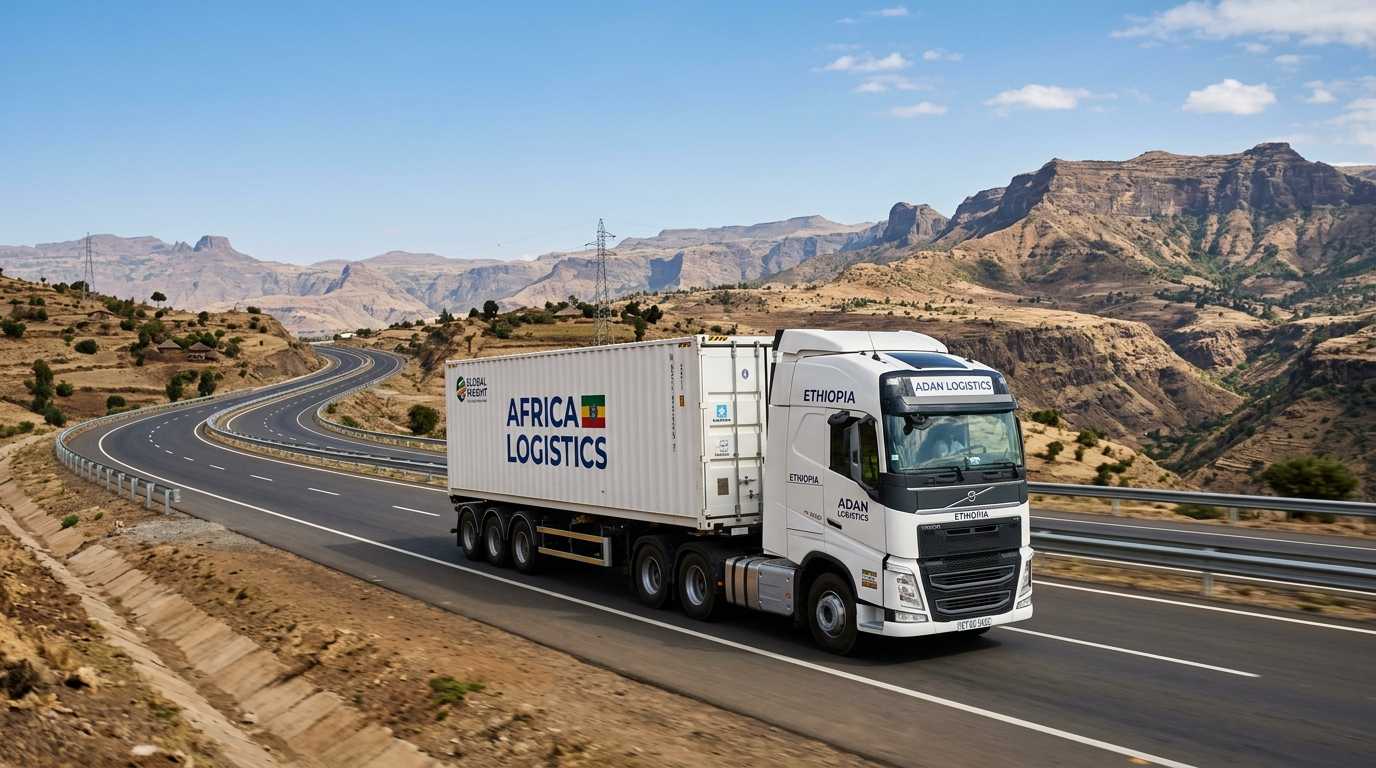
Once cleared at Djibouti, your container makes the overland journey on the Djibouti–Addis Ababa Expressway—a modern, paved road that has dramatically improved transit times. However, the journey is still complex.
The ‘Bond Transit’ Reality
The truck transporting your container from Djibouti to Addis Ababa operates under a ‘Transit Bond’—a financial guarantee to Ethiopia that the container will arrive at the designated inland customs depot (ICD) in Addis Ababa without any goods being offloaded along the way. The standard overland transit time is 2–4 days under normal conditions. Delays can occur at the Dewele border crossing (Djibouti/Ethiopia border) due to truck queuing. The key: your forwarder’s Djibouti agent must pre-arrange the bonded truck alongside the customs clearance. They cannot be done separately. Plan for 3–5 days from port to Addis Ababa ICD. Be ready. Period.
Addis Ababa Last-Mile: The ‘Bole’ ICD and Delivery
The main ICD in Addis Ababa is located near Bole International Airport (Bole Lemi ICD). After final ECC clearance at the ICD, your container is de-stuffed and your goods are loaded onto local trucks for home delivery. This final step is fast—usually within 24–48 hours of clearance. But the roads in Addis Ababa are undergoing rapid construction, and access to older neighborhoods like Piazza, Kazanchis, or Bole can be challenging for large trucks.
Ethiopia Shipping Route Summary
| Segment | Transit Time | Key Risk |
|---|---|---|
| Jebel Ali → Port of Djibouti (Sea) | 7–10 Days | Missing feeder connection; vessel delays. |
| Djibouti DCT → ECC Clearance | 5–14 Days | Value investigation flags; missing HS codes. |
| Djibouti → Addis Ababa ICD (Road) | 3–5 Days | Dewele border queue; bond truck availability. |
| Addis Ababa ICD → Home Delivery | 1–2 Days | City road construction; access for large trucks. |
Frequently Asked Questions
Can I ship a car from Dubai to Ethiopia?
Yes, but the import duties on vehicles in Ethiopia are extremely high—often 100%–200% of the CIF value depending on the vehicle type and age. Only vehicles that are less than 9 years old are eligible for import. Electric vehicles have recently received preferential duty rates as part of Ethiopia’s green economy push. Unless it is an EV or a specifically required vehicle, selling in Dubai is almost always the more cost-effective choice. Period.
Does Ethiopia have a Transfer of Residence exemption for household goods?
Yes, under the Ethiopian Customs Proclamation, returning residents and Ethiopian diaspora who have lived abroad for at least two years can import their personal effects and household goods at a significantly reduced duty rate. The key proof is your UAE residence visa history. Without this, standard import duties apply, which can be 30–35% of assessed value. Get the paperwork sorted before you pack. Period.
What about shipping electronics to Ethiopia?
Ethiopia uses the European standard: 220V, 50Hz, Type C/E/F plugs. Your UAE British-plug (Type G) appliances will work on the correct voltage but need plug adapters. Modern multi-voltage electronics (laptops, phones, most TVs) work perfectly. Large single-voltage appliances (washing machines, ovens) from the UAE are compatible but will need a plug adapter. Ship your quality appliances—they’re fine. Period.
What is the biggest mistake people make shipping to Ethiopia?
Using a freight forwarder with no physical presence in Djibouti. This is the single biggest mistake. Remote management of the Djibouti port is almost impossible given the communication and bureaucratic realities on the ground. Always insist your forwarder has a licensed agent at Djibouti DCT. Non-negotiable. Period.
As you navigate shipping logistics to Ethiopia, it’s essential to also consider the quality of services available for your personal or professional needs, such as those offered by home health care services in Abu Dhabi, which can provide valuable support in your transition.