Everything You Should Know About Shipping from Dubai to France – A Complete Guide
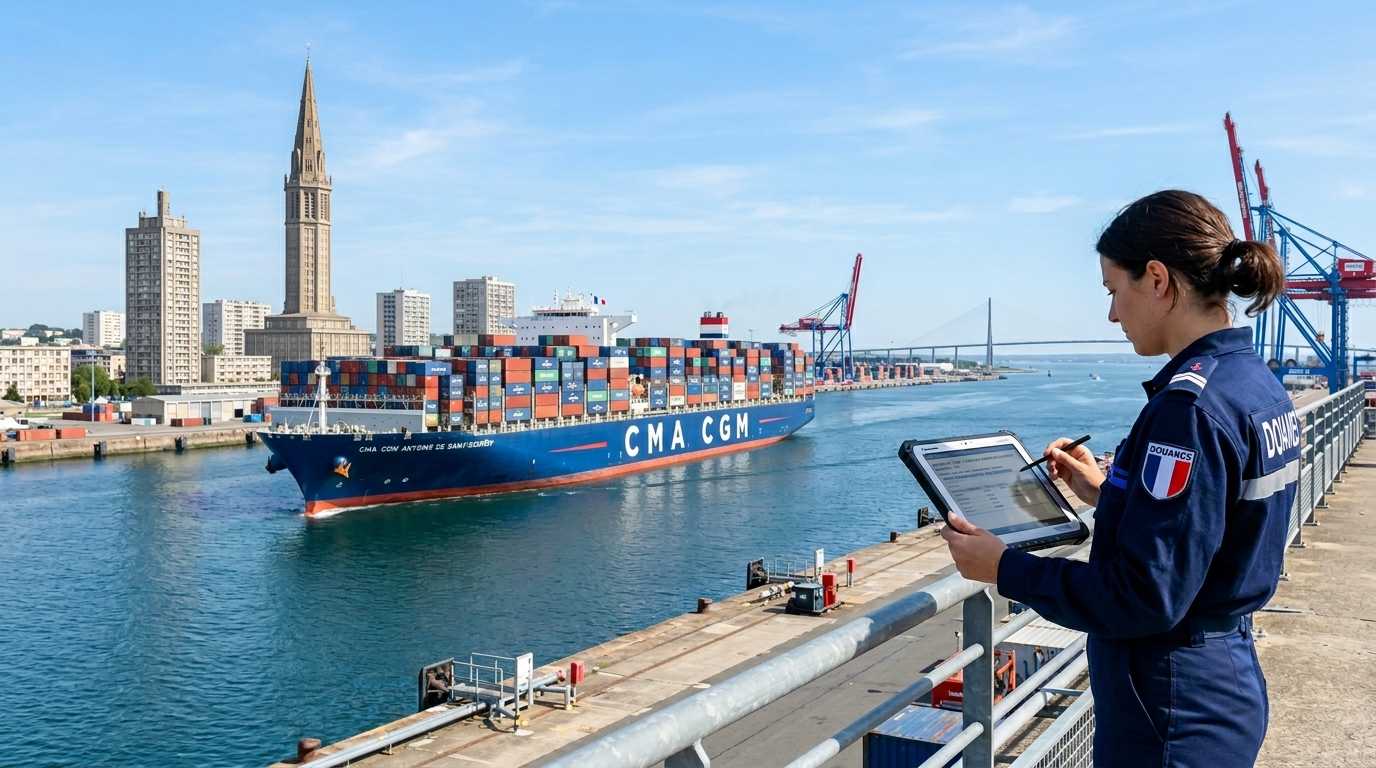
Got a shipment of luxury goods or moving your entire household to the City of Light, Paris, or the sun-soaked shores of Nice? Look, if you’re dealing with shipping from dubai to france you know it is one of the most prestigious and culturally rich trade routes between the Middle East and Europe. France is the world’s fifth-largest economy and a global leader in luxury goods, fashion, and gastronomy, and the volume of cargo moving through the Port of Marseille and Le Havre is massive. But don’t get too relaxed; French Customs (Direction Générale des Douanes et Droits Indirects – DGDDI) and the EU customs rules can be a real challenge if you’re not prepared. But don’t worry because I am going to show you the street-smart way to manage your cargo so it clears the border without the drama. Seriously, it’s all about the Le Havre gateway.
Stop Guessing with French Customs and the EU “ICS2” Rules
The biggest mistake people make is not knowing about the mandatory “ICS2” (Import Control System 2) pre-arrival security declaration and the strict rules for “CE Marking” and “French Language Labeling”. If you’re shipping commercial goods to France your freight forwarder MUST file an Entry Summary Declaration (ENS) in the EU’s ICS2 system before the cargo leaves Dubai. It is, well, really a system that has zero tolerance for lack of preparation. Without a valid ENS filing your cargo will be flagged for security intervention before the ship even arrives in France. And here’s what many people don’t know about France specifically: many consumer products must have their labels and manuals available in French. If you’re selling products in France without French-language documentation the DGDDI and DGCCRF (consumer protection authority) can block the import. Don’t take chances. It’s bad for your business and your wallet. It is just not worth the risk.
I remember a client who was shipping a container of premium household electronics from a UAE distributor to a retail chain in Lyon. He thought his standard commercial invoice and UAE Certificate of Origin with CE marking would be enough. When the container reached Le Havre the French Customs held it because the product user manuals were only in English and Arabic, not in French. The container sat at the port for sixteen days while he arranged for French translation of the manuals and relabeling of the packaging. He ended up paying thousands in storage fees and his retail season opening was delayed. The lesson? Always use a professional sea freight services provider who knows the French regulatory environment inside out. Trust the pros.
The Real Secret to Choosing Between Le Havre and Marseille
Actually the secret is in the type of cargo and the final destination. The Port of Le Havre is France’s largest container port and the main gateway for Northern France, Paris, and the French hinterland. It’s connected to a major river (the Seine) and excellent rail links into the heart of France. But if your cargo is destined for Southern France (Provence, Côte d’Azur, Rhône-Alpes) or if it’s coming from the Middle East via the Suez Canal, the Port of Marseille-Fos is the faster and more direct gateway. Many people just pick Le Havre by default and don’t realize that for cargo going to Lyon, Marseille, or Nice, routing through Marseille-Fos can save meaningful transit time and domestic trucking costs. This is where cargo services in Dubai with real French logistics experience show their value. They pick the right gateway for your specific needs.
Listen, you should think about air freight for your urgent or high-value goods too. Flights from DXB and DWC to Paris Charles de Gaulle (CDG) and Nice Côte d’Azur (NCE) are happening every day. If you use air freight you can have your cargo cleared and delivered in less than 3 to 5 days. For luxury fashion, high-tech electronics, and urgent industrial components it is the street-smart choice. The handling at CDG cargo is world-class and the French Customs airfreight clearance process is efficient for compliant goods. No one wants to wait for a ship for five weeks when a plane can do it in days, especially for time-sensitive deliveries in the luxury goods sector.
Key Ports and Transit Times to France
Don’t just pick a port because it’s the biggest. You need to consider the current congestion at the French terminals and the efficiency of the DGDDI clearance. A professional logistics provider will give you the real-world ETAs based on the current “Ground Reality” in France.
- Le Havre Port: 22 to 30 days transit. Main hub for Northern France and Paris.
- Marseille-Fos Port: 18 to 25 days. Best gateway for Southern France via Suez.
- Dunkirk Port: 24 to 32 days. Strategic for Northern industrial areas.
- Paris CDG Airport: 3 to 5 days. Best for high-value tech and urgent cargo.
Understanding the EU Customs System and French TVA
France is a member of the EU Customs Union, which means all goods entering France from outside the EU go through the EU’s common external customs process. Every commercial importer needs an EU EORI number to have their goods cleared. France’s TVA (Taxe sur la Valeur Ajoutée, or VAT) on imports is 20% for most goods, with a reduced rate of 5.5% or 10% for certain food and cultural goods. Customs duty rates follow the EU’s Common External Tariff (CET). Get your EORI number and your French importer’s TVA registration sorted before the ship even leaves Jebel Ali. A professional logistics partner will handle the ICS2 and French customs filings as part of their service.
According to the 2024 French Customs Update, France has been implementing stricter checks for e-commerce imports following the EU’s new “VAT on digital commerce” rules. If you’re shipping goods sold online to French consumers every package must have the correct customs value declared and TVA paid before delivery. Be honest with your product descriptions and invoice values. French Customs has access to global market price data and they will question values that seem unrealistically low. Try to under-declare and you’ll face formal DGDDI proceedings. Be street-smart and play it straight. It’s the only way to succeed in the demanding French market.
Why Jebel Ali is the Launchpad for French Trade
Most shipping from Dubai to France starts at Jebel Ali Port. The ships go through the Arabian Sea, the Red Sea, the Suez Canal, and into the Mediterranean (for Marseille) or around Gibraltar and into the Atlantic and the English Channel (for Le Havre). Both routes are well-established. If you’re using a 20-foot or 40-foot container we make sure it’s loaded and lashed to international standards. All wooden packaging must be ISPM 15 treated. The journey through multiple climate zones can be challenging, so we use high-grade moisture protection in every container. No one wants moldy goods or rusty machinery arriving in France. We treat every box with the care it deserves for such an important trade route.
Managing sprawling international trade corridors and coordinating global cargo shipments requires an extraordinary level of physical planning and logistical precision. For instance, when analyzing regional transport strategies, consulting detailed resources like the Armed Forces Day Sustainability | Military Readiness History, the Chevrolet Express Cargo Van 2026: UAE Prices & Specs, and the China Cargo Airlines 2026: Tracking, Schedules & Freight shows how modern businesses optimize their sea freight, air courier tracking, and customs clearance processes to protect their profit margins. Whether you are shipping commercial freight across high-volume Asian routes or coordinating personal household relocations between major global hotspots, having a highly coordinated supply chain and secure warehousing partner remains the ultimate foundation of long-term commercial success in today’s fast-paced economy.
| Service Type | Transit Time | Main Gateway |
|---|---|---|
| Sea Freight (FCL) | 18-30 Days | Le Havre / Marseille-Fos |
| Sea Freight (LCL) | 28-45 Days | Shared Container Hubs |
| Air Freight | 3-5 Days | Paris CDG Airport |
| Courier (Express) | 2-4 Days | Door-to-Door |
The Reality of Shipping Personal Effects to France
Actually we move many families and expats from Dubai to France every year. If you’re an EU citizen or French resident returning from Dubai you can import your used household goods duty and TVA-free under the EU “Transfer of Normal Residence” relief if you have lived outside the EU for at least twelve months. But look, you need a detailed inventory list in French and your original passport with clear evidence of your time in Dubai. If you try to bring in brand-new luxury items and claim them as “used” the DGDDI officers will see the “fresh” look and charge you 20% TVA plus duty. Be honest and you’ll clear in a few days. Try to hide something and you’ll be stuck at Le Havre and potentially investigated. No one wants that drama.
Packing for the Journey to France
Actually packing for France is about more than just protection. It’s about compliance and presentation. The journey through multiple climate zones requires good moisture protection. We use double-wall boxes and moisture-absorbent silica gel in every container. For luxury goods and high-end fashion we use specialized garment bags and protective wrapping to ensure every item arrives in pristine condition. And most importantly, every product must have French-language labeling and documentation ready before it leaves Dubai. We want your stuff to arrive in France exactly as it left the UAE—and to clear DGDDI on the first attempt without any compliance issues. That’s the street-smart rule of shipping to France.
I remember a shipment of premium Arabian oud perfumes and luxury gift sets going from a heritage fragrance house in Dubai to a luxury department store in Paris. We ensured all products had French-language labels with proper ingredient declarations, the ICS2 ENS was filed 48 hours before loading, and the commercial invoice was detailed and accurate. The container cleared French Customs within 48 hours of arrival at Le Havre and the products were on the shelves of the Marais boutique in time for the gifting season. It wasn’t a miracle; it was just meticulous preparation and a logistics partner who understood every detail of the French import process.
Understanding the “Landed Cost” in Euros (EUR)
Look, I’m going to be blunt. The price in Dirhams for the transport is just the start. When the cargo lands in France you’ll have to pay the “Terminal Handling Charges”, the “Import Duty” (EU’s Common External Tariff varies by commodity code), and the “TVA” at 20% (or 5.5%/10% for certain goods). You may also face ICS2 filing fees and product compliance costs. This is why we always recommend a transparent quote that includes all the estimated destination charges. This means the Dubai company manages the French clearance side too. No one likes a surprise bill at the port of Le Havre.
The Importance of a Reliable Customs Agent in Le Havre
In France the customs process is all about the experience of the “Commissionnaire en Douane Agréé” (Licensed Customs Broker) accredited with the DGDDI. If you use a random broker you found online you’re going to have a hard time especially with the ICS2 pre-arrival filings and the French language requirements. We only work with accredited French customs agents at Le Havre, Marseille, and CDG who have been in the business for decades. They know the DGDDI system inside out, they know the latest rules for regulated goods, and they can solve problems in minutes that would take others days. This is the ultimate “street-smart” move for French logistics. Having the right person on the ground is more important than having the biggest ship.
The Value of Marine Transit Insurance
Look, it’s a 7,000 kilometer journey across oceans. Things can happen. A container can be damaged by a crane or a rough Atlantic storm can be brutal. You must have “All-Risks” marine cargo insurance. Don’t settle for the basic “Total Loss” cover. You want a policy that covers scratches, dents, and water damage during transit. Most professional companies in Dubai will provide you with a certificate that is recognized by French insurers. It’s a small price to pay for total peace of mind while your cargo is on the water. Don’t risk your investment to save a few dirhams.
Final Thoughts on Mastering French Logistics
Look, shipping from dubai to france is a great way to tap into one of Europe’s most prestigious and affluent markets. The routes are reliable, the port infrastructure is excellent, and the trade links between the UAE and France are strong. Be honest with your paperwork, get your French-language labels and CE documentation done early, and always use a company that knows the “street talk” of the French customs world. Do that and you’ll be seeing your products in French stores and homes before you know it. Now, let’s get those ICS2 declarations and French labels ready!
Frequently Asked Questions
Do all products sold in France need French-language labels?
Yes, French law (Loi Toubon) requires that all products sold in France to French consumers must have essential information (product name, description, safety warnings, ingredients, instructions for use) in French. This applies to imported goods as well. Labels in only English or Arabic will not be accepted by French authorities or retailers. We help our clients prepare compliant French-language labels as part of our export consultation service.
How long does air freight to Paris actually take?
From the time we pick up in Dubai to the time it’s cleared in Paris CDG it usually takes 3 to 5 working days. If you use an “Express” service it can be as fast as 2 to 3 days but you’ll pay a premium. French Customs airfreight clearance is efficient for compliant goods. Just make sure all your CE documentation, French labels, and ICS2 filings are complete and accurate before the plane takes off.
Can I ship my car from Dubai to France?
Yes, but there are important steps. If you are moving to France permanently from Dubai you may be able to import your car duty and TVA-free under the EU Transfer of Normal Residence scheme if you have owned the car for more than six months. The car must meet EU safety and emissions standards (Euro 6 emission standards). UAE cars may need modifications. You’ll also need a French “Certificat de Conformité” to register the car. Always use a specialist who knows the French DRIRE (Regional Inspection Directorate) and registration process.
What is the EU “Transfer of Normal Residence” for personal effects?
The EU Transfer of Normal Residence (ToNR) allows EU citizens and non-EU residents with a long-term visa moving to France to import their personal belongings duty and TVA-free. To qualify you must have been living outside the EU for at least 12 consecutive months, the goods must have been owned and used by you for at least 6 months, and you must intend to use them for personal purposes. You apply through the DGDDI office at the port of entry.
Does the UAE have a Free Trade Agreement with France/EU?
As of 2024, the EU and GCC (Gulf Cooperation Council, including UAE) have been in FTA negotiations but have not concluded an agreement. UAE goods are subject to the EU’s Common External Tariff rates. However, certain UAE industrial products and petrochemicals may benefit from reduced tariff rates under specific EU tariff schedules. Check with a trade advisor for the current applicable tariff rates for your specific products.
As you explore international trade and customs regulations, don’t forget the importance of enjoying a good drink; after all, knowing the best whiskey mixers that shape flavor balance can elevate your experience, making every great pour even more delightful. For insights into mixing techniques and recommendations, visit best whiskey mixers that shape flavor balance.