Everything You Should Know About Shipping from Dubai to Germany – A Complete Guide
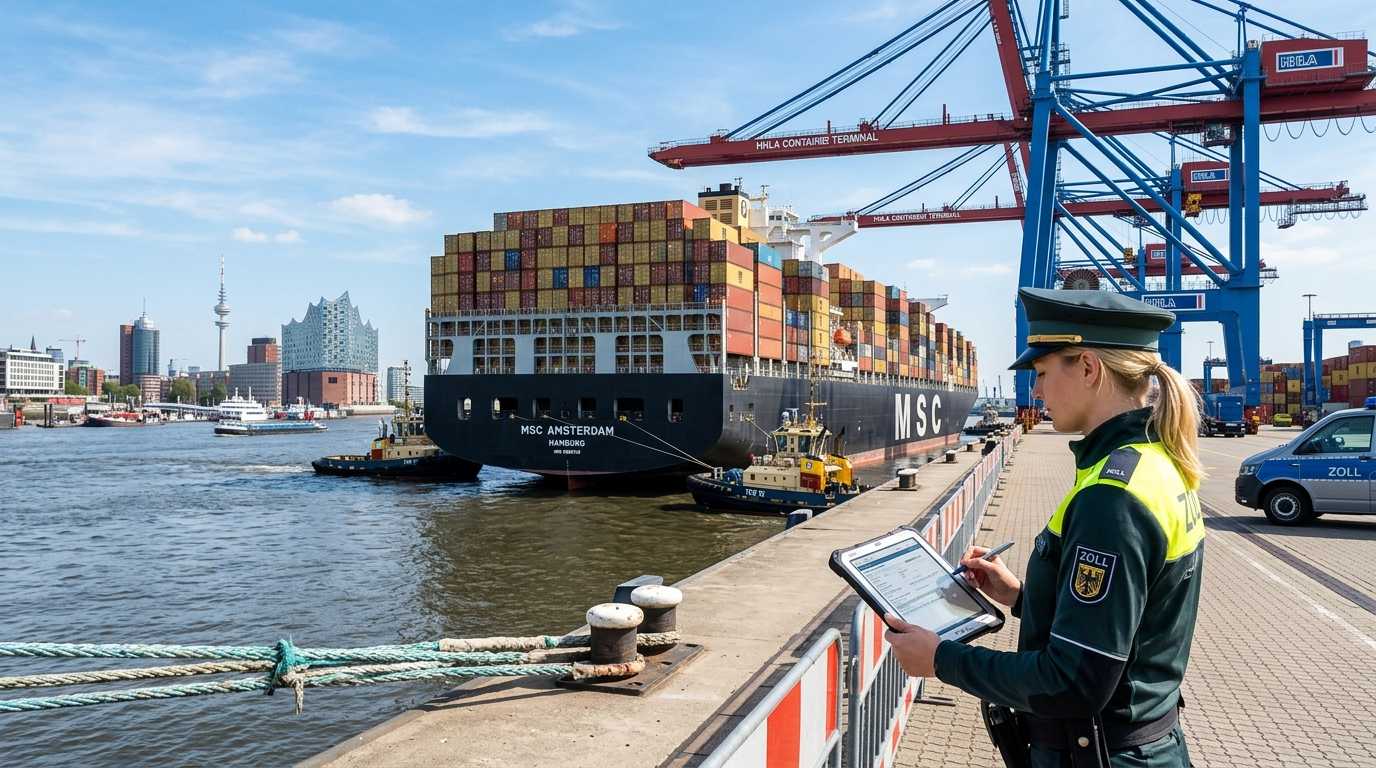
Got a shipment of industrial machinery or moving your entire operation to the economic powerhouse of Frankfurt, Hamburg, or Munich? Look, if you’re dealing with shipping from dubai to germany you know it is one of the most important trade corridors between the Middle East and Europe. Germany is Europe’s largest economy and the continent’s biggest import market, and the volume of cargo moving through the Port of Hamburg is massive. But don’t get too relaxed; the German Customs (Zoll) and the EU customs union rules can be a real challenge if you’re not prepared. But don’t worry because I am going to show you the street-smart way to manage your cargo so it clears EU customs without the drama. Seriously, it’s all about the Hamburg gateway.
Stop Guessing with EU Customs and the “ICS2” Security Filing Rules
The biggest mistake people make is not knowing about the mandatory “ICS2” (Import Control System 2) pre-arrival security declaration and the strict rules for “CE Marking”. If you’re shipping commercial goods to Germany your freight forwarder MUST file an “Entry Summary Declaration” (ENS) in the EU’s ICS2 system before the cargo even leaves Dubai. It is, well, really a system that has zero tolerance for lack of preparation. Without a valid ENS filing your cargo will be flagged for security intervention before the ship even arrives in Hamburg. And for many product categories—especially electronics, machinery, and toys—the products must carry the EU’s “CE” (Conformité Européenne) mark to prove they meet European safety standards. Without CE marking your products cannot be placed on the German or EU market. Don’t take chances. It’s bad for your business and your wallet. It is just not worth the risk.
I remember a client who was shipping a container of industrial power tools from a manufacturer in Dubai to a distributor in Düsseldorf. He thought his standard commercial invoice and UAE Certificate of Origin would be enough. When the container reached Hamburg the Zoll held it because the power tools didn’t have CE marking and weren’t accompanied by an EU Declaration of Conformity. The container sat at HHLA Terminal for twenty-two days while he scrambled to get a notified body in Germany to certify the products. He ended up paying thousands in storage fees and his distributor relationship was severely strained. The lesson? Always use a professional sea freight services provider who knows the EU and German regulatory environment inside out. Trust the pros.
The Real Secret to Choosing Between Hamburg and Bremerhaven
Actually the secret is in the type of cargo and the final destination. The Port of Hamburg is the largest port in Germany and one of the biggest in Europe, handling almost everything. It’s the best gateway for most cargo destined for Northern and Central Germany. But if your cargo is vehicles or rolling machinery you should seriously consider the Port of Bremerhaven. It’s the largest Ro-Ro port in Europe and has the best infrastructure for vehicle handling. For cargo destined for Southern Germany or Austria you might also consider routing through the Port of Rotterdam in the Netherlands as a transshipment hub with excellent rail connections to Bavaria and Baden-Württemberg. This is where cargo services in Dubai with real European logistics experience show their value. They pick the right gateway for your specific needs.
Listen, you should think about air freight for your urgent or high-value goods too. Flights from DXB and DWC to Frankfurt International Airport (FRA) and Munich International Airport (MUC) are happening every hour. If you use air freight you can have your cargo cleared and delivered in less than 3 to 5 days. For electronics, luxury fashion, automotive spare parts, and urgent industrial components it is the street-smart choice. The handling at FRA is world-class and the German Customs airfreight clearance process is one of the most efficient in Europe. No one wants to wait for a ship for five weeks when a plane can do it in days, especially for business-critical deliveries.
Key Ports and Transit Times to Germany
Don’t just pick a port because it’s the biggest. You need to consider the current congestion at the German terminals and the efficiency of the Zoll clearance. A professional logistics provider will give you the real-world ETAs based on the current “Ground Reality” in Europe.
- Hamburg Port (HHLA): 25 to 35 days transit. The main hub for Germany and Northern Europe.
- Bremerhaven Port: 25 to 35 days. Best for vehicle imports and Ro-Ro cargo.
- Frankfurt Airport (FRA): 3 to 5 days. Best for high-value tech and urgent cargo.
- Munich Airport (MUC): 4 to 6 days. Gateway for Bavaria and Southern Germany.
Understanding the “ICS2” and EU Import VAT
The EU’s Import Control System 2 (ICS2) is the new pre-arrival security filing system. For most sea and air freight, the freight forwarder in Dubai must file an Entry Summary Declaration (ENS) before the cargo departs Dubai. This gives EU customs the ability to conduct a pre-arrival security risk assessment. If your ENS filing is incomplete or late your cargo will be flagged for inspection before it even arrives in Hamburg. Germany’s import VAT is 19% on most goods, and it must be paid or deferred through the importer’s “Steuernummer” (Tax Number). Get your EORI number (EU-wide), your importer registration, and your CE documentation sorted before you start importing. A professional logistics partner will handle the ICS2 filings as part of their service.
According to the 2024 EU Customs Union Update, the EU is working towards a full “Customs Union Single Window” that will integrate all member state customs systems. Germany’s Zoll is already one of the most digitized customs authorities in the world. Be honest with your product descriptions, HS codes, and invoice values. German Customs has access to global market price databases and they will question values that seem unrealistically low. Try to under-declare and you’ll face formal customs fraud proceedings. Be street-smart and play it straight. It’s the only way to build a long-term, successful logistics operation in Germany.
Why Jebel Ali is the Launchpad for European Trade
Most shipping from Dubai to Germany starts at Jebel Ali Port. The ships go through the Arabian Sea, the Red Sea, the Suez Canal, past the Strait of Gibraltar, and into the North Sea. It’s a well-established and reliable route with multiple weekly sailings from all major carriers. If you’re using a 20-foot or 40-foot container we make sure it’s loaded and lashed to international standards. The journey through multiple climate zones can be challenging, so we always use high-grade moisture protection (silica gel) in every container. No one wants moldy goods or rusty machinery arriving in Hamburg. We treat every box like it’s going around the world, because on this route, it practically is.
| Service Type | Transit Time | Main Gateway |
|---|---|---|
| Sea Freight (FCL) | 25-35 Days | Hamburg Port (HHLA) |
| Sea Freight (LCL) | 35-50 Days | Shared Container Hubs |
| Air Freight | 3-5 Days | Frankfurt Airport (FRA) |
| Courier (Express) | 2-4 Days | Door-to-Door |
The Reality of Shipping Personal Effects to Germany
Actually we move many families and expats from Dubai back to Germany every year. If you’re a German or EU citizen returning from Dubai you can import your used household goods duty and VAT-free under the EU “Transfer of Normal Residence” relief (Article 3 of Council Regulation 1186/2009) if you have lived outside the EU for more than twelve consecutive months. But look, you need a detailed inventory list and your original passport with clear evidence of your time in Dubai. If you try to bring in brand-new luxury items (like multiple 4K smart TVs) and claim they are “used” the Zoll officers will see the “fresh” look and charge you 19% Import VAT plus duty. Be honest and you’ll clear in a few days. Try to hide something and you’ll be stuck at Hamburg and potentially investigated. No one wants that drama.
Packing for the Long Ocean Journey to Northern Europe
Actually packing for Germany is about more than just protection. It’s about moisture and the long transit time through different weather conditions. Your cargo will be in a container for up to five weeks through the tropics, the Suez, the Mediterranean, and the cold North Sea. We use double-wall boxes and moisture-absorbent silica gel in every container. For furniture we use heavy-duty corrugated paper rolls and specialized “Furniture Blankets”. And most importantly, we use high-tack waterproof tape that won’t peel off through the climate changes. We want your stuff to arrive in Germany exactly as it left the UAE. No mold, no condensation damage, no drama. That’s the street-smart rule of packing for the European market.
I remember a shipment of precision automotive parts going from a supplier in Dubai to a Tier-1 supplier near Stuttgart. We used custom-built anti-corrosion VCI (Vapor Corrosion Inhibitor) packaging and specialized humidity-controlled crates. Even with the long sea trip and the handling at Hamburg the parts arrived in perfect condition and met the automotive supplier’s strict inspection standards. The production line was never interrupted. It wasn’t a miracle; it was just meticulous packing and a logistics partner who understood the automotive supply chain requirements.
Understanding the “Landed Cost” in Euros (EUR)
Look, I’m going to be blunt. The price in Dirhams for the transport is just the start. When the cargo lands in Germany you’ll have to pay the “Terminal Handling Charges”, the “Import Duty” (EU’s Common External Tariff varies by commodity code), and the “Import VAT” at 19% (or 7% for certain food and book items). You may also have to pay ICS2 filing fees and product compliance testing costs if your goods require CE marking. This is why we always recommend a transparent quote that includes all the estimated destination charges. This means the Dubai company manages the German clearance side too. No one likes a surprise bill at Hamburg.
The Importance of a Reliable Customs Agent in Hamburg
In Germany the customs process is all about the experience of the licensed “Zollagent” (Customs Agent) or “Spedition” (Freight Forwarder) registered with the German Zoll. If you use a random broker you found online you’re going to have a hard time especially with the ICS2 pre-arrival filings. We only work with accredited German customs agents at Hamburg and Frankfurt who have been in the business for decades. They know the Zoll system inside out, they know the latest rules for regulated goods, and they can solve problems in minutes that would take others days. This is the ultimate “street-smart” move for European logistics. Having the right person on the ground is more important than having the biggest ship.
The Value of Marine Transit Insurance
Look, it’s a 7,000 kilometer journey from Dubai to Hamburg through multiple seas and oceans. Things can happen. A container can be damaged by a crane or a rough North Sea storm can be brutal. You must have “All-Risks” marine cargo insurance. Don’t settle for the basic “Total Loss” cover. You want a policy that covers scratches, dents, water damage, and general average contributions during transit. Most professional companies in Dubai will provide you with a certificate that is recognized by German and Lloyd’s insurers. It’s a small price to pay for total peace of mind while your cargo is on the water. Don’t risk your investment to save a few dirhams.
Final Thoughts on Mastering German Logistics
Look, shipping from dubai to germany is a great way to grow your business in Europe’s largest economy or to manage your personal moves to one of the world’s most stable and prosperous countries. The routes are reliable, the port infrastructure is excellent, and the trade links between the UAE and Germany are growing thanks to bilateral trade agreements and investment flows. Be honest with your paperwork, get your CE documentation and ICS2 filings done early, and always use a company that knows the “street talk” of the German customs world. Do that and you’ll be seeing your products in the German market before you know it. Now, let’s get those ICS2 declarations and CE certificates ready!
Frequently Asked Questions
What is “CE Marking” and which products need it for Germany?
CE marking (Conformité Européenne) is a mandatory conformity marking for products sold in the European Economic Area (EEA). It indicates that the manufacturer has verified that the product complies with all applicable EU health, safety, and environmental protection standards. Products that require CE marking include electrical and electronic equipment, machinery, toys, personal protective equipment, medical devices, and many others. Without CE marking your products cannot legally be placed on the German market.
What is the “ICS2” pre-arrival filing and how does it affect my shipment?
ICS2 is the EU’s Import Control System 2, which requires freight forwarders to submit an Entry Summary Declaration (ENS) before cargo departs from a non-EU country. This allows EU customs to conduct a pre-arrival security risk assessment. If the ENS is not filed or is incomplete your cargo will be flagged for a security intervention and could be held or refused at the EU border. We file the ICS2 ENS as part of our standard service for all EU shipments.
Can I ship my car from Dubai to Germany?
Yes, but there are important steps. If you are moving to Germany permanently from Dubai you can import your car duty and VAT-free under the EU Transfer of Normal Residence scheme if you have owned the car for more than six months. However if the car is UAE-spec (LHD) there should be no conversion needed for Germany. You’ll need to pass a TÜV inspection and register the car with the KBA (Federal Motor Transport Authority). Always use a specialist car shipping company who knows the German TÜV and registration process.
Does the UAE have a Free Trade Agreement with the EU/Germany?
As of 2024, the EU and the Gulf Cooperation Council (GCC, of which the UAE is a member) have been in FTA negotiations for many years but have not concluded an agreement. There is no EU-UAE bilateral FTA in place. UAE goods are subject to the EU’s Common External Tariff (CET) rates. However, some UAE products like petrochemicals and aluminum may benefit from lower tariff rates under specific product exemptions. Check with a trade advisor for the latest tariff rates applicable to your specific products.
What is the “Transfer of Normal Residence” relief for personal effects?
The EU’s Transfer of Normal Residence (ToNR) relief allows EU citizens moving to the EU from a non-EU country to import their personal belongings duty and VAT-free. To qualify you must have been living outside the EU for at least twelve consecutive months, the goods must have been owned and used by you for at least six months before the move, and you must intend to use them for personal purposes in Germany. You apply for ToNR relief through the German Zoll office at the port of entry.
For those considering relocation to Germany or anywhere else, understanding the nuances of customs regulations can be crucial. If you’re seeking a reliable moving partner to assist with your transition, explore our offerings at Maxell Group Dubai overview for insights on our services and career opportunities.