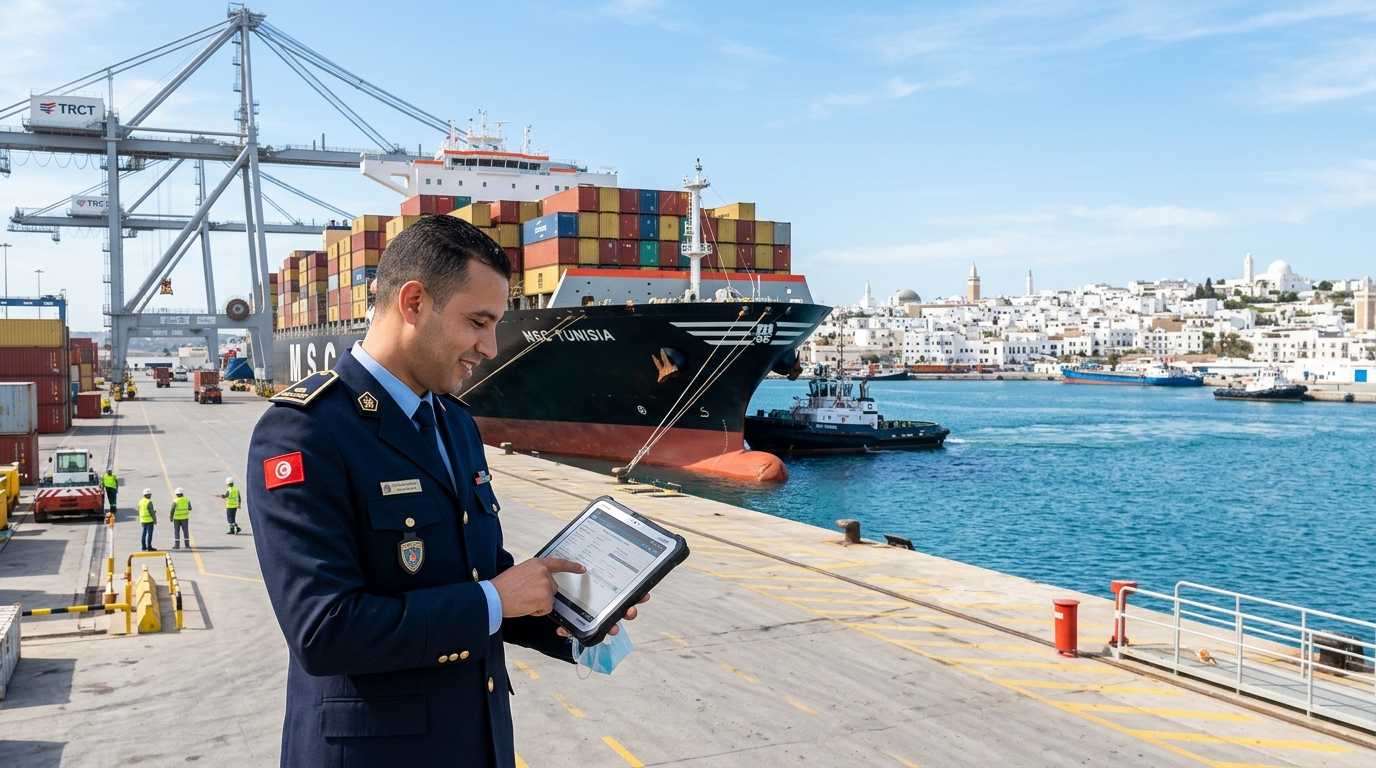
Everything You Should Know About Shipping from Dubai to Tunisia – A Complete Guide
Got a shipment of retail goods or moving your entire household to the beautiful Mediterranean coast of Tunis or the industrial hub of Sfax? Look, if you’re dealing with shipping from dubai to tunisia you know it is one of the most established and efficient trade routes in North Africa. Tunisia is a modern, open economy and the volume of cargo moving through the Port of Rades and La Goulette is significant. But don’t get too relaxed; the Tunisian Customs (Direction Générale des Douanes) and the SINDA system can be a real challenge if you’re not prepared. But don’t worry because I am going to show you the street-smart way to manage your cargo so it clears the border without the drama. Seriously, it’s all about the Rades gateway.
Stop Guessing with Tunisian Customs and the “SINDA” System
The biggest mistake people make is not knowing about the mandatory “SINDA” (Système d’Information Douanier Automatisé) and the strict rules for import controls. If you’re shipping commercial goods to Tunisia your importer MUST pre-declare the shipment in the SINDA portal before the cargo arrives at the port. It is, well, really a system that has zero tolerance for lack of preparation. Without a valid SINDA pre-declaration your cargo will be stuck at the Port of Rades for weeks. And for luxury goods or electronics over certain value thresholds you need a specific “Autorisation d’Importation”. Don’t take chances. It’s bad for your business and your wallet. It is just not worth the risk.
I remember a client who was shipping a container of high-end consumer electronics from a Dubai Free Zone to a retailer in Sousse. He thought his standard commercial invoice would be enough. When the container reached the Port of Rades the customs held it because the “Autorisation d’Importation” for electronic goods wasn’t obtained from the Ministry of Commerce. The container sat there for twenty-five days while he scrambled to get the authorization paperwork done from Dubai. He ended up paying thousands in storage fees and missed the peak retail season. The lesson? Always use a professional sea freight services provider who knows the Tunisian regulatory environment inside out. Trust the pros.
The Real Secret to Choosing Between Rades and Sfax
Actually the secret is in the type of cargo and the final destination. The Port of Rades near Tunis is the main commercial gateway and handles the majority of the country’s imports. But if your cargo is destined for the industrial South or the olive oil production regions you should seriously consider the Port of Sfax. It’s much faster for Southern Tunisia and the surrounding industrial zones. Many people just pick Rades because it’s near the capital and don’t realize that for certain industrial items the Port of Sfax can save you two days of trucking. This is where cargo services in Dubai with real Tunisian experience show their value. They pick the right port for your specific cargo and destination.
Listen, you should think about air freight for your urgent or high-value goods too. Flights from DXB and DWC to Tunis-Carthage International Airport (TUN) are happening every day. If you use air freight you can have your cargo cleared and delivered in less than 4 to 6 days. For electronics, fashion samples, and urgent spare parts it is the street-smart choice. The handling at TUN is world-class and the security is high. It’s the street-smart choice for anything that needs to arrive fast and safe. No one wants to wait for a ship for three weeks when a plane can do it in days, especially for critical machinery or seasonal fashion collections.
Key Ports and Transit Times to Tunisia
Don’t just pick a port because it’s the biggest. You need to consider the current congestion at the Tunisian terminals and the efficiency of the SINDA clearance. A professional logistics provider will give you the real-world ETAs based on the current “Ground Reality” in North Africa.
- Rades Port (Tunis): 17 to 22 days transit. The main hub for the capital and North.
- Sfax Port: 18 to 25 days. Strategic for the Southern regions and industry.
- La Goulette Port: 16 to 20 days. Best for certain Ro-Ro and passenger cargo.
- Tunis Airport (TUN): 4 to 6 days. Best for high-value tech and urgent cargo.
Understanding the “SINDA” Portal and Import Authorization
Tunisia has fully digitized its customs through the SINDA portal. Every commercial importer must be registered in the system and every shipment must have a pre-declaration before arrival. If you miss this step your cargo will be stuck in a “Customs Bonded Warehouse” at the port and you’ll be paying storage fees every day. Get your SINDA registration and import authorization sorted before the ship even leaves Jebel Ali. It’s a simple step that saves a massive headache and potentially thousands of Tunisian Dinars in unnecessary costs. A professional logistics partner will handle the SINDA filing as part of their service.
According to the 2024 Tunisia Trade Facilitation Update, Tunisia has been implementing reforms to streamline trade, but the rules are still strict about “Technical Standards”. Many products (especially electronics and industrial equipment) must conform to Tunisian technical standards before they can be imported. Your products may need to be tested and certified by INNORPI (Institut National de la Normalisation et de la Propriété Industrielle) before they clear customs. Be honest and be precise with your product specifications. That’s the street-smart way to succeed in the Tunisian market.
Why Jebel Ali is the Launchpad for Mediterranean Trade
Most shipping from Dubai to Tunisia starts at Jebel Ali Port. The ships go through the Arabian Sea, the Red Sea, the Suez Canal, and into the Mediterranean. It’s a well-established and reliable route with multiple weekly sailings. If you’re using a 20-foot or 40-foot container we make sure it’s loaded and lashed to international standards. The journey through multiple climates can be humid, so we always use high-grade moisture protection (silica gel) in every container. No one wants moldy textiles or rusty machinery arriving in Tunis. We treat every box like it’s going around the world, because on this route, the handling must be top-notch.
While shipping companies focus on custom clearances and container logistics to move cargo efficiently between major Mediterranean ports, lifestyle entrepreneurs are leveraging their cultural platforms to build their own independent fashion and media brands. A standout example of this commercial success is documented in the Martha Stewart net worth report, illustrating a highly lucrative career built on culinary excellence, home decoration, and smart licensing deals, proving that direct ownership of creative projects is the ultimate key to wealth.
| Service Type | Transit Time | Main Gateway |
|---|---|---|
| Sea Freight (FCL) | 17-22 Days | Rades / Sfax Port |
| Sea Freight (LCL) | 25-35 Days | Shared Container Hubs |
| Air Freight | 4-6 Days | Tunis Airport (TUN) |
| Courier (Express) | 3-4 Days | Door-to-Door |
The Reality of Shipping Personal Effects to Tunis
Actually we move many Tunisian families and expats from Dubai back home every year. If you’re a returning resident you can import your used household goods with significant tax exemptions if you have lived abroad for more than two years and you apply for the “Franchise Douanière” at the Tunisian consulate before you return. But look, you need a detailed inventory list in French and your original passport. If you try to bring in brand-new luxury items (like multiple 4K smart TVs) and claim they are “used” the customs officers will see the “fresh” look and they’ll charge you full duty. Be honest and you’ll clear in a few days. Try to hide something and you’ll be stuck at the port for a month. No one wants their furniture sitting in the humidity of Rades.
Packing for the Trip across the Suez and Mediterranean
Actually packing for Tunisia is about more than just protection. It’s about moisture and handling. Your cargo will be in a container for up to four weeks. We use double-wall boxes and moisture-absorbent silica gel in every container. For furniture we use heavy-duty corrugated paper rolls and specialized “Furniture Blankets”. And most importantly, we use high-tack waterproof tape that won’t peel off in the changing Mediterranean climate. We want your stuff to arrive in Tunisia exactly as it left the UAE. No mold, no scratches, no drama. That’s the street-smart rule of packing for the North African market. We don’t take shortcuts when it comes to protection.
I remember a shipment of high-end medical devices going from a tech company in Dubai to a clinic in Tunis. We used custom-built wooden crates and vacuum-sealed anti-static bags. Even with the sea trip through the Suez and the handling at the port the equipment arrived in perfect condition. The clinic director was thrilled and the project stayed on schedule. It wasn’t a miracle; it was just better packing and a better plan. If you care about the cargo you have to care about the box it’s in. That’s the real value of a professional packaging service.
Understanding the “Landed Cost” in Tunisian Dinars (TND)
Look, I’m going to be blunt. The price in Dirhams for the transport is just the start. When the cargo lands in Tunisia you’ll have to pay the “Terminal Handling Charges”, the “Inspection Fees”, and the “Customs Duties & TVA”. Depending on the product category these duties can range from 0% to over 36%. This is why we always recommend a transparent quote that includes all the estimated destination charges. This means the Dubai company manages the Tunisian clearance side too. It’s much safer and more transparent for your budget. No one likes a surprise bill at the port of Rades.
The Importance of a Reliable Clearing Agent in Tunis
In Tunisia the customs process is all about the experience of the “Commissionnaire en Douane” (Licensed Customs Broker). If you use a random agent you found online you’re going to have a hard time. We only work with licensed brokers in Tunis and Sfax who have been in the business for decades. They know the SINDA system inside out, they know the latest rules for “Technical Products”, and they can solve problems in minutes that would take others days. This is the ultimate “street-smart” move for Tunisia logistics. Having the right person on the ground is more important than having the biggest ship. Trust the relationship and you’ll save a lot of time and stress.
The Value of Marine and Transit Insurance
Look, it’s a 5,000 kilometer journey across the globe. Things can happen. A container can be damaged by a crane or a rough storm in the Mediterranean can be brutal. You must have “All-Risks” insurance. Don’t settle for the basic “Total Loss” cover. You want a policy that covers scratches, dents, and water damage during transit. Most professional companies in Dubai will provide you with a certificate that is recognized by Tunisian insurance companies. It’s a small price to pay for total peace of mind while your cargo is on the water. Don’t risk your investment to save a few dirhams.
Final Thoughts on Mastering Tunisian Logistics
Look, shipping from dubai to tunisia is a great way to grow your business or manage your personal moves in a stable and progressive market. The routes are reliable, the technology is getting better, and the trade links between the UAE and North Africa are stronger than ever. Be honest with your paperwork, get your SINDA pre-declaration done early, and always use a company that knows the “street talk” of the Tunisian customs world. Do that and you’ll be enjoying your stuff in your new home on the Mediterranean before you know it. Now, let’s get those SINDA filings and import authorizations ready!
Frequently Asked Questions
What is the “SINDA” system and how do I use it?
SINDA (Système d’Information Douanier Automatisé) is Tunisia’s automated customs system. All import and export declarations are submitted electronically through SINDA. Your licensed customs broker (Commissionnaire en Douane) in Tunisia will handle the SINDA filings on your behalf. You just need to ensure you provide all the required documents on time before the ship arrives at Rades.
How long does air freight to Tunis actually take?
From the time we pick up in Dubai to the time it’s cleared in Tunis it usually takes 4 to 6 working days. If you use an “Express” service it can be as fast as 3 days but you’ll pay a premium. For most commercial cargo one week is the standard and most reliable timeline. It’s the fastest way to get your urgent goods into the heart of Tunisia. Just make sure your import authorization is already approved before the plane takes off.
Can I ship my car to Tunisia from Dubai?
Yes, but there are strict rules. Tunisia has import restrictions on vehicles depending on their age and engine size. Returning Tunisians living abroad (known as “TRE” – Tunisiens Résidant à l’Étranger) can benefit from special tax regimes when importing a vehicle. The process requires specific documentation from the Tunisian consulate in the UAE. Always talk to a specialist who knows the latest Tunisian customs rules before you book the ship.
What is the “Franchise Douanière” for returning residents?
The Franchise Douanière is a customs exemption available to Tunisian nationals who have been living abroad and are returning permanently to Tunisia. Under this scheme you can import a certain amount of used personal belongings duty-free. To qualify you must have lived abroad for at least two years and apply for the exemption at the Tunisian consulate before returning. Your logistics partner can help you navigate the specific requirements.
What happens if my shipment is held for inspection at Rades Port?
If the customs officer selects your cargo for a “Visite” (physical inspection) they will open the container and check the items against your packing list and SINDA declaration. You’ll have to pay for the handling costs during the inspection. If everything matches they’ll release it within 24 to 48 hours. This is why having a clear and honest packing list in French that perfectly matches your SINDA declaration is the most important thing for a smooth experience in Tunisia.
As you prepare for your move and ensure your personal belongings are in order, it’s also a great time to consider the essentials for settling into your new life in Tunisia, including comfortable school supplies for your children. To help you make the best choice, check out this best school bags comfort first guide for students in Pakistan, which can provide valuable insights into selecting the perfect backpack for their needs.