Everything You Should Know About Shipping from Dubai to UK – A Complete Guide
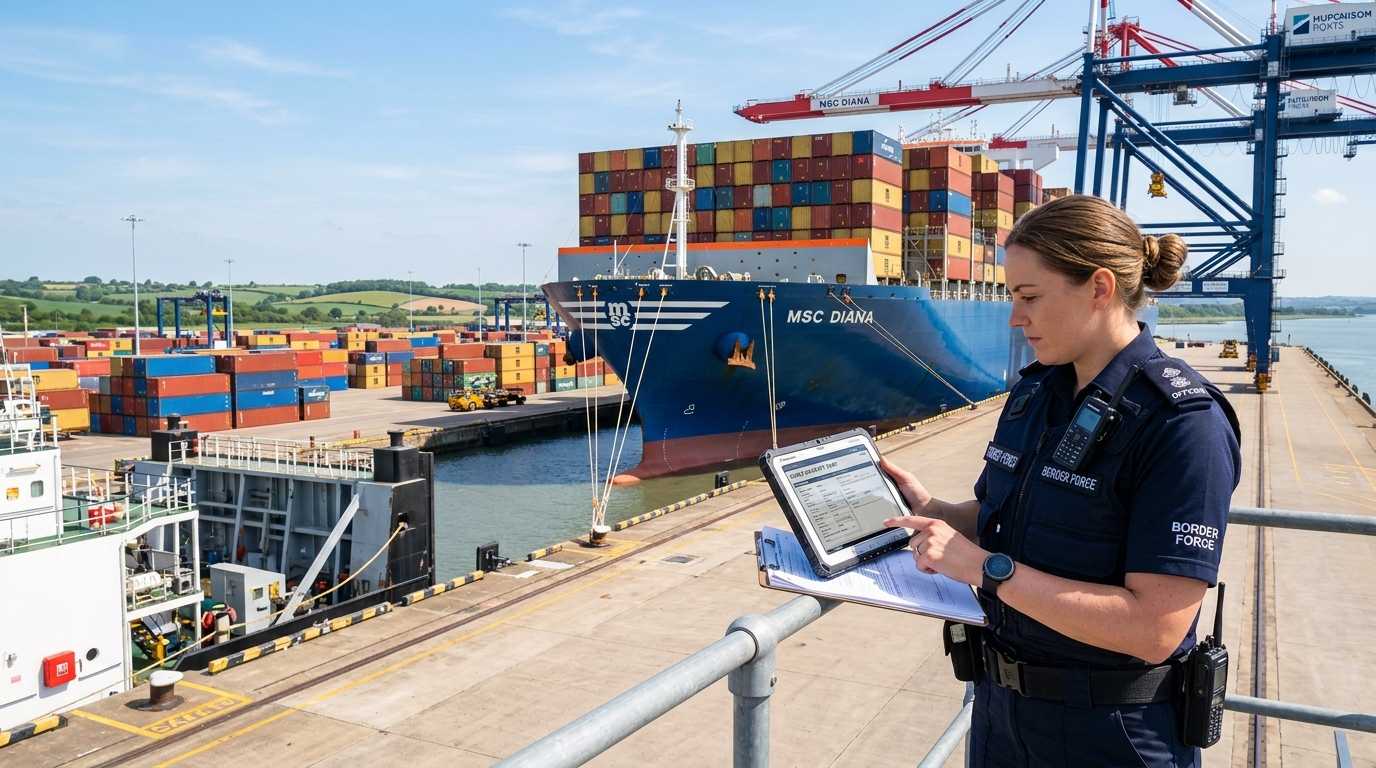
Got a shipment of retail goods or moving your entire household to the buzzing streets of London, Manchester, or Birmingham? Look, if you’re dealing with shipping from dubai to uk you know it is one of the most established and high-volume trade routes between the Middle East and Europe. The UK is a massive market and the volume of cargo moving through the Port of Felixstowe and Southampton is massive. But don’t get too relaxed; Post-Brexit customs rules and the new UK Border Target Operating Model (BTOM) can be a real challenge if you’re not prepared. But don’t worry because I am going to show you the street-smart way to manage your cargo so it clears UK customs without the drama. Seriously, it’s all about the Felixstowe gateway.
Stop Guessing with UK Customs (HMRC) and the Post-Brexit Reality
The biggest mistake people make is not knowing about the mandatory “EORI” (Economic Operators Registration and Identification) number and the strict rules for “Rules of Origin”. Since Brexit the UK has its own customs rules separate from the EU. If you’re shipping commercial goods to the UK your importer MUST have a valid UK EORI number and must file an “Import Declaration” with HMRC through the Customs Declaration Service (CDS). It is, well, really a system that has zero tolerance for lack of preparation. Without a valid EORI number your cargo will be stuck at the port. And if you’re importing food products there are new physical inspection requirements under the BTOM that started in 2024. Don’t take chances. It’s bad for your business and your wallet. It is just not worth the risk.
I remember a client who was shipping a container of premium food products from a UAE manufacturer to a supermarket chain in London. He thought his UAE Certificate of Origin and health certificates would be enough. When the container reached Felixstowe the HMRC held it because the new BTOM physical inspection requirement for food products wasn’t pre-notified on the UK’s “Import of Products, Animals, Food and Feed System” (IPAFFS). The container sat at the port for ten days while he scrambled to get the pre-notification done through a UK customs agent. He ended up paying thousands in storage fees and his products nearly expired. The lesson? Always use a professional sea freight services provider who knows the post-Brexit UK rules inside out. Trust the pros.
The Real Secret to Choosing Between Felixstowe and Southampton
Actually the secret is in the type of cargo and the final destination. The Port of Felixstowe is the UK’s largest container port and handles most of the country’s containerized imports, especially from the Middle East and Asia. It’s the best choice for cargo destined for London, the Midlands, and the South East. But if your cargo is destined for the South-West or the South Coast you should seriously consider Southampton. It has a more modern terminal and often faster clearance times for certain cargo types. Many people just pick Felixstowe by default and don’t realize that for certain destinations Southampton can save meaningful transit time. This is where cargo services in Dubai with real UK logistics experience show their value. They pick the right gateway for your specific needs.
Listen, you should think about air freight for your urgent or high-value goods too. Flights from DXB and DWC to London Heathrow (LHR) and London Gatwick (LGW) are happening every hour. If you use air freight you can have your cargo cleared and delivered in less than 3 to 5 days. For electronics, luxury fashion, and urgent industrial spare parts it is the street-smart choice. The handling at Heathrow Cargo is world-class and the HMRC airfreight clearance process is fast for compliant goods. No one wants to wait for a ship for five weeks when a plane can do it in days, especially for time-sensitive business needs.
Key Ports and Transit Times to the UK
Don’t just pick a port because it’s the biggest. You need to consider the current congestion at the UK terminals and the efficiency of the HMRC clearance. A professional logistics provider will give you the real-world ETAs based on the current “Ground Reality” in the UK.
- Felixstowe Port: 25 to 35 days transit. The main hub for the whole country.
- Southampton Port: 28 to 38 days. Strategic gateway for the South and South-West.
- London Gateway Port: 26 to 36 days. Modern deep-water port for the London region.
- Heathrow Airport (LHR): 3 to 5 days. Best for high-value tech and urgent cargo.
Understanding the UK “CDS” System and Import VAT
Since Brexit the UK has its own Customs Declaration Service (CDS) which replaced the old CHIEF system. Every commercial import must be declared through the CDS by a licensed customs agent. The UK Import VAT is 20% on most goods, and it must be paid or deferred before the goods can be released from the port. Many UK importers use a “Duty Deferment Account” to pay the VAT and duties monthly rather than per-shipment. This improves cash flow significantly. Get your EORI number, your importer registration, and your duty deferment account set up before you start importing. A professional logistics partner will walk you through the entire setup process as part of their service.
According to the 2024 HMRC Customs Update, the UK is implementing stricter checks on goods from non-EU countries including the UAE. The new “Border Target Operating Model” (BTOM) means that certain food, plant, and animal products now require pre-notification and physical inspection. Be honest with your product descriptions and ensure all health and phytosanitary certificates are in order. Try to skip a step and your food products will be destroyed at the border. Be street-smart and plan every detail in advance. It’s the only way to succeed in the demanding UK market.
Why Jebel Ali is the Launchpad for European Trade
Most shipping from Dubai to the UK starts at Jebel Ali Port. The ships go through the Arabian Sea, the Red Sea, the Suez Canal, and past the Strait of Gibraltar into the Atlantic and the English Channel. It’s a well-established and reliable route with multiple weekly sailings. If you’re using a 20-foot or 40-foot container we make sure it’s loaded and lashed to international standards. The journey through multiple climates can be challenging, so we always use high-grade moisture protection (silica gel) in every container. No one wants moldy goods or rusty machinery arriving in Felixstowe. We treat every box like it’s going around the world, because on this route, it practically is.
| Service Type | Transit Time | Main Gateway |
|---|---|---|
| Sea Freight (FCL) | 25-35 Days | Felixstowe / London Gateway |
| Sea Freight (LCL) | 35-50 Days | Shared Container Hubs |
| Air Freight | 3-5 Days | Heathrow Airport (LHR) |
| Courier (Express) | 2-4 Days | Door-to-Door |
The Reality of Shipping Personal Effects to the UK
Actually we move many families and expats from Dubai back to the UK every year. If you’re a UK citizen returning from Dubai you can import your used household goods duty-free under the “Transfer of Residence” (ToR) relief if you have lived abroad for more than twelve months. But look, you need a detailed inventory list and your original passport with clear evidence of your time abroad. If you try to bring in brand-new luxury items (like multiple 4K smart TVs) and claim they are “used” the HMRC officers will see the “fresh” look and charge you 20% Import VAT plus duty. Be honest and you’ll clear in a few days. Try to hide something and you’ll be stuck at the port and potentially investigated for customs fraud. No one wants that drama.
Packing for the Long Ocean Journey
Actually packing for the UK is about more than just protection. It’s about moisture and the long transit time. Your cargo will be in a container for up to five weeks through multiple climate zones. We use double-wall boxes and moisture-absorbent silica gel in every container. For furniture we use heavy-duty corrugated paper rolls and specialized “Furniture Blankets”. And most importantly, we use high-tack waterproof tape that won’t peel off through the climate changes. We want your stuff to arrive in the UK exactly as it left the UAE. No mold, no water damage, no drama. That’s the street-smart rule of packing for the European market. We don’t take shortcuts when it comes to protection.
I remember a shipment of fine antique furniture going from a collector in Dubai to a gallery in Mayfair, London. We used custom-built wooden crates with specialized humidity-controlled padding. Even with the long sea trip and the handling at Felixstowe the furniture arrived in pristine condition, cleared HMRC in one day, and was in the gallery window within a week of arrival. The gallery owner was thrilled and the pieces sold at auction for a record price. It wasn’t a miracle; it was just meticulous packing and a logistics partner who understood the value of the cargo.
Understanding the “Landed Cost” in British Pounds (GBP)
Look, I’m going to be blunt. The price in Dirhams for the transport is just the start. When the cargo lands in the UK you’ll have to pay the “Terminal Handling Charges”, the “Import Duty” (varies by commodity code from 0% to 12% for most goods), and the “Import VAT” at 20%. You may also have to pay BTOM inspection fees for regulated goods. This is why we always recommend a transparent quote that includes all the estimated destination charges. This means the Dubai company manages the UK clearance side too. It’s much safer and more transparent for your budget. No one likes a surprise bill at Felixstowe port.
The Importance of a Reliable UK Customs Broker
In the UK the customs process is all about the experience of the “Licensed Customs Agent” accredited with HMRC. If you use a random broker you found online you’re going to have a hard time especially with all the post-Brexit complexities. We only work with accredited UK customs agents at Felixstowe and Heathrow who have been in the business for decades. They know the CDS system inside out, they know the latest BTOM rules for food and regulated goods, and they can solve problems in minutes that would take others days. This is the ultimate “street-smart” move for UK logistics. Having the right person on the ground is more important than having the biggest ship.
The Value of Marine Transit Insurance
Look, it’s a 7,000 kilometer journey across the Indian Ocean, through the Suez, and across the Atlantic. Things can happen. A container can be damaged by a crane or a rough North Atlantic storm can be brutal. You must have “All-Risks” insurance. Don’t settle for the basic “Total Loss” cover. You want a policy that covers scratches, dents, and water damage during transit. Most professional companies in Dubai will provide you with a certificate that is recognized by Lloyd’s of London and other UK insurers. It’s a small price to pay for total peace of mind while your cargo is on the water. Don’t risk your investment to save a few dirhams.
Final Thoughts on Mastering UK Logistics
Look, shipping from dubai to uk is a great way to grow your business or manage your personal moves in one of the world’s most important economies. The routes are reliable, the port infrastructure is excellent, and the trade links between the UAE and the UK are stronger than ever, especially post-Brexit as the UK actively seeks new trade partnerships. Be honest with your paperwork, get your EORI number and UK customs agent sorted early, and always use a company that knows the “street talk” of the British customs world. Do that and you’ll be enjoying your goods in the UK before you know it. Now, let’s get those CDS declarations and EORI numbers ready!
Frequently Asked Questions
What is an “EORI” number and how do I get one in the UK?
EORI stands for Economic Operators Registration and Identification. It is a unique number issued by HMRC that identifies your business for customs purposes. Every business that imports or exports goods in the UK must have a UK EORI number. You can apply for a UK EORI number online on the HMRC website. The process usually takes 3 to 5 working days. Without a UK EORI number your customs agent cannot file an import declaration on your behalf.
What is the “Border Target Operating Model” (BTOM)?
The BTOM is the UK’s new approach to border control for goods imported from outside Great Britain. It introduced a phased system of physical inspections and documentary checks for food, animal, and plant products (known as Sanitary and Phytosanitary – SPS goods). Under the BTOM, importers must pre-notify the arrival of regulated goods through the IPAFFS system. Failure to pre-notify can result in the goods being turned away at the border. The full BTOM came into effect in January 2024.
Can I ship my car from Dubai to the UK?
Yes, but there are several important steps. If the car is a UAE-spec (Left-Hand Drive) vehicle you cannot register it for road use in the UK as UK cars are Right-Hand Drive. If you have a RHD vehicle you can import it, but it must pass a DVLA and DVSA inspection to be registered. You’ll pay 6.5% import duty plus 20% VAT. For UAE-based expats moving back to the UK, the “Transfer of Residence” relief may apply if you have owned the car for more than six months abroad.
Does the UK have a Free Trade Agreement with the UAE?
As of 2024, the UK and UAE are in active negotiations for a Comprehensive Free Trade Agreement (CFTA). Once signed, this will significantly reduce tariffs on many goods traded between the two countries. For the latest status of the UK-UAE FTA, check with the UK Department for Business and Trade or the UAE Ministry of Economy. In the meantime, UAE goods are subject to the UK’s standard “Global Tariff” rates.
What is “Transfer of Residence” (ToR) relief for personal effects?
Transfer of Residence (ToR) relief is an HMRC scheme that allows you to import your personal belongings duty and VAT-free when you move to the UK permanently. To qualify you must have been living outside the UK for at least twelve months, the goods must be for your personal use (not for sale), and you must have owned and used the goods before you moved. You need to apply for ToR relief through HMRC before your goods arrive in the UK.
As you prepare for your move and take advantage of opportunities like the Transfer of Residence relief, it’s also essential to stay informed about potential challenges that may arise during relocation, including unexpected scams. Understanding how to protect yourself can be crucial, especially when navigating the complexities of hoax the kidnapping that could disrupt your journey.