The Virtuoso’s Protocol: How to Move Your Musical Instruments Without Losing Their Soul
Listen up. I’m a professional concert cellist. My instrument was crafted in 1750 in Italy and is worth more than a luxury villa in Palm Jumeirah. To most people, it’s a wooden box with strings. To me, it is a living, breathing entity that is hyper-sensitive to every degree of temperature change and every gram of kinetic pressure. When a mover tells me they are going to “bubble wrap the case and put it in the truck,” I want to ban them from my life. If you don’t follow a strict atmospheric and structural protocol for move your musical instruments, you are one humid day or one rough road away from a ‘crack,’ a ‘warped neck,’ or a permanent loss of tonal quality. You cannot move a professional instrument like you move a piece of furniture.
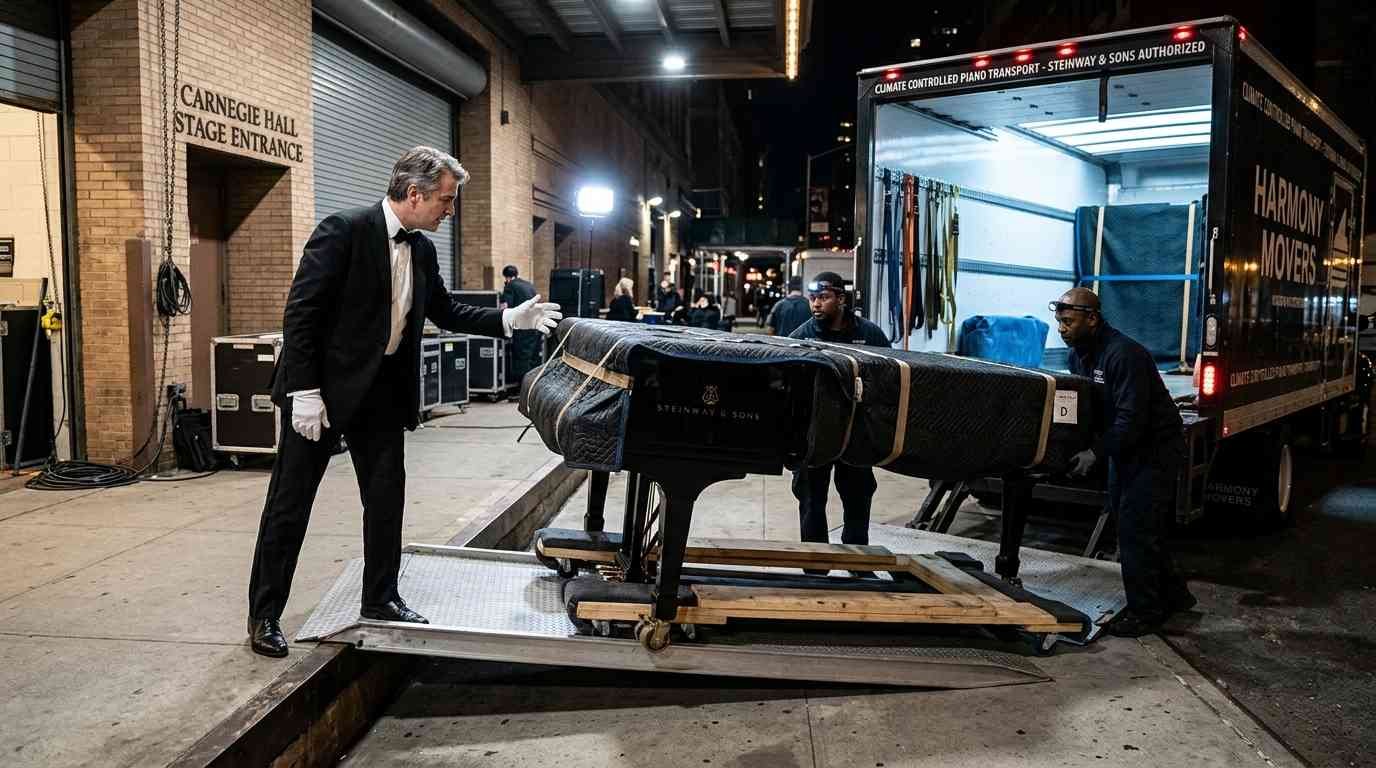
Last year, a colleague moved her Steinway grand piano from a villa to a penthouse. She hired a “piano mover” who didn’t understand the humidity sensitivity of the soundboard. They moved the piano in a non-chilled truck during a July afternoon in Dubai. The heat caused the wood to expand rapidly, and the sudden drop in humidity inside the apartment caused it to contract just as fast. The soundboard developed a hairline crack that ruined the resonance of the instrument. The repair cost 40,000 Dollars, and the piano never sounded the same again. Total acoustic tragedy.
You have to be paranoid. Let me show you the virtuoso’s protocol for safe instrumental transit.
The Atmospheric Mandate: The 50% Humidity Rule
Dubai’s climate is a slow-acting poison for aged wood.
The Humidity-Control Strategy
Wooden instruments (violins, cellos, guitars, pianos) are extremely hygroscopic—they absorb and release moisture. In Dubai, moving an instrument from a chilled 22°C house to a 45°C moving truck and back into a 22°C house will cause the wood to ‘shock.’ This leads to cracks, bridge-collapse, and tuning peg failure. Every instrument must be moved in a climate-controlled (chilled) truck. For smaller instruments, they must be in a ‘hermetically sealed’ hard-shell case with a specialized 50% Relative Humidity (RH) buffer packet. This maintains a stable internal environment regardless of what is happening outside the case. And remember: your elite instruments stay in the air-conditioned car with you. Never put a vintage cello in a non-chilled moving van.
The Structural Threat: Kinetic Shock and Tension
Vibration is the enemy of a precision-tuned instrument.
The ‘De-Tuning’ and Padding Rule
Before you move a stringed instrument (especially a guitar or a violin), you must slightly ‘de-tune’ the strings—usually by a half-step. This reduces the tension on the neck and the bridge during the kinetic shocks of the journey. But here is the secret: you must pad the area *under* the tailpiece and *around* the bridge with soft silk or microfiber cloth. If the case is dropped, the bridge can be forced into the top-plate of the instrument, causing a ‘sound-post’ crack. Furthermore, the instrument must be ‘suspended’ inside the case with high-density foam that absorbs micro-vibrations from the road. If your mover doesn’t know what a sound-post is, they are not qualified to touch your instrument.
If you have a collection of world-class instruments and want a team that understands the paranoia of moving high-value acoustic assets without a single scratch or a lost note, check out our Lifestyle and specialty instrumental relocation division. We are the best movers and packers in UAE because my crew treats your piano like it’s a royal guest.
The Insurance and Appraisal Audit
Standard moving insurance is a joke for a professional musician.
The ‘Agreed Value’ Rider
Moving companies offer insurance based on weight—usually 0.60 cents per pound. That means if they smash your 100,000 Dollar violin, they will pay you about 5 Dollars. You must have a specialized ‘Musical Instrument’ rider on your personal insurance that covers ‘Agreed Value,’ not ‘Replacement Value.’ Before the move, you must have a fresh appraisal from a certified luthier or a reputable dealer (like the ones in London or New York). Take high-resolution photos of the varnish condition, the serial numbers, and any existing repairs. If an instrument is damaged, those photos and the appraisal are your only path to a payout.
Essential Musical Instrument Moving Checklist
| Virtuoso’s Requirement | Why It Prevents an Acoustic Catastrophe |
|---|---|
| Climate-Controlled Transit (22°C) | Prevents the wood from ‘shocking’ and cracking due to Dubai’s extreme heat. |
| RH-Buffer Humidity Packets | Maintains a constant 50% humidity level inside the case to protect the soundboard. |
| Half-Step String De-Tuning | Reduces structural tension on the neck and bridge during kinetic transit shocks. |
| Custom Crating for Pianos | Ensures the internal cast-iron plate and soundboard are protected from vibration. |
| Certified Market Appraisal | Ensures you are insured for the ‘collector’s value’ of the instrument, not its weight. |
Frequently Asked Questions
Should I move my piano myself with a few friends?
Never. A grand piano weighs 500kg and is structurally unbalanced. If you tilt it wrong, the internal cast-iron plate can snap. If you drop it, the energy will shatter the delicate internal action. Moving a piano requires specialized equipment—skid boards, heavy-duty straps, and a crew of four who know exactly where the center of gravity is. It is the most dangerous move in the house.
How do I handle woodwind and brass instruments?
These are less sensitive to humidity than strings, but they are hyper-sensitive to ‘bending.’ A single tiny dent in a trumpet’s lead-pipe or a warped key on a saxophone will ruin the intonation. These must be moved in hard-shell cases with ‘internal blocking’ to ensure the keys don’t move during transit. For high-value flutes (gold or silver), keep them in your personal carry-on baggage.
Does high heat affect the glue of an instrument?
Yes. Traditional instruments are held together with ‘hide glue,’ which is designed to be reversible for repairs. This glue begins to soften at temperatures above 40 degrees. If an instrument sits in a hot moving truck for three hours, the seams can literally come apart. This is why climate control is not a luxury—it is a requirement.
Should I leave my instruments in the case after the move?
No. Unpack them immediately into a climate-controlled room and let them ‘acclimatize’ for 24 to 48 hours before you try to tune them or play them. The wood needs time to settle into the new environment. If you force a tune-up immediately after a move, you risk snapping a string or putting unnecessary stress on the neck.
How do I move an electronic keyboard?
Electronic keyboards are more like computers than instruments. They must be moved in their original boxes or padded ‘Gig Bags’ with extra bubble wrap around the screen and the knobs. The main risk is ‘key-clatter’ during transit, which can damage the internal contact sensors. Secure the keys with a specialized ‘key-cover’ or a soft foam insert.