The Landlord’s Ledger: The Truth About the Dubai Move-In Security Deposit
Listen up. I’m a landlord. I own ten properties across Dubai, from studios in JLT to luxury villas in the Ranches. When a tenant moves in and hands me that 5% security deposit, they think they are giving me a ‘refundable’ pot of money. I see it differently. I see it as an insurance policy against the chaos a tenant can cause in twelve months. If you don’t understand the dubai move-in security deposit rules, you are going to be very shocked when you move out and find that I’ve deducted 3,000 Dirhams for ‘paint’ and another 1,500 for ‘cleaning.’ If you don’t document the state of the property on day one, you are just handing me a gift. Total financial oversight.
Last year, a tenant moved out of my Marina apartment. He was a nice guy, but he didn’t realize that the ‘minor’ scuffs on the walls and the ‘slightly’ dirty AC vents were my responsibility to fix using HIS money. He didn’t have a ‘Move-In Inspection Report.’ I deducted 4,000 Dirhams from his 6,000 Dirham deposit for a full professional repaint and deep clean. He complained, but he had no proof of the original condition. I kept the money. Total administrative victory.
You have to be a tactical tenant. Let me show you how to protect your deposit from guys like me.
The 5% vs. 10% Mandate
The deposit amount is fixed by market tradition, but the rules are set by the RERA.
The Standard Deposit Scale
In Dubai, the standard security deposit is 5% of the annual rent for unfurnished properties and 10% for furnished ones. This money is intended to cover ‘damages beyond normal wear and tear.’ But here is the secret: ‘normal wear and tear’ is a subjective term. To a tenant, a small scratch on the floor is normal. To a landlord, it’s a ‘damage’ that requires a full floor polish. You must ensure that your tenancy contract explicitly defines what ‘wear and tear’ means. If it doesn’t, the landlord’s definition is the only one that matters at the RDC.
The ‘Move-In Inspection’ Defense
If it’s not in a photo, it didn’t exist.
The Date-Stamped Photo Audit
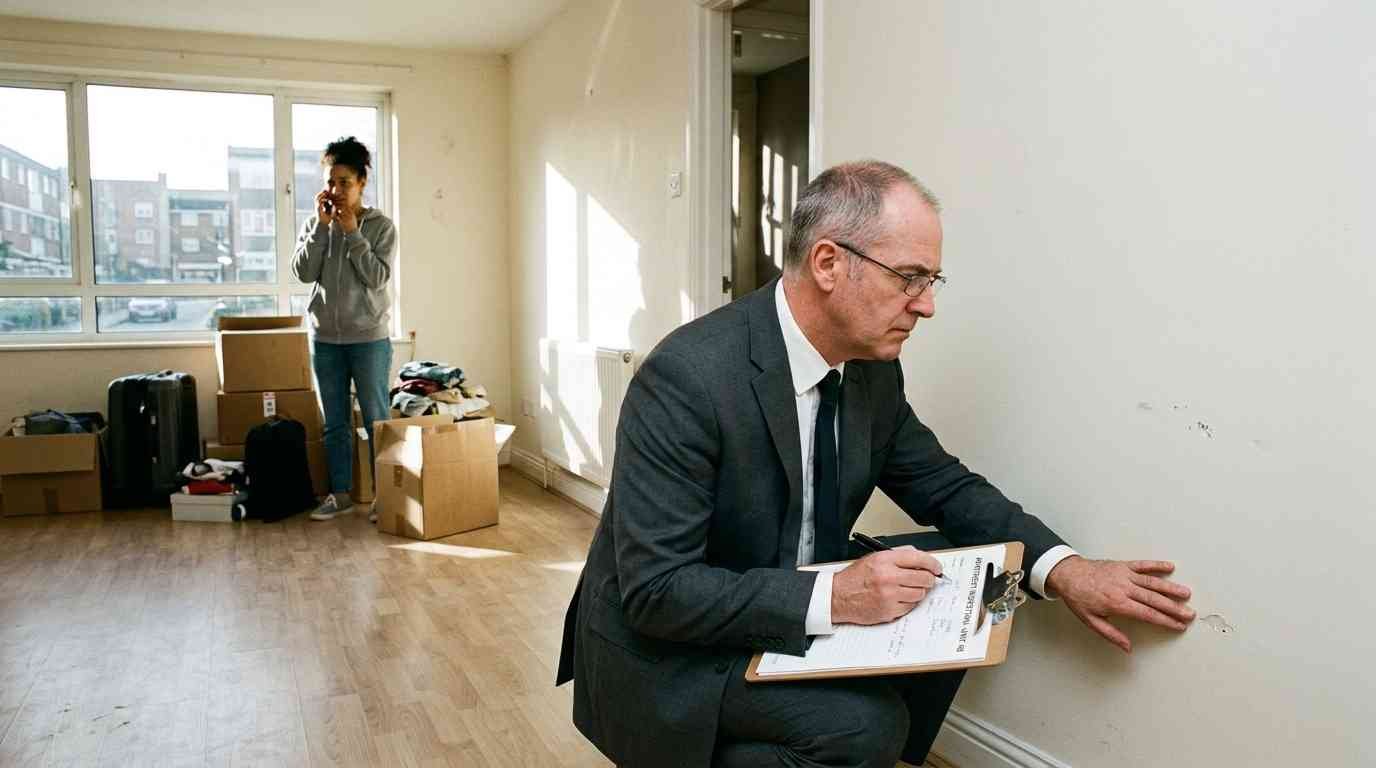
The moment you get the keys, before your movers bring in a single box, you must perform a ‘Deep Audit.’ Take high-resolution, date-stamped photos and videos of every single corner of the property. I’m talking about the inside of the kitchen cabinets, the state of the AC filters, the grouting in the bathroom, and every single mark on the walls. Put these into a PDF ‘Move-In Report’ and email it to the landlord or the agent on day one. If you don’t have this email trail, the RDC will assume the property was in ‘brand new’ condition when you arrived. This report is your only shield against a deposit deduction.
If you are moving into a new property and want a team that understands the importance of the ‘pre-move’ inspection and can help you document the property while they are unloading, check out our UAE relocation specialists. We are the best movers and packers in UAE because my crew knows that a scratch caused by a mover is a scratch paid for by your deposit.
The Final Handover Protocol
Don’t just hand over the keys and hope for the best.
The ‘Snagging’ and Paint Reality
In Dubai, most landlords expect the property to be returned in the *exact* same condition it was handed over, which usually means ‘Freshly Painted and Deep Cleaned.’ If you don’t hire a professional painting and cleaning company yourself when you move out, the landlord will hire their own and charge you 300% of the market rate. I have a ‘preferred’ contractor who charges my tenants 2,500 Dirhams for a studio repaint. If the tenant had hired someone from Satwa, it would have cost them 800. Do the work yourself, get the receipts, and hand them to the landlord with the keys. This leaves the landlord with no excuse to touch your deposit.
Essential Security Deposit Protection Checklist
| Tenant’s Requirement | Why It Prevents a Financial Loss |
|---|---|
| Date-Stamped Photo Report | The ONLY legal proof of the property’s condition on day one. |
| Email Trail to Landlord/Agent | Establishes a timeline that the landlord cannot dispute at the RDC. | Professional Paint & Clean Receipt | Prevents the landlord from overcharging you for their own contractors. |
| DEWA/Cooling Clearance Certificate | Required to prove all utility liabilities are cleared before the deposit is returned. | Signed ‘Handover’ Form | A document signed by the landlord stating they have accepted the property back. |
Frequently Asked Questions
When should the landlord return the deposit?
Legally, the deposit should be returned within 7 to 14 days after the final handover, provided there are no disputes. However, many landlords try to delay this until they have ‘assessed the damages.’ You should include a specific timeframe for the deposit refund in your tenancy contract ‘Addendum.’ If they miss the deadline, you can file a case at the RDC.
What is ‘Normal Wear and Tear’?
According to RERA, normal wear and tear includes things like slight fading of the paint, minor carpet wear in high-traffic areas, and the aging of kitchen appliances. It does *not* include holes in the walls from TV mounts, deep scratches on the floor, or broken windows. If you drilled 20 holes for your pictures, you must patch and paint them before you leave, or you will pay for it.
Can I use my security deposit to pay the last month’s rent?
Absolutely not. This is a common mistake tenants make. The security deposit is for damages, not for rent. If you stop paying rent, the landlord can file a ‘Performance Order’ against you, and you will end up with a travel ban and a legal case. Always pay your rent in full and handle the deposit as a separate transaction.
How do I handle a ‘Maintenance’ deduction?
In Dubai, major maintenance (anything over 500 or 1,000 AED, depending on the contract) is the landlord’s responsibility. If the AC compressor fails, the landlord pays. If the tenant breaks the AC thermostat, the tenant pays. Do not let the landlord deduct ‘major maintenance’ costs from your security deposit. If they try, take the case to the RDC mediators.
Is the deposit refundable for off-plan property?
No. A ‘Security Deposit’ only applies once the property is handed over and you are a tenant. For an off-plan purchase, you pay ‘Installments’ and a ‘Booking Fee.’ If you are renting an off-plan property that has just been completed, the standard 5%/10% rule applies from the moment you sign the Ejari.