The Expert Method to Move Fine Art and Sculptures in Dubai
Are you trying to figure out how to move fine art and sculptures without them ending up in pieces? Here is the exact, uncompromising protocol for transporting high-value pieces across Dubai safely.
Moving a sofa is easy. Moving a heavy dining table is just labor. Moving a unique piece of art is a high-stakes operation. If you scratch an IKEA table, you buy a new one. If you drop a one-of-a-kind marble sculpture or tear an original oil canvas, it is gone forever. You cannot fix it. I see people treat their expensive art like regular household goods, and it always ends in tears.
Last year, an art collector moving from DIFC to Palm Jumeirah hired a standard moving company to transport a massive, custom-framed mirror and a delicate glass sculpture. The movers wrapped the glass sculpture in a few layers of bubble wrap and put it in a cardboard box. They strapped the mirror to the side of the truck. The truck hit a speed bump in Al Sufouh too fast. The mirror shattered, and the glass sculpture cracked down the middle. Over fifty thousand dirhams of art destroyed in three seconds. Total disaster.
You cannot cut corners with fine art. You need specialized logistics. Let me break down exactly how to protect your investment.
The Danger of Standard Cardboard Boxes
Never, under any circumstances, put a valuable sculpture or painting in a standard moving box. Cardboard bends, crushes, and absorbs moisture. It offers zero structural protection against impact.
The Absolute Necessity of Custom Crating
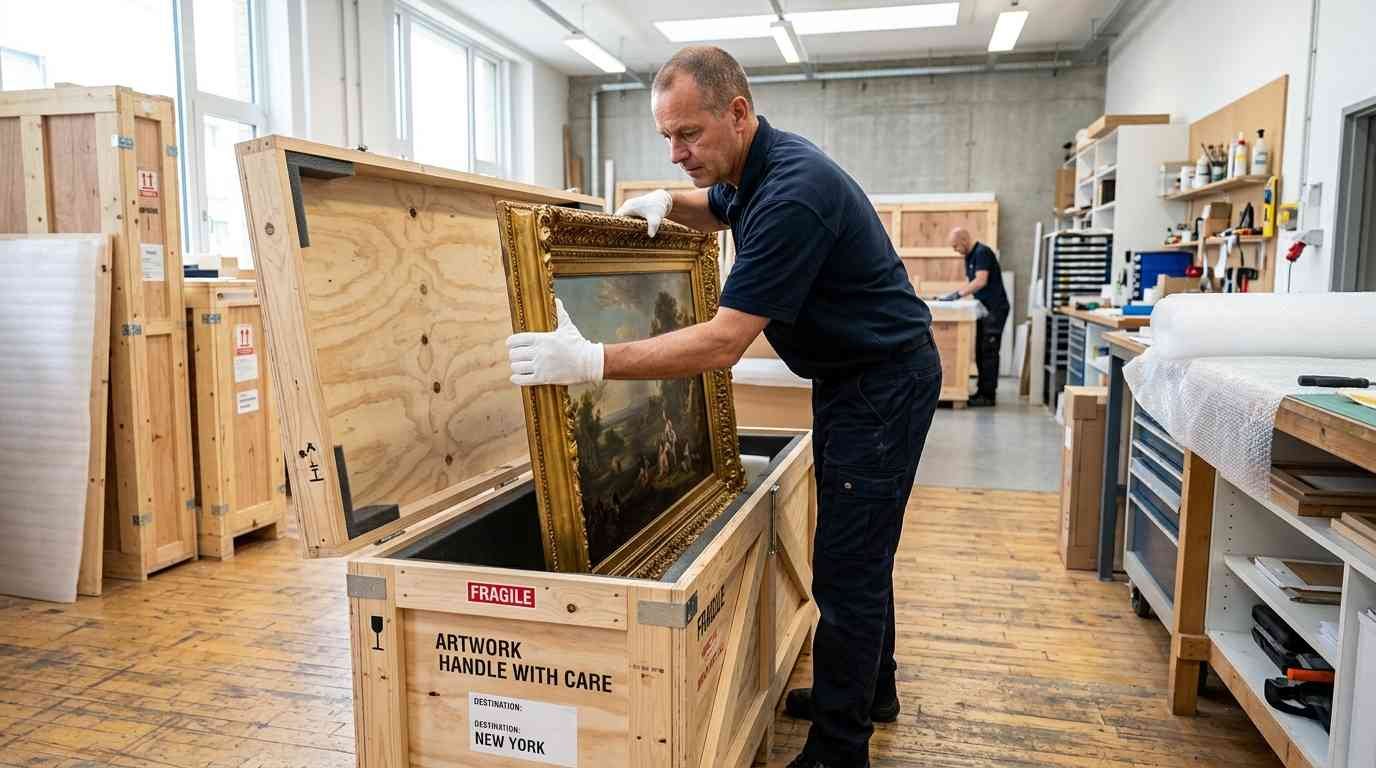
If you have an original painting, a heavy framed mirror, or a sculpture, you must demand custom wooden crating. This is not optional.
A specialized art moving team will come to your house before the move. They measure the exact dimensions of the piece. They build a solid plywood crate specifically for that item. Inside the crate, they use high-density, acid-free foam to suspend the item. If a worker drops the crate, the wood and the foam absorb the shock. The art inside does not even move.
It costs extra, but it is the only way to guarantee the piece survives the journey.
Protecting the Surface of the Art
Building a strong box is only half the battle. You have to protect the actual surface of the canvas or the finish of the sculpture from chemical damage.
The Risk of Bubble Wrap
Do not let standard movers put plastic bubble wrap directly against the surface of an oil painting. The plastic traps heat and moisture. In the Dubai climate, the plastic can literally melt into the oil paint, ruining the artwork permanently.
Professional art handlers use acid-free glassine paper or specialized Tyvek wrap. These materials allow the art to breathe while protecting it from dust and scratches. Only after the art is wrapped in acid-free paper do they apply shock-absorbing layers like bubble wrap or foam.
If you want a team that respects high-value assets, look into our Lifestyle logistics division. We are trusted as the best movers and packers in UAE because we know the difference between moving furniture and handling art.
Handling Massive Sculptures
A heavy bronze or marble sculpture is a logistical nightmare. It is incredibly heavy but simultaneously very fragile. If it falls over, it will break.
Rigging and Hoisting
Do not let three guys try to carry a 300-kilo marble statue down a spiral staircase. They will drop it, destroy your stairs, and likely injure themselves.
Moving heavy sculptures requires mechanical rigging. Professionals use specialized A-frame gantries, heavy-duty dollies, and sometimes even a crane to lift the piece out of a balcony. They secure the center of gravity so the piece cannot tip over during transit. Ask the moving company exactly what equipment they plan to use before they touch the piece.
The Importance of Climate Control
Fine art is incredibly sensitive to rapid changes in temperature and humidity.
The Danger of Open Trucks
If you transport an antique wooden frame or a delicate canvas in the back of a hot, un-air-conditioned truck in July, the sudden spike in temperature will cause the wood to warp and the paint to crack. It happens faster than you think.
High-value art must be transported in a climate-controlled vehicle. The truck maintains a constant temperature of around 22 degrees Celsius, regardless of the heat outside. This prevents thermal shock and condensation from destroying the piece.
Insurance: The Final Safety Net
Even with the best crating and climate control, accidents happen. You must protect yourself financially.
Valued Inventory and Appraisals
Standard moving liability pays by the kilogram. If they destroy your lightweight original Picasso, they owe you twenty dirhams. You must purchase a specific Fine Art transit insurance policy.
To get this insurance, you must provide a recent, official appraisal of the artwork’s value, along with high-resolution photographs of its current condition. Do not guess the value. The insurance company will require proof if you make a claim.
Essential Art Moving Checklist
| Crucial Protocol | Why It Protects Your Art |
|---|---|
| Demand Custom Wooden Crates | Provides impenetrable structural protection against drops and impacts. |
| Use Acid-Free Glassine Wrap | Prevents standard bubble wrap from melting into the surface of oil paintings. |
| Require Climate-Controlled Trucks | Stops severe heat and humidity from warping wood and cracking old paint. |
| Verify Rigging Equipment | Ensures massive sculptures are lifted mechanically, not carried by hand. |
| Secure Fine Art Insurance | Guarantees full financial replacement value, not just basic weight liability. |
Frequently Asked Questions
Should I clean my paintings before the movers pack them?
No. Do not apply any cleaning chemicals or water to fine art before a move. You risk damaging the varnish. Let the professional art handlers dust it lightly with a dry microfiber cloth before wrapping it in glassine paper.
Can I transport my expensive art in my personal car?
If it is small enough to fit securely in the back seat with the AC running, and you drive very carefully, yes. However, your standard car insurance will not cover the art if you get into an accident. Only a specialized transit policy covers that.
How do I pack heavy framed mirrors?
Large mirrors must be packed exactly like fine art. They need custom wooden crating. Cardboard mirror boxes are only acceptable for small, cheap mirrors. If a large mirror flexes during transit, the glass will shatter.
Do moving companies install the art at the new house?
Standard movers do not. Hanging heavy art requires finding wall studs and using specialized anchors. If a heavy mirror falls off the wall, it can be lethal. Ask the moving company if they provide a specialized art installation handyman.
What is the biggest mistake people make moving art?
Trying to save money on crating. A custom crate might cost 500 to 1,000 AED. If the artwork is worth 20,000 AED, skipping the crate to save a few hundred dirhams is a massive, unnecessary risk.