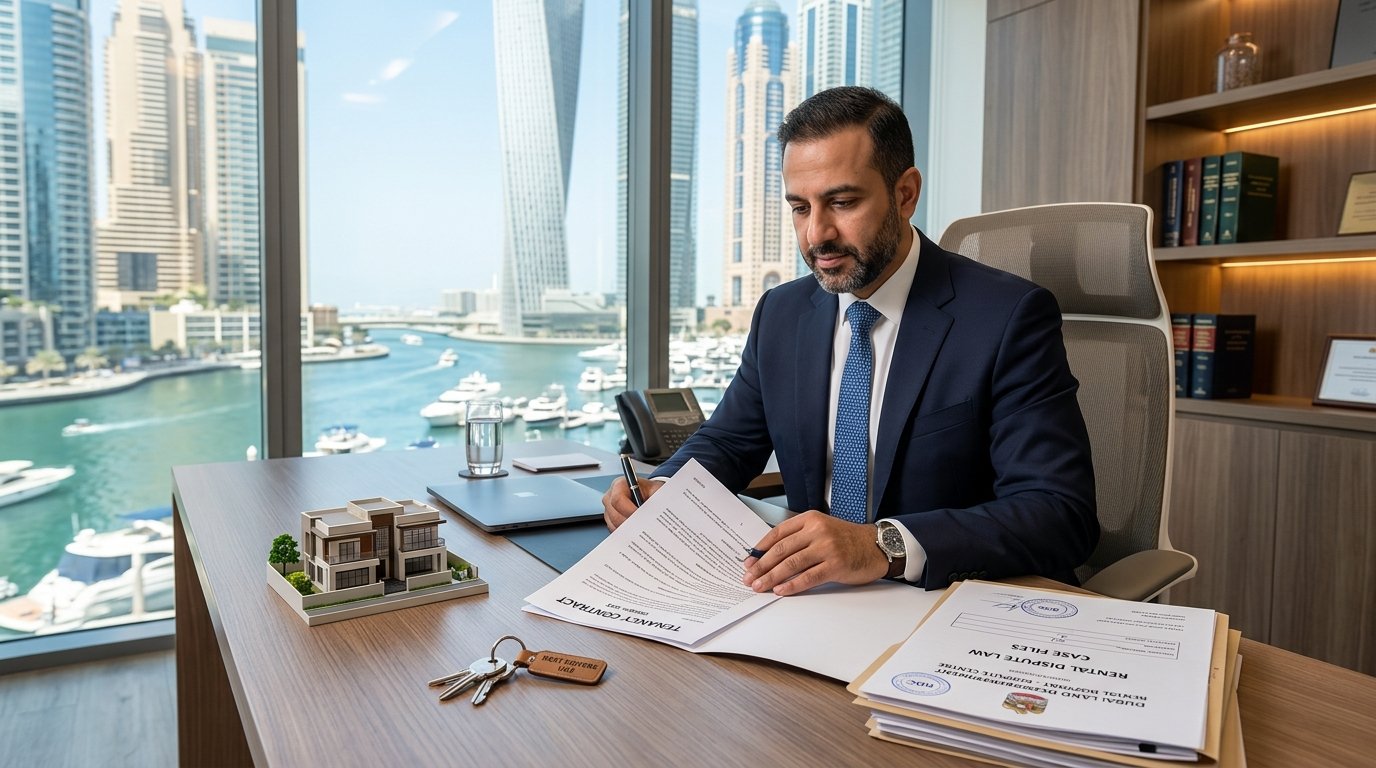
Dubai’s real estate market is one of the most dynamic in the world, attracting millions of expatriates and investors. With such a massive volume of rental transactions occurring daily—ranging from studio apartments in Deira to luxury commercial spaces in the DIFC—disputes between landlords and tenants are inevitable. Whether it’s a disagreement over a sudden rent hike, an unexpected eviction notice, or the refusal to refund a security deposit, these conflicts can quickly escalate, causing significant financial and emotional stress.
Fortunately, Dubai has established a highly structured and efficient legal framework to handle these issues, overseen by the Rental Disputes Center (RDC). However, navigating the RDC’s procedures, understanding your rights under Dubai’s specific tenancy laws, and presenting a winning case requires specialised knowledge. This is where a Rental Dispute Lawyer in Dubai becomes essential.
This comprehensive guide explains the most common rental disputes in Dubai, the laws that govern them, and the step-by-step process of resolving them through the RDC.
Understanding Dubai’s Rental Laws
The relationship between landlords and tenants in Dubai is primarily governed by two key pieces of legislation:
- Law No. 26 of 2007 (Regulating the Relationship between Landlords and Tenants in the Emirate of Dubai)
- Law No. 33 of 2008 (Amending Law No. 26 of 2007)
These laws heavily favour stability and fairness, offering strong protections to tenants against arbitrary evictions and unreasonable rent increases, while also ensuring landlords have clear legal avenues to recover their property or unpaid rent when justified.
Eviction Disputes: When Can a Landlord Legally Evict a Tenant?
Eviction is the most common cause of bitter rental disputes in Dubai. Landlords often assume they can ask a tenant to leave simply because the lease term has ended. In Dubai, this is legally incorrect. Under the law, a tenancy contract automatically renews on the same terms unless there is a valid, legal reason for eviction.
Eviction Prior to the Expiry of the Tenancy Contract
A landlord can demand eviction before the lease expires only under specific circumstances, including:
- Non-payment of rent: The tenant fails to pay rent within 30 days of receiving a formal notarised notice from the landlord.
- Illegal subletting: The tenant sublets the property (or part of it) without the landlord’s written approval. (Note: Both the tenant and the sub-tenant will be evicted).
- Illegal activities: The tenant uses the property for illegal or immoral purposes.
- Property damage: The tenant intentionally damages the property or allows damage to occur through gross negligence.
- Commercial changes: For commercial properties, if the tenant closes business operations for 30 consecutive days or 90 non-consecutive days without a valid reason.
Eviction Upon Expiry of the Tenancy Contract
If a landlord wants to recover the property at the end of the lease term, they cannot simply send a WhatsApp message. The law requires the landlord to serve a formal 12-month notarised notice sent via Notary Public or registered mail. Furthermore, the eviction must be based on one of these four legally valid reasons:
- Personal Use: The landlord intends to recover the property for their own personal use or the use of their first-degree relatives (provided they do not own suitable alternative property in Dubai).
- Sale of the Property: The landlord wishes to sell the property.
- Demolition or Reconstruction: The property requires demolition or major reconstruction that prevents the tenant from staying.
- Comprehensive Maintenance: The property requires massive maintenance that cannot be done while the tenant is occupying it (a technical report from Dubai Municipality is required).
If a landlord evicts a tenant claiming “personal use” and then immediately rents the property to a new tenant at a higher price, the evicted tenant can hire a Rental Dispute Lawyer to file a case at the RDC for compensation, which can be substantial.
Rent Increase Disputes: The RERA Calculator
Another major source of conflict is rent increases. A landlord cannot arbitrarily increase the rent by whatever amount they choose, nor can they spring the increase on the tenant at the last minute.
The 90-Day Notice Rule
By law, if either party wishes to amend the terms of the tenancy contract (including the rent amount), they must notify the other party at least 90 days before the contract expires. If the landlord fails to provide this 90-day notice, they lose the right to increase the rent for the upcoming year, regardless of market conditions.
The RERA Rental Index
Even if the 90-day notice is given, the increase must comply with the Real Estate Regulatory Agency (RERA) Rental Index. The RERA calculator dictates the maximum permissible percentage increase based on how the current rent compares to the average market rent for similar properties in that specific area.
- If current rent is less than 10% below market average: No increase permitted.
- If current rent is 11% to 20% below market average: Max 5% increase.
- If current rent is 21% to 30% below market average: Max 10% increase.
- If current rent is 31% to 40% below market average: Max 15% increase.
- If current rent is more than 40% below market average: Max 20% increase.
If a landlord demands an increase higher than what the RERA calculator permits, the tenant can refuse. If the landlord subsequently refuses to renew the contract, a Rental Dispute Lawyer can help the tenant deposit the old rent amount directly with the RDC through an “Offer and Deposit” mechanism, legally forcing the contract renewal.
Security Deposit Disputes
At the end of a tenancy, disputes frequently arise over the refund of the security deposit (typically 5% of the annual rent for unfurnished and 10% for furnished properties). Landlords often attempt to deduct excessive amounts for “wear and tear.”
Under Dubai law, the tenant is obliged to hand back the property in the same condition it was received, subject to normal wear and tear. If the landlord refuses to refund the deposit, the tenant can file a claim at the RDC. A lawyer can help gather the necessary evidence, such as the move-in condition report, photographs, and repair receipts, to prove the deductions are unjustified.
The Rental Disputes Center (RDC): The Legal Process
The RDC, located at the Dubai Land Department, is the exclusive judicial body for resolving rental conflicts in the emirate (excluding disputes inside free zones like the DIFC, which have their own courts). The RDC is designed to be faster and more specialised than the regular civil courts.
Step 1: Amicable Settlement (Reconciliation)
When a case is filed at the RDC, it is first assigned to the Reconciliation Department. A mediator will attempt to help the landlord and tenant reach an amicable settlement within 15 days. If an agreement is reached, it is documented, signed by a judge, and becomes legally binding. Having a lawyer present during mediation ensures your rights are protected and you don’t agree to an unfair settlement under pressure.
Step 2: First Instance Court
If reconciliation fails, the case moves to the First Instance Circuit. Here, the process is largely electronic and document-based. Your lawyer will submit a detailed legal memorandum outlining your case, supported by the tenancy contract, Ejari registration, notice letters, bounced cheques, or DEWA bills. The judge will review the submissions and issue a binding judgment. Most cases are resolved within 30 to 45 days.
Step 3: The Appeal Court
If either party is dissatisfied with the judgment, they may appeal the decision to the Appeal Court within 15 days, provided the claim value exceeds AED 100,000 (or for lesser amounts if the judgment involves eviction). The Appeal Court’s decision is generally final.
Step 4: Execution
Once a final judgment is obtained (e.g., an order for the tenant to pay arrears and vacate, or an order for the landlord to refund a deposit), the winning party must open an Execution File. The Execution Judge has the power to enforce the judgment by freezing bank accounts, seizing assets, blocking travel, or ordering the police to physically carry out an eviction.
Why You Need a Rental Dispute Lawyer in Dubai
While the RDC process is designed to be accessible, navigating it without legal representation is risky, especially when significant financial sums or the roof over your head is at stake.
Here is how an expert rental lawyer provides an advantage:
- Procedural Accuracy: The RDC is strict about documentation. If a notice was sent via courier instead of the Notary Public, or if the 90-day window was missed by one day, your case can be dismissed on a technicality. Lawyers ensure procedural flawlessness.
- Legal Drafting: Submissions to the RDC must be in Arabic. A bilingual law firm will translate your evidence and draft compelling legal arguments that directly address Dubai tenancy law.
- Strategic Advice: Sometimes the cost of litigation outweighs the benefit. A lawyer will provide a realistic assessment of your chances of winning and advise whether to litigate or negotiate a settlement.
- Stress Reduction: Dealing with a hostile landlord or a non-paying tenant is exhausting. Handing the case over to a legal professional allows you to focus on your life or business while the lawyers handle the conflict.
Conclusion: Protect Your Rights in Dubai’s Property Market
Whether you are a landlord struggling to deal with a defaulting tenant, or a tenant facing harassment and illegal eviction threats, the laws of Dubai provide clear mechanisms for justice. However, the law only protects those who know how to use it properly.
Engaging a specialist Rental Dispute Lawyer in Dubai ensures that your side of the story is presented accurately to the RDC, your legal rights are fiercely protected, and your rental dispute is resolved as swiftly and favourably as possible.