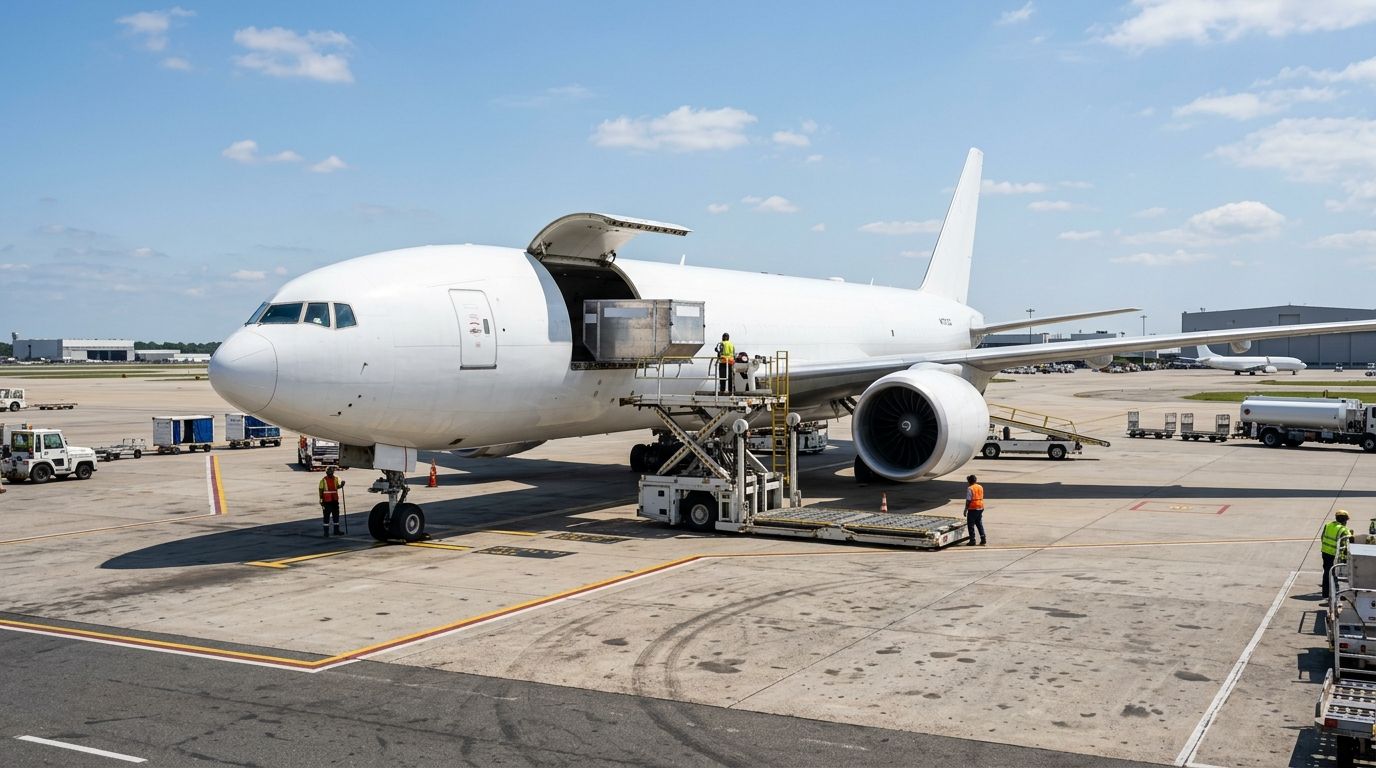
The Evolution of Air Cargo Services in the Middle East
Moving high-value inventory quickly across the globe is the cornerstone of modern commerce, yet the aviation freight sector remains intensely confusing for new shippers. Businesses frequently hemorrhage money by choosing the wrong flight routing, failing to understand dimensional weight pricing, or having their goods grounded due to improper hazardous materials declarations. We fix this by exposing exactly how air cargo operates in 2026. You get a transparent look into how Middle Eastern aviation hubs function, the strategic advantage of hybrid logistics, and how to ensure your freight boards the aircraft on time.
When I first managed expedited shipments out of the UAE, the most common error was clients attempting to ship massive, low-value items via air, entirely wiping out their profit margins. Our team now meticulously audits every shipment profile, ensuring clients only utilize aviation freight for time-sensitive, high-yield commodities where speed directly equates to revenue.
Why Aviation Rules the Supply Chain
Despite being the most expensive mode of transport, aviation remains irreplaceable.
- Unmatched Speed: Ocean freight takes weeks; aviation moves inventory from Dubai to London in less than eight hours.
- Extreme Security: Airports operate under the strictest security protocols on earth, making theft of high-value electronics nearly impossible.
- Cold Chain Integrity: Vaccines and perishable foods rely entirely on the specialized temperature-controlled zones within aircraft holds.
Exploring Sharjah Air Cargo Operations
While Dubai International (DXB) gets most of the global attention, neighboring Sharjah is a massive, heavily utilized logistical powerhouse.
The Advantage of Sharjah Aviation
Many specialized forwarders route their flights through the sharjah air cargo hub because it operates as a dedicated freight-first environment. Unlike DXB, which heavily prioritizes passenger schedules, Sharjah International Airport allows for much faster turnaround times for dedicated freighter aircraft, particularly those operating older, noisier cargo planes that might face slot restrictions elsewhere.
| Hub Feature | Dubai (DXB) | Sharjah (SHJ) |
|---|---|---|
| Primary Focus | Passenger Belly Cargo | Dedicated Freighters & Charters |
| Cost Profile | Premium | Highly Competitive |
| Customs Processing | Rigorous, Automated | Rapid, Flexible for Heavy Industry |
Regional Connectivity: Saudi Air Cargo Networks
The Kingdom of Saudi Arabia is aggressively expanding its aviation infrastructure, altering the entire Middle Eastern logistics map.
The New Mega Hubs
The saudi air cargo operation is heavily centered around Jeddah and Riyadh. In 2026, these hubs are not just final destinations; they are actively competing with the UAE to become transshipment points for cargo moving between Asia and Africa. The Kingdom’s massive investment in cold storage facilities at King Abdulaziz International Airport makes it a preferred route for global pharmaceutical distribution.
If you are exporting into Saudi Arabia, aviation is often the only viable method for time-sensitive goods, as the land borders can experience unpredictable delays due to rigorous customs inspections.
The Hybrid Solution: Sea Air Cargo Explained
What happens when ocean freight is too slow, but pure aviation is too expensive?
The Best of Both Worlds
The logistics industry solved this dilemma with sea air cargo. This hybrid model involves shipping a container via ocean from China to a massive transshipment hub like Jebel Ali in Dubai. The container is immediately unloaded, and the goods are trucked directly to the airport (DXB or DWC) where they are flown the rest of the way to Europe or Africa.
- Cost: Roughly 40% cheaper than flying the entire distance.
- Speed: Roughly 50% faster than sailing the entire distance.
- Carbon Footprint: A highly effective middle ground for corporate sustainability goals.
The Legacy of Shaheen Air Cargo in the Region
Understanding regional history helps explain current logistical routing.
Connecting the Subcontinent
Historically, the shaheen air cargo operations were a vital lifeline connecting Pakistan to the UAE. While corporate structures evolve, the massive demand for expedited freight along this specific corridor remains. Today, multiple carriers fiercely compete to absorb the massive volume of textiles and perishables that must move daily between Karachi, Lahore, and the Emirates.
Understanding Volumetric Weight in Aviation
If you do not understand this formula, you will bankrupt your shipping budget.
The Aviation Formula
Aircraft have strict weight limits, but they also have very limited physical space (volume). Airlines charge based on whichever number is higher: the actual weight on the scale, or the dimensional weight. The standard 2026 aviation formula calculates volumetric weight by multiplying the Length x Width x Height (in centimeters) and dividing by 6,000.
The Pillow Example
If you ship a massive box of pillows weighing only 10kg, the airline will not charge you for 10kg. They will measure the massive box and likely charge you for 50kg of ‘volumetric weight’ because your box takes up the space of 50kg worth of dense cargo (like steel machinery) in the aircraft hold.
Frequently Asked Questions
Can I ship dangerous goods by air?
Yes, but it is heavily restricted. Items like lithium batteries, flammable liquids, and corrosive chemicals require specialized IATA-certified packaging and dangerous goods declarations. Passenger aircraft strictly prohibit most of these items, requiring them to fly on dedicated ‘Freighter Only’ aircraft.
What is a Unit Load Device (ULD)?
A ULD is a specialized aluminum pallet or container designed specifically to lock into the floor tracks of an aircraft’s cargo hold. This secures the cargo from shifting during turbulence.
How accurate is aviation tracking?
It is incredibly precise. Cargo is scanned at the warehouse (RCS), when loaded onto the plane (DEP), and the exact moment the aircraft touches down at the destination (ARR). You can often track the physical flight via radar apps.
Why did my cargo get ‘bumped’ from a flight?
If an airline sells too many passenger tickets or the weather requires the pilot to load extra heavy jet fuel, the airline will ‘bump’ (offload) commercial cargo at the last minute to keep the aircraft under its maximum legal takeoff weight.
For a deeper understanding, check out our detailed guide on Jeff Bezos Net Worth which covers related aspects in depth.
As you explore the intricacies of cargo management in aviation, it’s also fascinating to consider the construction industry and the essential role of suppliers, such as construction chemicals supplier in Sharjah, in ensuring building projects run smoothly and efficiently.