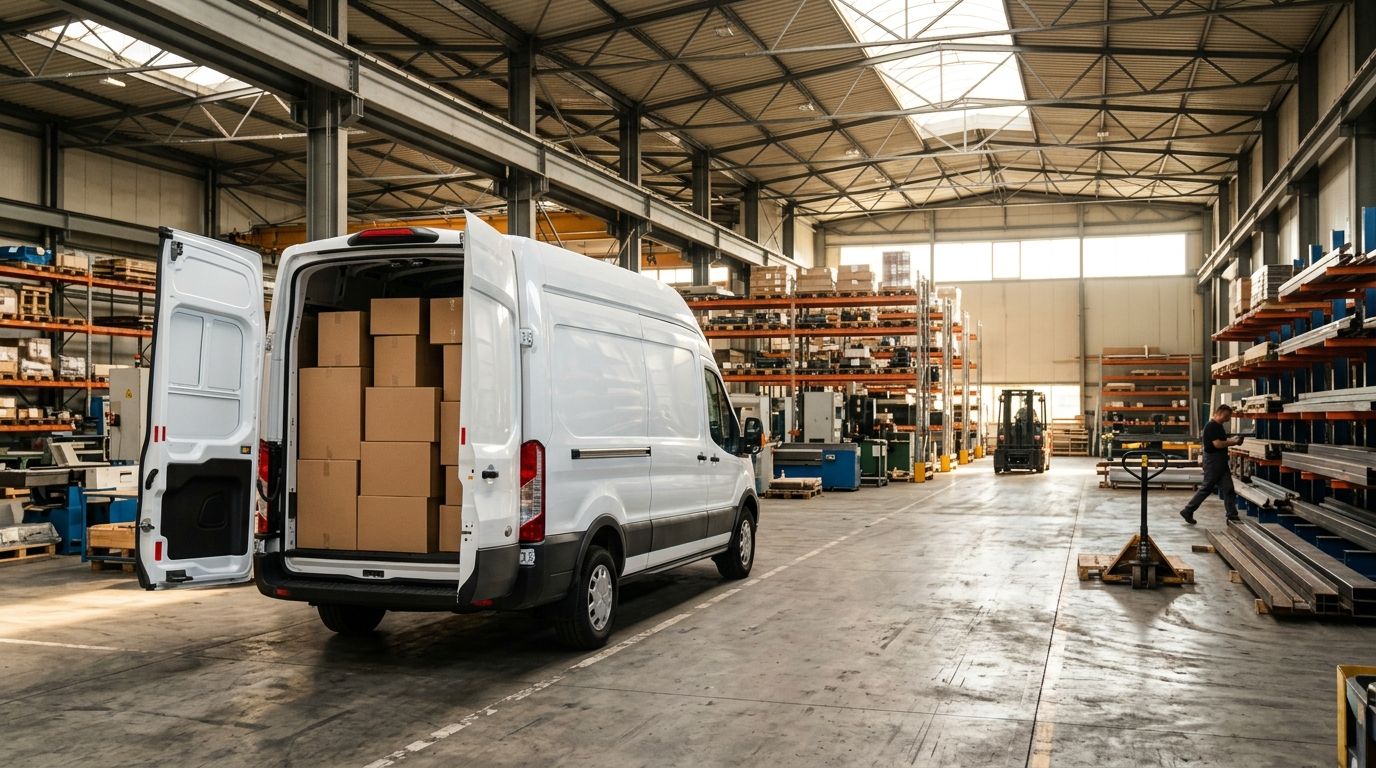
The Heavy Reality of Buying a Commercial Vehicle
Are you struggling to find a reliable cargo van that won’t drain your business account with endless repairs? Many logistics owners buy the cheapest used van they can find, only to lose thousands in breakdown delays, missed delivery windows, and angry customers. When your delivery vehicle breaks down on the side of the highway, you aren’t just paying for the tow truck; you are paying for the lost revenue of every package sitting in the back. We solve this exact problem by breaking down the true cost of ownership. If you are looking for a cargo van for sale in 2026, you can expect to spend between $25,000 to $45,000 for a reliable used model, and you can get it on the road generating revenue in under 48 hours.
Choosing the right vehicle is not just about the sticker price. It is about understanding cargo capacity, fuel efficiency, insurance premiums, and long-term maintenance schedules. In the fiercely competitive logistics market, your van is your lifeline. You need a vehicle that can handle the extreme heat of summer deliveries, the heavy payload of bulk pallets, and the stop-and-go traffic of inner-city routing. The logistics industry has evolved rapidly, and the demands placed on commercial vehicles are higher than ever before. Whether you are an independent contractor starting a courier service or a fleet manager looking to expand operations, the decision you make today will impact your bottom line for the next five years. You must look beyond the shiny exterior and dive deep into the mechanical reliability of the engine and transmission.
Chevrolet Express Cargo: The Classic Workhorse
The Chevrolet Express is a classic workhorse in the delivery world. It is known for having a very strong engine and a chassis that can take a massive beating on bad roads. When you talk to seasoned freight forwarders and local courier drivers, the Chevy Express almost always comes up in conversation. It has been around for decades with very few major design changes, which is actually its biggest advantage. Because the design has remained consistent, mechanics know exactly how to work on them, and replacement parts are incredibly cheap and abundant.
Many courier companies prefer the Chevy because parts are cheap and easy to find anywhere. However, it does not offer the high-roof options that some modern European vans have. This means that if your drivers need to stand up inside the cargo area to organize packages, they will be hunched over. Over a long 10-hour shift, this can lead to back pain and driver fatigue. But what it lacks in interior height, it more than makes up for in raw towing power. The V8 engine options available in the Express allow it to tow heavy utility trailers, making it a dual-purpose vehicle for many logistics operators who need to move heavy equipment alongside boxed freight.
- V8 Engine Power: Perfect for towing heavy trailers or carrying dense pallets of goods across long distances without overheating the transmission.
- Wide Wheelbase: Gives you excellent stability when fully loaded on the highway, reducing the risk of rollover accidents during high winds.
- Basic Interior: It lacks luxury features and modern infotainment screens, but it makes up for it in pure durability. You won’t be paying to fix broken electronic sensors.
GMC Savana Cargo: The Heavy-Duty Twin
The GMC Savana is almost identical to the Chevy Express, built on the exact same platform by General Motors. It is specifically designed for contractors, heavy-duty freight movers, and industrial suppliers who need to move extremely heavy materials like steel parts, liquid drums, or construction supplies.
If you find a GMC Savana cargo van for sale, you are looking at a vehicle that can easily last over 300,000 miles if you change the oil regularly and keep the transmission fluid clean. The Savana is built on a body-on-frame architecture, much like a heavy-duty pickup truck, which gives it incredible structural rigidity. This is why you frequently see Savanas being used as the base for small box trucks or ambulance conversions. They are built to carry weight, pure and simple. In 2026, the demand for heavy-duty commercial vehicles has skyrocketed, making a well-maintained Savana a highly sought-after asset on the used market.
| Feature | GMC Savana 2500 | GMC Savana 3500 |
|---|---|---|
| Payload Capacity | 3,280 lbs | 4,280 lbs |
| Cargo Volume | 239 cu ft | 284 cu ft |
| Best For Use Case | City Parcel Deliveries | Heavy Industrial Freight |
Nissan NV Cargo Van: The Truck-Based Alternative
Nissan took a completely different approach to the commercial vehicle market by building their van directly on a heavy-duty pickup truck frame. The Nissan NV cargo van offers a unique, truck-like driving experience with a massive interior space. Because the engine sits entirely ahead of the driver (like a pickup truck) rather than protruding into the cabin (like a traditional van), the driver and passenger have significantly more legroom and comfort. For a driver who spends 12 hours a day behind the wheel, this ergonomic difference is an absolute game-changer.
One of the standout features of the Nissan NV is the availability of a true high-roof model directly from the factory. The structural integrity of the roof is designed to hold heavy ladder racks and equipment, making it a favorite among electricians, plumbers, and final-mile logistics couriers who need to carry oversized items.
The Nissan NV high roof allows a six-foot-tall worker to stand up completely straight inside the cargo area. This drastically reduces back injuries during loading and unloading, keeping your workers compensation claims to a minimum.
Sadly, Nissan stopped producing these vans recently to focus on their consumer vehicle lineup. But the used market in 2026 is full of incredible deals for these reliable machines. Because they use the proven 4.0L V6 or the massive 5.6L V8 engines found in the Nissan Titan pickup truck, parts are still widely available, and any truck mechanic can service them without specialized van training.
Ford Transit Cargo: The Modern Standard
The Ford Transit has completely taken over the logistics industry globally. Go to any major Amazon distribution center, and you will see fleets of Ford Transits lining the loading docks. It offers amazing fuel economy and handles much more like a small car than a heavy-duty truck, making it perfect for tight city streets and residential neighborhoods. The steering is light, the visibility is excellent, and the turning radius is unmatched in its class.
Ford offers the Transit in multiple roof heights and wheelbase lengths, giving fleet managers the ability to customize their vehicles precisely to their route requirements. The unibody construction makes the van lighter than the body-on-frame Chevy Express, which drastically improves payload capacity and fuel efficiency. If you are buying a used Ford Transit cargo van, there are three critical things you must check before signing the paperwork.
- Check the roof height dimensions: Make sure you buy the high-roof model if you transport tall pallets. The low-roof model is fine for flower deliveries, but useless for appliance movers.
- Inspect the dual rear wheels: Heavy loads require the dual-wheel setup (DRW) for safety. A single rear wheel (SRW) setup can blow out under extreme industrial payloads.
- Test the EcoBoost engine: If the van has the turbocharged EcoBoost V6, listen closely for turbo rattles or wastegate issues before making a purchase. Turbo replacements are very expensive.
Ford Transits also offer incredible modern safety features like lane-keeping assist, adaptive cruise control, and pre-collision automatic braking. These features actively keep your drivers safe on long highway runs, preventing accidents before they happen and saving your business from catastrophic insurance hikes.
Dodge Sprinter Cargo: The Premium Choice
Now sold under the Mercedes-Benz badge, the Sprinter is the absolute king of luxury, efficiency, and advanced engineering in the commercial van world. It gets incredible diesel mileage and offers a smooth, comfortable ride that no American van can match. If your business involves transporting high-value goods, or if you run an executive expediting service, the Sprinter projects a highly professional image to your clients.
However, you must be extremely careful when buying a used Sprinter. Maintenance costs on a Sprinter can be double or even triple that of a Ford or Chevy. You are paying for premium German engineering, which means you cannot take it to a cheap corner mechanic. It requires specialized diagnostic computers and expensive imported parts. If the previous owner skipped oil changes, a Sprinter engine replacement can easily exceed $10,000.
| Van Model | Average Fuel Economy | Expected Maintenance Cost |
|---|---|---|
| Ford Transit (V6) | 18 City / 22 Hwy MPG | Low to Medium |
| Chevy Express (V8) | 14 City / 17 Hwy MPG | Very Low |
| MB Sprinter (Diesel) | 20 City / 24 Hwy MPG | Extremely High |
Frequently Asked Questions
What is the most reliable cargo van to buy used?
The Chevy Express and GMC Savana are widely considered the most reliable due to their simple naturally aspirated V8 engines and cheap replacement parts.
How many miles is too much for a used commercial van?
For standard gas engines, anything over 150,000 miles requires a strict mechanical inspection. Diesel engines, like those found in the Sprinter, can easily surpass 300,000 miles if maintained well.
Do I need a commercial driver license to drive a cargo van?
No. Standard cargo vans fall under the gross vehicle weight limit and can be driven with a regular personal driver license in almost all global regions.
Are recent regulatory updates affecting older cargo vans?
Yes, recent regulatory updates in 2026 regarding urban emissions zones are banning older diesel vans from entering city centers, making newer gas or electric vans more appealing.
For a deeper understanding, check out our detailed guide on Spurs vs Timberwolves Game 6 which covers related aspects in depth.
As businesses look to upgrade their fleets and comply with evolving regulations, it’s also crucial to consider the financial aspects of operations, such as transaction efficiency; for insights on the best options available, explore which payment gateway is best in UAE for fees speed and scaling.