The Merchant’s Protocol: How to Move Your Expensive Persian Carpets Without Ruining the Silk
Listen to me. My grandfather opened our carpet shop in the Dubai Gold Souk in 1965. I have handled silk Qums, wool Isfahans, and antique Tabriz rugs worth hundreds of thousands of dirhams. When a customer tells me they are going to let their “regular movers” move your expensive persian carpets, I feel like they are throwing money into the Dubai Creek. A Persian carpet is not a floor covering. It is a piece of art woven from thousands of delicate natural fibers. If you don’t follow the ancient rules of rolling, wrapping, and breathing, you will end up with permanent creases, moth damage, or dry-rot that destroys a hundred years of history in one afternoon.
Last year, a wealthy family in Emirates Hills moved their collection to a new villa. They let the movers fold their hand-knotted silk carpets instead of rolling them. They stacked heavy boxes on top of the folded rugs in a hot truck. When they unfolded them at the new house, the silk fibers had snapped at the crease lines. You could see the white foundation threads showing through. A 50,000 Dirham investment was ruined. Total heritage disaster.
You cannot treat a silk masterpiece like a piece of IKEA rug. Let me show you the merchant’s protocol for safe transit.
The Rolling Mandate: Never Fold
Folding a hand-knotted carpet is a sin against the weaver.
The Directional Roll
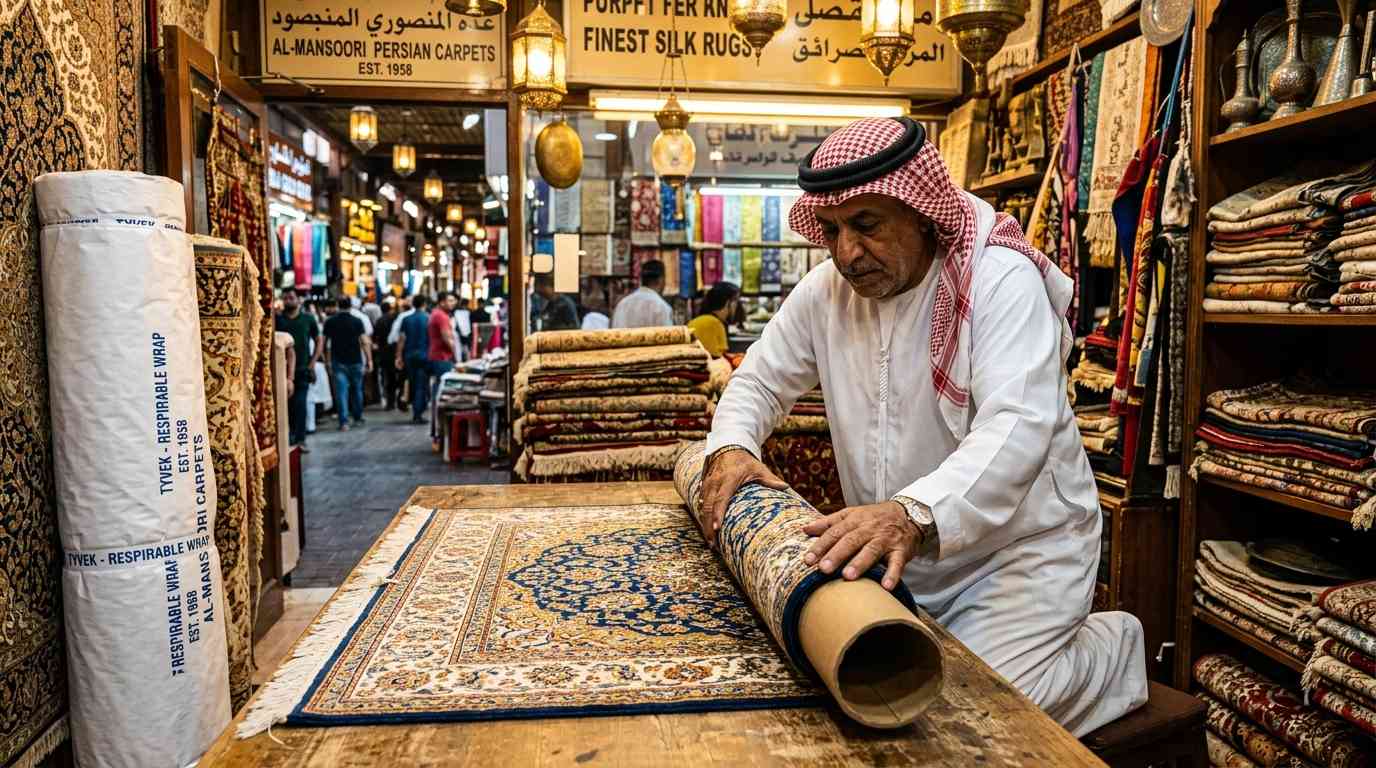
You must always roll a carpet with the ‘pile’ (the direction the fibers lean) facing inward. This protects the delicate surface from dust and friction. But before you roll, you must ensure the carpet is surgically clean. If there is a single breadcrumb or a drop of moisture trapped inside a rolled carpet in the Dubai heat, it will create an environment for mold and moth larvae to feast. You must have the carpet professionally ‘dust-vibrated’ and dried before it is rolled around a heavy-duty cardboard core to prevent crushing.
The Atmospheric Threat: Let it Breathe
Plastic is the enemy of natural fibers.
The Tyvek or Cotton Wrap
Never, ever wrap a Persian carpet in plastic shrink wrap. Plastic traps moisture and prevents the natural wool and silk fibers from breathing. In the high humidity of Dubai, a plastic-wrapped carpet will develop dry-rot in just a few days. Instead, use a breathable wrap like Tyvek or a simple heavy-duty cotton sheet. This allows air to circulate while keeping the dust out. If your movers show up with a roll of plastic and no breathable materials, do not let them touch your rugs.
If you have a collection of antique rugs and want a team that understands the thread-count paranoia of a Gold Souk merchant, check out our Lifestyle and specialty antique relocation experts. We are the best movers and packers in UAE because my crew knows that a silk Qum requires a white-glove touch.
The Storage Reality: The Moth Defense
If your move takes a few weeks, you are at risk.
The Cedar and Pepper Strategy
If your carpets are going into a moving truck or a storage unit for more than 48 hours, you must protect them from pests. I don’t use toxic mothballs that ruin the smell of the house. I use natural cedar blocks or a light dusting of specialized, non-staining herbal deterrents inside the roll. Moths in the UAE are aggressive. They can eat through a wool Tabriz in a week. A professional carpet mover will pre-treat the rugs for transit to ensure you aren’t bringing an infestation into your new home.
Essential Persian Carpet Moving Checklist
| Merchant’s Rule | Why It Protects Your Investment |
|---|---|
| Roll, Never Fold | Prevents snapping of the delicate silk and wool fibers at the crease lines. |
| Roll with the Pile Inward | Protects the artistic surface from friction, dust, and light damage. |
| Use Breathable Tyvek Wrap | Prevents moisture buildup and the dreaded dry-rot that kills antique rugs. |
| Deep-Dust Before Rolling | Removes organic particles that attract moths and cause fiber decay. |
| Store Off the Floor | If stored, keep rugs on a palette to prevent moisture from the concrete seeping in. |
Frequently Asked Questions
Should I have my carpets cleaned before the move?
Yes, but only by a specialist in hand-knotted rugs. Do not send them to a standard ‘laundry’ that uses harsh chemicals and machines. A Persian rug must be hand-washed and air-dried. If the rug is even 1% damp when it is rolled for the move, it will be ruined by mold within 48 hours.
How do I tell if my rug is silk or wool?
A simple ‘burn test’ on a tiny loose fiber will tell you. Silk smells like burning hair; wool smells like burning feathers; synthetic smells like plastic. But a true merchant can tell just by the way the light hits the ‘sheen’ of the pile. Silk rugs are much more delicate and require extra padding during a move.
Can I move my carpets in the moving truck?
Yes, provided they are the last things loaded and the first things unloaded. They should never be at the bottom of a stack of furniture. The weight of a sofa sitting on a rolled carpet can cause the internal cardboard core to collapse, creating a permanent ‘kink’ in the rug.
Does moving insurance cover the ‘artistic value’ of a rug?
Most standard policies only cover the weight or a basic ‘used’ value. For a high-end Persian carpet, you must provide a ‘Certificate of Authenticity’ and a professional appraisal from a merchant like me. You need a ‘Fine Art’ rider to ensure you are covered for the full market value.
How do I unroll the carpet in the new house?
When you arrive, unroll the carpet immediately. Do not leave it in the wrap. Let the fibers breathe and ‘relax’ for 24 hours. If there are any slight ripples from the roll, do not put heavy furniture on them yet. Walk on the rug with bare feet to help the fibers settle naturally.
To ensure a smooth transition for all your valuable items, including intricate rugs, consider partnering with reliable moving services that understand the importance of proper handling. For those in need of specialized equipment and support during their relocation, Al Mawrid Heavy Equipment Trading LLC offers exceptional solutions to assist you in Sharjah.