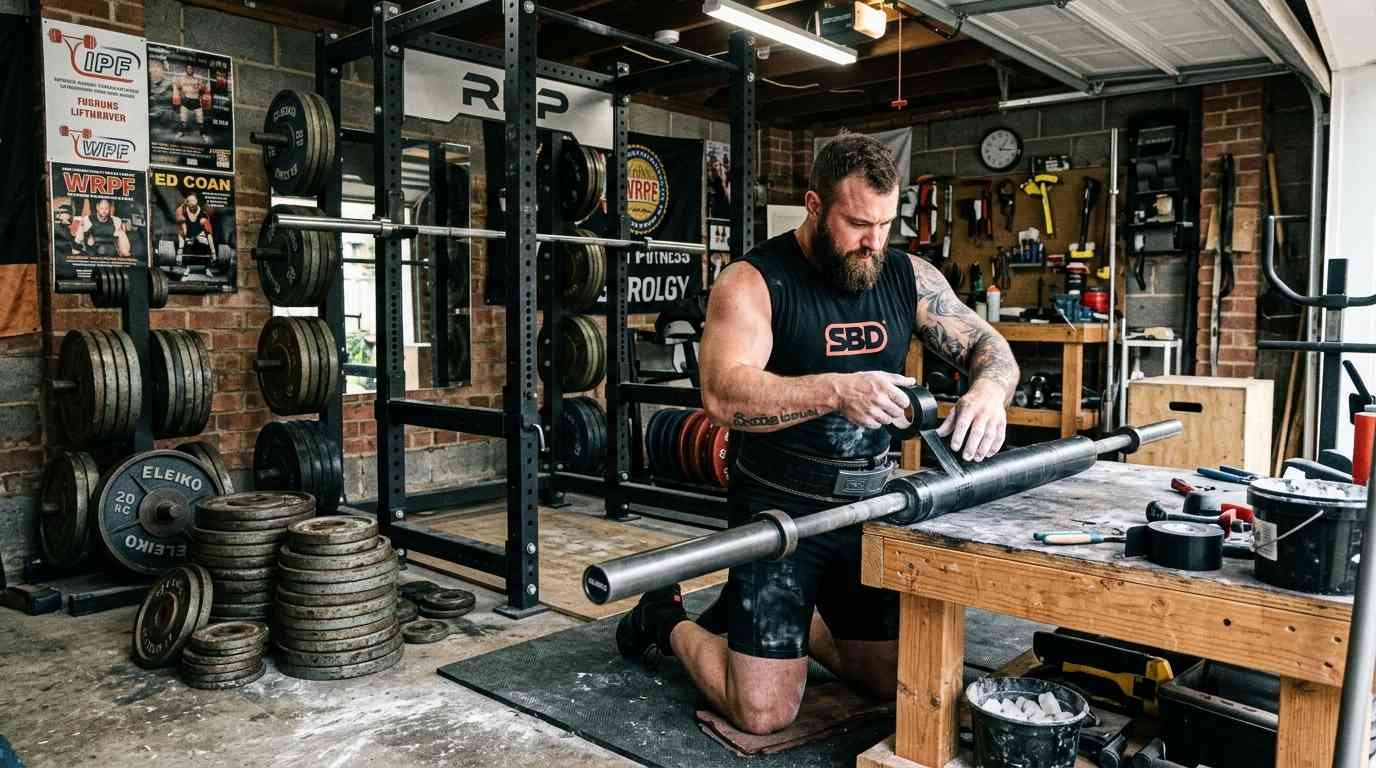
The Lifter’s Protocol: How to Move Your Home Gym Without Destroying Your House or Your Back
Listen to me. I have a 500-kilogram home gym in my garage in Al Barsha. I have calibrated steel plates, a competition-grade power rack, and a 2,000-Dollar Olympic barbell. When a moving company tells me they are going to “just pick up the plates and put them in the truck,” I want to ban them from the premises. Weight is easy to move; iron is hard. If you don’t follow a strict structural and floor-loading protocol for move your home gym, you will crack your villa’s floor tiles, bend your barbell, or snap the cables on your multi-gym. You cannot move a serious lifting setup like you move a dining table.
Last year, a friend of mine moved his home gym from a ground-floor villa to a second-floor apartment in JVC. He let the movers stack ten 20kg plates in a single cardboard box. The bottom of the box burst halfway up the stairs. A 20kg plate fell four feet and smashed into the marble stairs, cracking the tread and nearly taking off a mover’s foot. The repair bill for the stairs was 3,000 Dirhams. Total logistical disaster.
You have to respect the gravity. Let me show you the powerlifter’s protocol for heavy-metal extraction.
The Floor Loading Mandate
A half-ton of iron concentrated in one corner of a room is a structural threat.
The 200kg-per-Box Rule
You must never, ever put more than two 20kg plates in a single moving box. Even the strongest double-walled cardboard will fail under that kind of point-load. The plates must be wrapped individually in moving blankets or rubber mats and placed in small, reinforced plastic crates or heavy-duty ‘tote’ boxes. Furthermore, when you arrive at the new house, you cannot stack all your plates in one corner. You must spread the weight across the floor joists until the power rack is assembled and the weight horns are ready. If your mover tries to stack 500kg of iron on a 1-square-meter area, stop them. They are about to cave in your floor.
The Barbell and Cable Defense
Your barbell is a precision instrument; treat it like one.
The Zero-Bend Protocol
A high-end Olympic barbell (like an Eleiko or Rogue) is designed to be perfectly straight. If it gets bent by even a millimeter during a move—because something heavy was stacked on top of it in the truck—it is ruined for lifting. You must move your barbells in specialized PVC tubes or hard-shell cases. For your cable machines (like a Functional Trainer), you must lock the weight stacks and secure the cables with zip-ties. If the cables are allowed to rattle and fray during transit, they will snap under load when you start lifting again. A snapped cable at 100kg is a death sentence for your shins.
If you have a serious iron addiction and need a team that understands the paranoia of moving heavy lifting equipment without a single scratch on the marble, check out our Lifestyle and specialty heavy-lift division. We are the best movers and packers in UAE because my crew knows that 20kg is always heavier than it looks.
The Disassembly and Bolt Audit
Don’t lose the hardware that keeps you alive.
The Ziploc Labeling System
A power rack or a multi-gym has hundreds of bolts, washers, and nuts. When the movers take it apart, you must ensure every piece of hardware is placed in a labeled Ziploc bag and taped directly to the main frame of the machine. If you lose one specialized high-tensile bolt, your rack is no longer safe to hold 200kg over your head. I have seen guys try to use ‘hardware store’ bolts to replace lost gym parts—don’t do it. The shear strength isn’t the same. If the mover loses the bolts, they buy you a new rack.
Essential Home Gym Moving Checklist
| Lifter’s Requirement | Why It Prevents a Physical Catastrophe |
|---|---|
| Max 2 Plates Per Box | Prevents the box from bursting and the weights from smashing the floor. |
| PVC Tubes for Barbells | Ensures the bar remains perfectly straight and the ‘spin’ of the sleeves is protected. |
| Rubber Floor Protection | Heavy-duty mats must be laid down BEFORE the equipment enters the new room. |
| Zip-Tie All Cables | Prevents the pulley system from tangling or fraying during the truck journey. |
| Labeled Hardware Bags | Ensures the high-tensile bolts are not lost, maintaining the safety of the rack. |
Frequently Asked Questions
Can I move my treadmill without taking it apart?
Only if you are moving on the ground floor. A treadmill is a massive, unbalanced piece of equipment. If it has to go up stairs or into a small elevator, it must be partially disassembled. The electronic console is the most fragile part—wrap it in three layers of bubble wrap and move it separately from the heavy motor base.
Will the movers re-assemble my complex cable machine?
Most standard movers will refuse to re-assemble complex multi-gyms or cable cross-overs because of the liability. If they put it together wrong and a cable snaps while you are using it, they are in deep trouble. You should hire a specialized ‘Gym Technician’ to handle the final assembly and safety check at the new house.
How do I move my adjustable dumbbells?
Adjustable dumbbells (like Bowflex or PowerBlock) have very delicate internal plastic and metal mechanisms. You must never move them in their ‘open’ state. Lock them into their base-tray and wrap the entire unit in heavy-duty shrink-wrap and bubble wrap. If they are dropped, the internal dials will shatter, and they will become expensive paperweights.
Do I need to reinforce my second-floor apartment floor?
If you have more than 300kg of total weight and you plan to do deadlifts, yes. Even with 3/4 inch rubber mats, the kinetic energy of a dropped deadlift can crack a standard apartment floor slab. In an apartment, you should use a ‘Deadlift Platform’ to distribute the impact across a wider area and protect your security deposit.
Is the gym equipment covered by standard moving insurance?
Standard insurance covers the physical ‘iron,’ but it won’t cover the ‘calibrated accuracy’ or the ‘mechanical smooth-flow’ of the pulleys. If your barbell is slightly bent but still looks fine, insurance won’t pay. This is why you must use a specialist who knows how to handle high-performance gear.