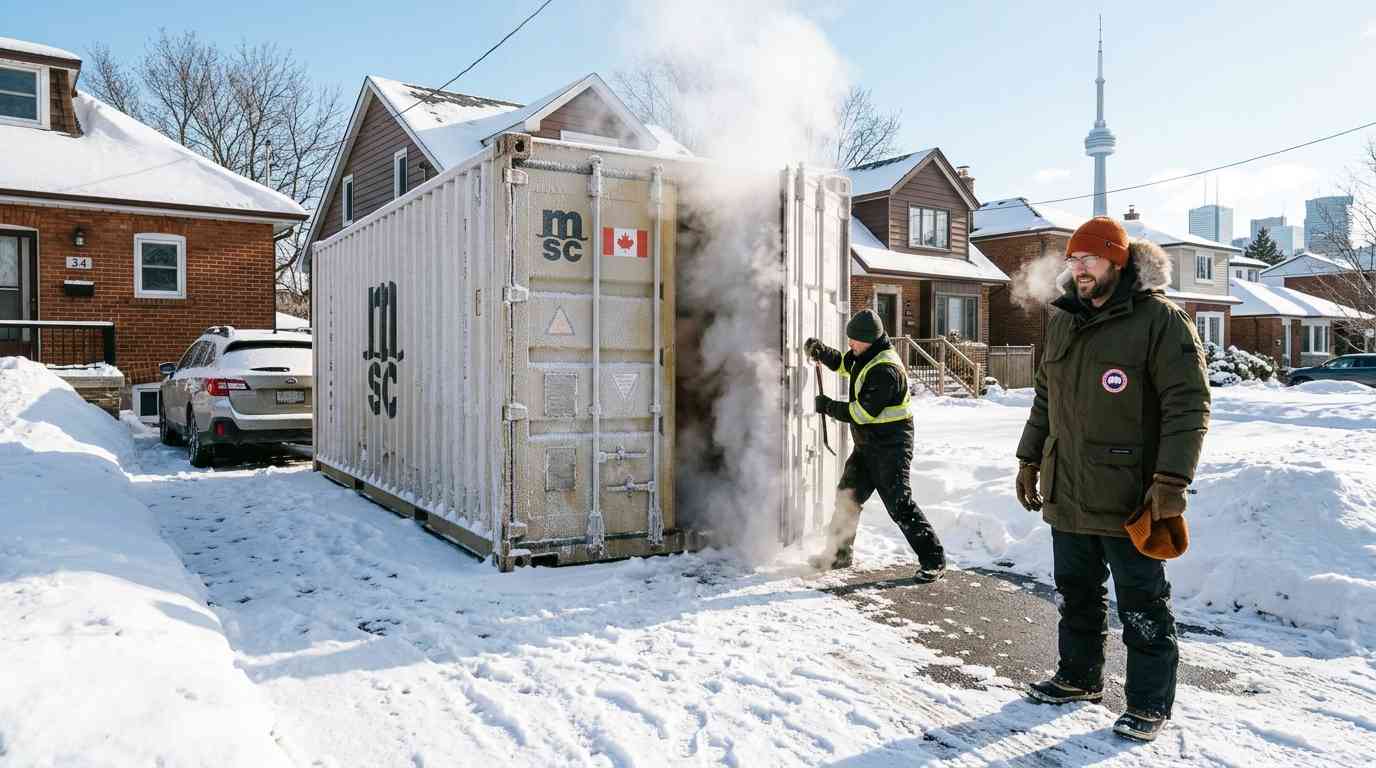
The Frozen Truth: Shipping a Container from Dubai to Canada
Listen, I just moved back to Toronto after eight years in the Dubai sun. I packed my container in 35-degree heat at the end of January, and it arrived in the Port of Montreal in the middle of a -20 degree February blizzard. If you are shipping a container from dubai to canada, you have to realize that your furniture is about to experience a 60-degree temperature swing in less than 40 days. If you don’t pack for the cold, your beautiful Dubai-made hardwood furniture will literally shatter the moment it touches the Canadian air. You are moving from a desert to a deep-freeze, and your logistics need to reflect that.
Last winter, a friend of mine moved back to Vancouver. She had a stunning solid rosewood dining table she bought in the Sharjah markets. She didn’t use a climate-controlled container, and she didn’t wrap the wood in the right oils. When they opened the container in the Vancouver rain, the wood had contracted so violently from the cold that the entire tabletop had a massive, six-inch crack right down the middle. It sounded like a gunshot. The wood couldn’t handle the shock. Total structural failure.
You cannot ignore the physics of the Canadian winter. Let me show you the exact protocol for surviving the North Atlantic crossing.
The Thermal Shock Defense
Hardwood furniture is a living thing; it expands and contracts with the temperature.
The Humidity Buffer
The air in Dubai is humid; the air in a Canadian winter is brutally dry. When your wood furniture loses that moisture too fast in a cold container, it cracks. Before you pack, you must treat every piece of solid wood with high-quality lemon oil or beeswax. This creates a thin barrier that slows down the moisture loss. Then, you must wrap the wood in thick moving blankets, followed by a layer of breathable kraft paper. Do not use plastic shrink wrap directly on wood; it traps condensation which then freezes and ruins the finish.
The CBSA and CFIA Bureaucracy
Canada is just as strict as Australia when it comes to what you bring across the border.
The Personal Effects (B4) Form
To import your goods duty-free into Canada, you must prove you have been a resident of the UAE for at least one year and that you have owned the items for at least six months. You must fill out the B4 (Personal Effects Accounting Document) with extreme precision. If you list ’10 Boxes of Kitchen Stuff,’ the CBSA (Canada Border Services Agency) will flag you for a manual inspection. You must list ‘1 Box: Toaster, Blender, 12 Ceramic Plates.’ The more detail you give, the less likely they are to rip your container apart in a freezing port warehouse.
If you want a logistics team that understands the brutal physics of the Canadian winter, check out our Logistics and international relocation division. We are the best movers and packers in UAE because my team knows exactly how to prep your furniture for the 60-degree temperature drop.
The ‘Winter Port’ Logistics
Your container will get stuck in the snow. Plan for it.
The Rail Delay
If your container is going to an inland city like Calgary or Edmonton, it will travel by rail from the port (Montreal or Vancouver). In the middle of winter, rail delays are constant due to frozen tracks and blizzards. Do not book your delivery for the day after the ship is supposed to dock. Give yourself a 10-day ‘buffer’ in a Canadian hotel. I’ve seen people waiting on the sidewalk in Ottawa for a truck that was stuck in a snowbank three provinces away. Be patient, and keep your winter coat in your carry-on luggage, not the container.
Essential Canada Shipping Checklist
| Crucial Step | Why It Saves Your Furniture |
|---|---|
| Oil All Solid Wood Pieces | Prevents the wood from contracting too fast and cracking in the dry Canadian air. |
| Avoid Plastic Wrap on Wood | Plastic traps condensation that freezes and destroys the varnish and finish. |
| Detailed B4 Manifest | Stops the CBSA from ordering a 2,000 Dollar manual inspection of your goods. |
| Pressure Wash Outdoor Gear | The CFIA will impound any item with Dubai soil to prevent agricultural contamination. |
| Pack Winter Gear in Your Suitcase | Do not put your heavy boots and jackets in the container; you will need them the moment you land. |
Frequently Asked Questions
Do I have to pay taxes on my used furniture in Canada?
If you are a returning Canadian citizen or a new permanent resident (PR), and you have owned the items for more than six months, you can import your household effects duty and tax-free. However, any brand-new items (bought within 6 months) must be declared, and you will pay GST/HST on their value.
Can I ship my car to Canada from Dubai?
It is incredibly difficult. Canada has strict safety and emissions standards (CMVSS). Unless the car is more than 15 years old, it must be a US or Canadian-spec model to be imported easily. GCC-spec cars usually require thousands of dollars in modifications to pass the provincial inspections. It is almost always better to sell your car in Dubai and buy a new one in Canada.
What is ‘Self-Accounting’ at the CBSA?
When your container arrives, you must physically go to a CBSA inland office with your B4 form and your passport to ‘clear’ the goods. Your moving company cannot do this for you. Once you get the stamped release from the officer, you give it to your mover to schedule the final delivery.
Should I buy winter tires in Dubai?
No. You cannot even find proper Canadian-grade winter tires in the UAE. Plus, the tires will take up valuable space in your container. Buy your winter tires in Canada; they are designed for the specific temperature ranges you will be facing.
Is the container watertight against snow?
Yes, sea containers are designed to be weather-tight. However, the internal humidity from the Dubai packing day will remain inside. This is why using moisture-absorbing ‘Dry-Bags’ (silica gel) inside the container is critical to prevent mold growth during the long sea journey.
If you found this helpful, you might also want to explore Moving from Wolverhampton to for more insights on this topic.
As you settle into your new home in Dubai, it’s also important to be mindful of local dining habits, particularly when it comes to buffet-style meals, which can pose certain food safety risks. To ensure a safe dining experience, consider familiarizing yourself with the food poisoning risks in Dubai buffets and how to navigate them effectively.