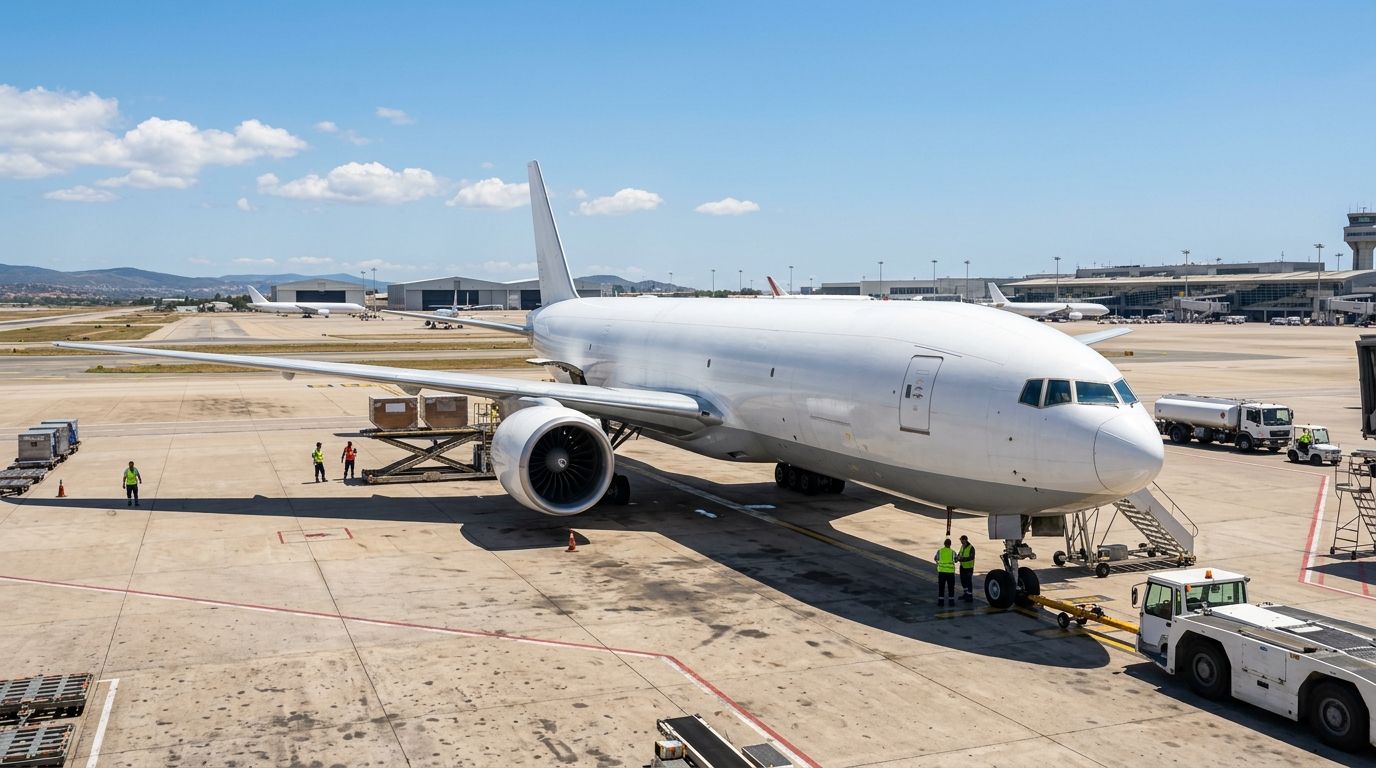
The Complex Logistics of Shipping Freight by Air
Sending commercial goods via aviation is the fastest way to move inventory, but it is also the easiest way to bankrupt your supply chain if mismanaged. Novice importers routinely fail to declare hazardous materials, misunderstand volumetric pricing, and accept blind quotes that exclude massive destination handling fees. We solve this by breaking down exactly how shipping freight by air functions in 2026. You get total transparency into how airlines calculate their exact rates, how to secure ironclad Door-to-Door quotes, and how to track your high-value cargo with military precision.
When I first managed expedited pharmaceutical shipments out of Dubai, the most common financial disaster was clients shipping lightweight but massive boxes, entirely unaware of ‘dimensional weight’ penalties. Our team now mandates a strict physical audit of every shipment’s dimensions before generating a quote, ensuring our clients never pay for ’empty air’ inside the aircraft’s cargo hold.
The Aviation Advantage
While ocean shipping is cheap, aviation dominates specific, high-yield industries.
- Speed to Market: Moving fast fashion or the latest electronics from Asia to the Middle East takes hours, not weeks, allowing retailers to capture immediate consumer trends.
- Reduced Warehousing: Because air freight is so fast, companies can operate on ‘Just-In-Time’ (JIT) manufacturing models, drastically reducing the cost of storing massive inventory in local warehouses.
- Lower Insurance Premiums: Due to the incredibly short transit time and extreme airport security, aviation cargo insurance is often significantly cheaper than maritime insurance.
The Fast Track: Shipping Freight to India
The UAE-India aviation corridor is arguably one of the busiest and most competitive cargo routes on the planet.
Navigating Indian Customs via Air
If you are shipping freight to india, speed is your primary goal. However, Indian Customs (CBIC) can easily negate that speed. Upon arrival at Delhi or Mumbai airports, your cargo enters the Air Cargo Complex (ACC). Unless your Customs House Agent (CHA) has pre-filed a Bill of Entry before the flight lands, your cargo will sit in an expensive bonded warehouse accumulating massive daily demurrage fees while the paperwork is sorted.
Navigating Export Laws: Shipping Freight from Dubai to UK
Moving high-value commercial goods into the United Kingdom requires flawless documentation.
The CHIEF/CDS System
When shipping freight from dubai to uk, your forwarder must interact with the UK’s Customs Declaration Service (CDS). You cannot simply fly goods into Heathrow and hope for the best. You must provide a highly detailed commercial invoice with exact HS (Harmonized System) codes so HMRC can instantly calculate the required VAT and import duties before the goods are released from the airport terminal.
How to Use an Aviation Shipping Freight Calculator
Never rely on a basic bathroom scale to estimate your aviation costs.
The Volumetric Trap
Every professional shipping freight calculator in the aviation industry uses the IATA standard volumetric formula. Because an airplane’s cargo hold has severely limited space, you are charged based on the actual weight or the volumetric (dimensional) weight—whichever is greater.
The standard formula is: (Length x Width x Height in centimeters) divided by 6,000. If you ship a box of feathers that weighs 5kg, but the box’s dimensions calculate out to a volumetric weight of 35kg, the airline will bill you for 35kg. You are paying for the massive amount of space the box occupies.
Deciphering Air Shipping Freight Quotes
A legitimate aviation quote is a complex legal document, not a single lump sum.
What is Actually Included?
When requesting shipping freight quotes, you must demand a line-by-line breakdown to avoid destination extortion.
| Line Item | What It Means | Who Pays |
|---|---|---|
| Airway Bill (AWB) Fee | The cost of issuing the legal transport document. | The Shipper |
| Fuel Surcharge (FSC) | A fluctuating fee based on global jet fuel prices. | The Shipper |
| Security Surcharge (SSC) | Fees for mandatory X-ray screening at the airport. | The Shipper |
| Terminal Handling (THC) | Fees paid to the destination airport to unload the plane. | Must be clarified (often excluded in cheap quotes) |
The Transparency of Shipping Freight Tracking
Unlike ocean freight, which has massive tracking blackouts while the ship is at sea, aviation tracking is virtually real-time.
The Master Airway Bill (MAWB)
Your ultimate tool for shipping freight tracking is the 11-digit Master Airway Bill number (e.g., 176-12345678). The first three digits identify the specific airline (e.g., 176 is Emirates). By entering this number into the airline’s cargo portal, you receive exact, IATA-standard milestone updates:
- RCS (Received from Shipper): The airline has physical possession of the cargo at the origin airport.
- DEP (Departed): The aircraft has officially taken off.
- ARR (Arrived): The aircraft has landed at the destination airport.
- RCF (Received from Flight): The cargo has been physically unloaded into the destination terminal.
Frequently Asked Questions
What are ‘Dangerous Goods’ in air freight?
Dangerous goods are items that pose a risk to the aircraft, such as lithium batteries, flammable perfumes, and magnetic materials. They must be packed by certified specialists and accompanied by a strict Shipper’s Declaration for Dangerous Goods (DGD).
Can I ship anything on a passenger plane?
No. Commercial passenger aircraft (belly cargo) have strict height restrictions and ban almost all hazardous materials. Oversized machinery or dangerous chemicals must fly on dedicated ‘Freighter Only’ aircraft (like a Boeing 777F).
What is a House Airway Bill (HAWB)?
If you are shipping a small pallet, your forwarder will consolidate it with other clients’ goods. The airline issues a Master Airway Bill (MAWB) to the forwarder for the whole consolidation, and the forwarder issues a House Airway Bill (HAWB) to you for your specific pallet.
Why was my cargo delayed if the flight departed on time?
Often, cargo is ‘bumped’ off a flight at the last minute if the airline sells too many passenger tickets or if the pilot needs to load extra jet fuel due to bad weather, pushing the aircraft over its maximum allowable takeoff weight.
For a deeper understanding, check out our detailed guide on How Automation Changes Cambridge which covers related aspects in depth.
As logistics and transportation evolve, so do the various service providers in the industry, including those like OHM Electromechanical Contracting LLC in Abu Dhabi, which offers specialized solutions to meet the growing demands of cargo and freight services.