The Invisible Engine of Modern Commerce
Are you trying to scale your global e-commerce brand or manufacture high-tech electronics, only to realize that standard ocean shipping is far too slow to meet consumer demand? Many ambitious supply chain directors face this exact ceiling. Relying on slow-moving container ships for high-value, time-sensitive inventory is a recipe for disaster. If your latest smartphone release is delayed by three weeks because of a port strike in Asia, your competitors will instantly capture your market share. The stress of watching your entire quarterly revenue sink because you didn’t utilize fast commercial freight is overwhelming.
We solve this by giving you an unfiltered, expert-level breakdown of the global air cargo industry in 2026. You can expect a deep dive into exactly how international air logistics work, why massive brands rely on it despite the high costs, and how historical innovations have shaped the modern hub-and-spoke delivery systems used by giants today.
How Air Cargo Works
The Choreography of the Tarmac
Unlike passenger travel, where you simply check a bag and board a plane, commercial air freight requires a highly synchronized chain of specialized industrial equipment.
The Four Phases of the Aerial Supply Chain
Moving a massive pallet of microchips from Taiwan to Frankfurt is a complex operation.
- The Origin Handover: A local truck delivers the goods to an IATA-certified freight forwarder. The forwarder weighs the cargo, calculates the volumetric dimensions, and issues the Master Air Waybill (MAWB).
- ULD Build-Up: At the airport terminal, specialized loadmasters pack your boxes into contoured aluminum containers called ULDs (Unit Load Devices). These are shaped specifically to fit the exact curvature of the aircraft’s hull.
- The Transit: A massive loader lifts the ULD into the belly of the aircraft. Depending on the aircraft type (passenger belly vs. dedicated freighter), the temperature and pressure are carefully monitored by the captain.
- Breakdown and Clearance: Upon landing, the ULD is unloaded, dragged to the import warehouse, and “broken down.” Customs officers inspect the commercial invoices before releasing the goods for final-mile delivery.
Importance of Air Cargo
The High-Value Freight Ratio
It is a stunning industry fact: global air cargo only accounts for about 1% of the world’s total trade by physical volume, but it represents over 35% of the total value of global trade.
Why Companies Pay the Premium
Air freight is notoriously expensive, often costing 4 to 5 times more than ocean freight. So why do companies use it?
- Perishability: Fresh cut flowers from Kenya or highly sensitive medical vaccines simply cannot survive a 30-day ocean voyage. They must be flown to Europe or the US within 24 hours.
- Inventory Carrying Costs: Fast fashion retailers (like Zara) use air freight to restock popular clothing items globally in days, rather than weeks, minimizing the massive cost of holding dead inventory in warehouses.
- Manufacturing Resilience: If an automotive plant in Germany runs out of a specific microchip, the entire assembly line halts, costing millions per day. Flying in the parts via express air cargo is vastly cheaper than halting production.
International Air Cargo
The Global Hub-and-Spoke System
You might assume that a flight from Brazil to Japan flies directly. In the world of commercial aviation, this is rarely the case.
The Power of Mega-Hubs
Major international airlines operate using a “hub-and-spoke” model. This maximizes efficiency and ensures massive freighter aircraft fly fully loaded.
| Global Mega-Hub | Primary Airline | Geographic Advantage |
|---|---|---|
| Dubai (DXB/DWC) | Emirates SkyCargo | Bridges East and West (Asia to Europe/Africa) |
| Hong Kong (HKG) | Cathay Cargo | The undisputed gateway for Chinese manufacturing exports |
| Frankfurt (FRA) | Lufthansa Cargo | The central distribution node for the entire European Union |
“If you are shipping from a smaller city in Africa to South America, your cargo will almost certainly transit through at least two major global hubs. Always calculate your estimated delivery time based on these mandatory layovers, not just the raw flight hours.”
Hermes Air Cargo
The Rise of Specialized Niche Forwarders
While massive integrators like FedEx and DHL dominate the headlines, the logistics market is heavily supported by specialized mid-tier forwarders and regional airline partnerships, often operating under legacy or localized brand names like Hermes.
Navigating the Mid-Market Forwarders
Why would a business choose a mid-tier forwarder instead of a giant global integrator?
- Personalized Account Management: Massive airlines often treat small shippers like numbers. Mid-tier forwarders provide dedicated account managers who handle the painful customs paperwork for you.
- Charter Capabilities: Many regional forwarders have aggressive relationships with charter airlines. If a massive mining operation needs an entire Antonov aircraft to move a broken drill bit to a remote site, these specialized forwarders can arrange it faster than commercial passenger airlines.
History of Air Cargo
From Mailbags to Main-Decks
The logistics infrastructure we rely on today was built on decades of radical innovation and military necessity.
The Evolution of Flight
Understanding the history of air cargo explains why modern systems operate the way they do.
- 1910s – The Airmail Era: The very first commercial cargo flights were almost exclusively carrying postal mail. Early biplanes had incredibly limited payload capacities.
- 1940s – The Berlin Airlift: Following WWII, the massive logistical effort to supply West Berlin entirely by air proved that heavy, sustained commercial freight operations were physically and economically possible.
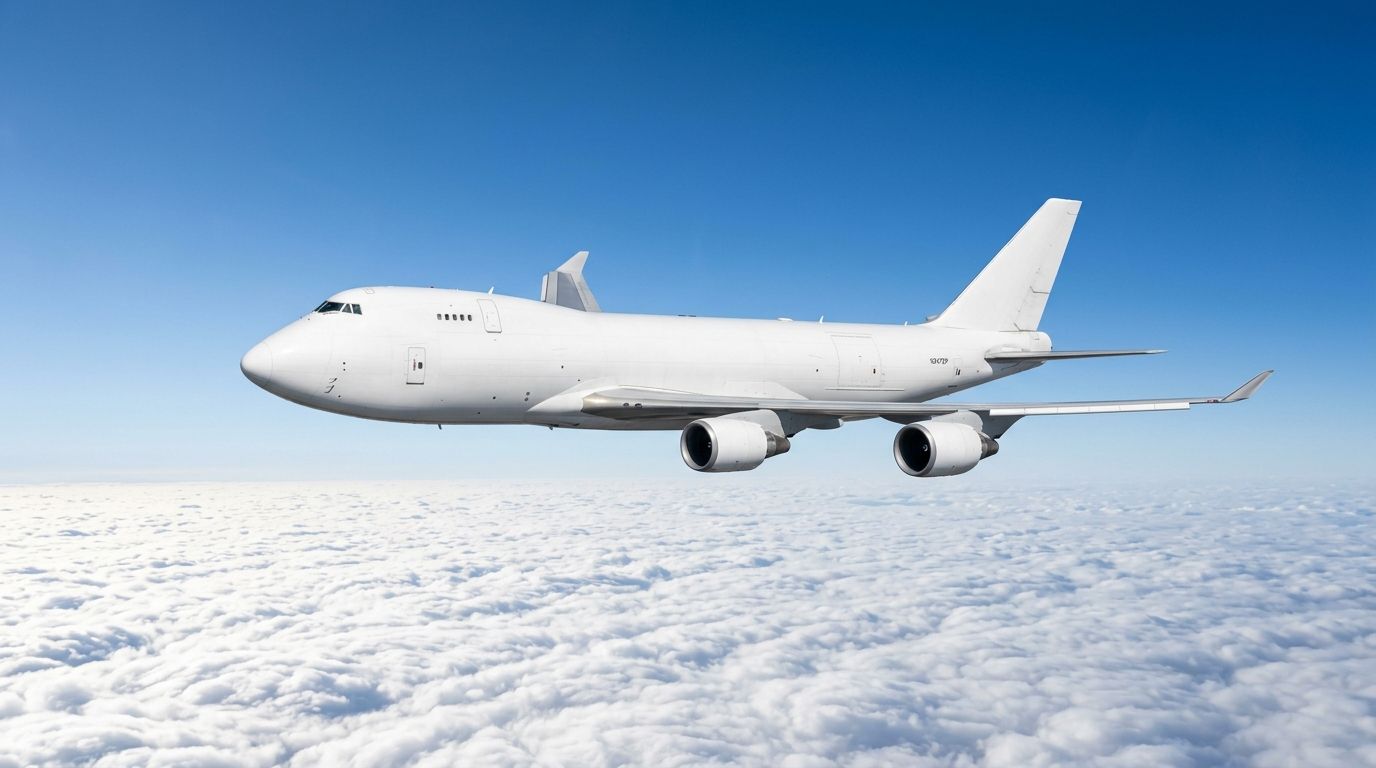
- 1960s – The Jumbo Jet Revolution: The introduction of the Boeing 747 changed everything. With its massive lifting capacity and the iconic “nose door” that allowed oversized industrial cargo to be loaded straight into the main deck, true global supply chains were born.
The Bottom Line on Aviation Logistics
Summary of Key Takeaways
Understanding the air freight ecosystem is mandatory for any high-growth international business.
- Always utilize a skilled freight forwarder to navigate the complex ULD build-up and customs clearance processes.
- Recognize that you are paying a massive premium for speed and reliability; only use air cargo for high-value, time-sensitive, or highly perishable goods.
- Factor transit times through global mega-hubs into your final delivery estimates, especially for cross-continental shipments.
Frequently Asked Questions
What is the difference between belly cargo and freighter cargo?
Belly cargo is loaded into the lower deck of standard passenger airplanes, underneath where people sit. Freighter cargo is loaded onto dedicated cargo-only aircraft, which can carry vastly heavier and much larger industrial pieces on their main decks.
Is air freight charged by actual weight or volume?
Airlines always charge whichever is greater: the actual physical weight or the volumetric (dimensional) weight, using the standard 1:6000 density ratio.
Can I ship liquids via air cargo?
Yes, but the restrictions are brutal. Any liquid must be accompanied by an extensive Material Safety Data Sheet (MSDS). If the liquid is flammable or classified as a Dangerous Good, it requires specialized, highly expensive UN-certified packaging.
Who provides the Master Air Waybill?
The Master Air Waybill (MAWB) is the official contract of carriage issued directly by the operating airline to the freight forwarder. The forwarder then issues you a House Air Waybill (HAWB) for your specific box.
Readers who enjoyed this post also found value in Shipping from Dubai to Canada — a must-read for anyone interested in this subject.
For those considering a move to Dubai, understanding the intricacies of international shipping is crucial, especially when it comes to air cargo regulations. To help streamline your relocation process, explore our comprehensive guide on moving from London to Dubai, which covers everything from packing tips to customs requirements.